




Study on the mechanism of BAFF protein in autoimmune diseases


Autoimmune diseases are disorders in which the immune system malfunctions, leading to tissue and organ damage caused by autoantibodies or autoreactive lymphocytes attacking normal cells.
- Recent Advances
- Product Information
I. Research Background of Autoimmune Diseases
Autoimmune diseases are disorders where the immune system malfunctions, leading to tissue and organ damage caused by autoantibodies or autoreactive lymphocytes attacking normal cells. With over 100 types identified, they rank as the third most prevalent disease category after cardiovascular diseases and cancer. B cells, as one of the most important effector cells in autoimmune diseases, play a central role in disease pathogenesis. Targeting B cell-related molecules has become a crucial direction in autoimmune disease treatment research. BAFF protein, as a key B cell survival factor, has garnered widespread attention for its role in autoimmune disease mechanisms.
II. Structure and Biological Characteristics of BAFF Protein
B cell activating factor (BAFF), also known as TNFSF13B or CD257, belongs to the tumor necrosis factor ligand family and exists in both soluble and membrane-bound forms. This protein is expressed on various cell types including monocytes, dendritic cells, and bone marrow stromal cells. BAFF exerts its biological functions by binding to three specific receptors: TACI, BCMA, and BAFF receptor (BAFF-R). These receptors exhibit distinct expression patterns across different B cell subsets and differentiation stages, mediating diverse biological effects of BAFF. The discovery of BAFF receptors has provided fundamental insights into B cell regulatory networks and multiple potential targets for intervention strategies.
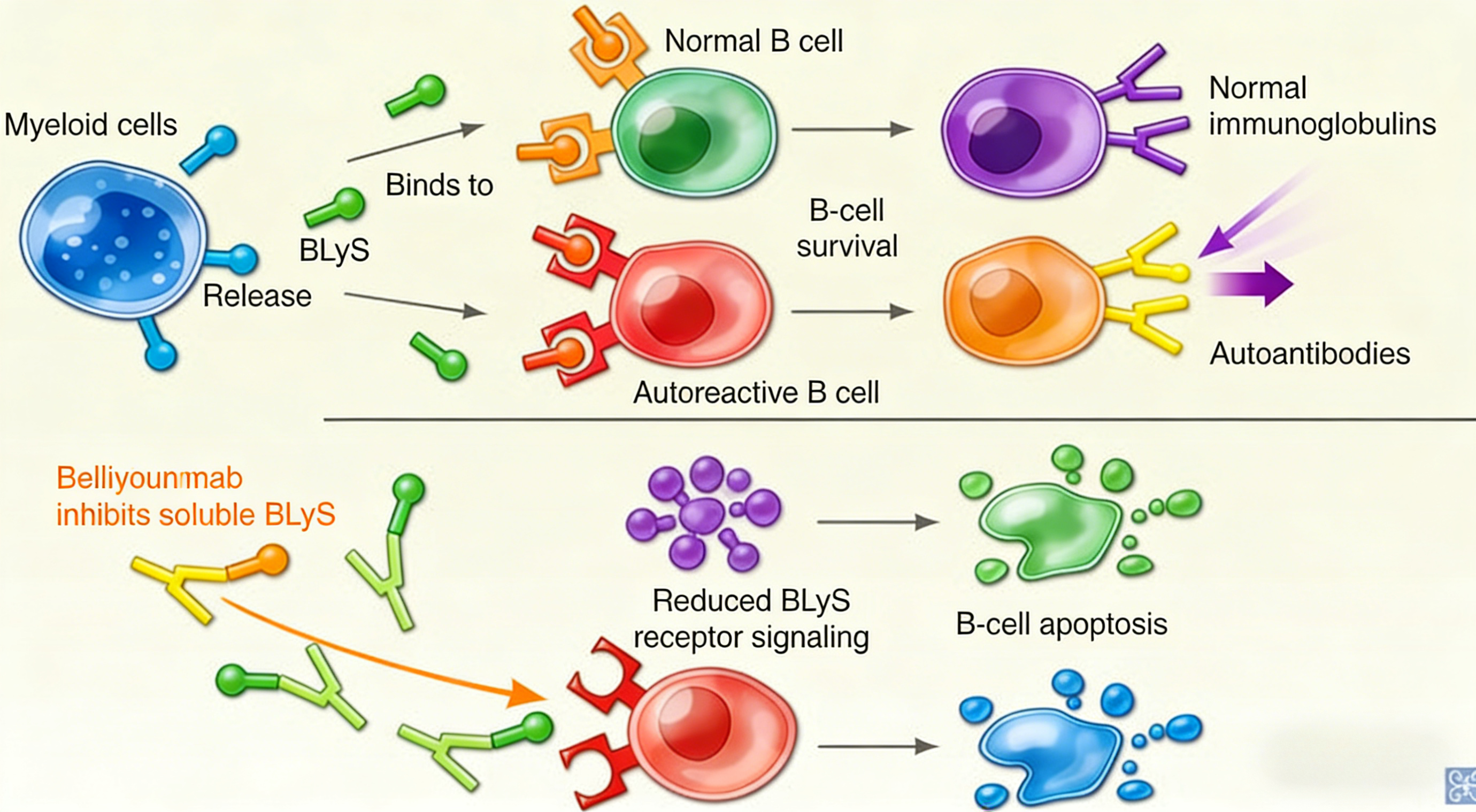
III. Functions of BAFF Protein in B Cell Regulation
BAFF plays crucial regulatory roles in B cell survival, proliferation, and differentiation. As a B cell survival factor, BAFF maintains the viability of immature B cells during their transition to mature B cells by activating downstream signaling pathways through receptor binding. During germinal center reactions, BAFF participates in regulating class switch recombination, influencing antibody isotype production. Additionally, BAFF plays important roles in the selection of autoreactive B cells by modulating B cell tolerance maintenance. Research has shown that BAFF can also promote T cell activation, proliferation and differentiation, suggesting its potential indirect effects on autoimmune responses through T cell regulation. The multifaceted functions of BAFF make it a key molecular bridge connecting innate and adaptive immunity.
IV. Association Between BAFF Protein and Autoimmune Diseases
Numerous clinical studies demonstrate BAFF's involvement in the pathogenesis of various autoimmune diseases. In patients with systemic lupus erythematosus (SLE), serum BAFF levels are significantly elevated and positively correlate with disease activity and autoantibody levels. Similarly, abnormal BAFF elevation has been observed in multiple sclerosis, IgA nephropathy, Sjögren's syndrome, and rheumatoid arthritis. These clinical observations suggest that BAFF overexpression may be closely related to autoimmune disease pathology. As a classic autoimmune disease, SLE pathogenesis involves multiple aspects including autoreactive T/B cell proliferation, pathogenic autoantibody production, and cytokine dysregulation. BAFF plays a central role in this complex immune network disruption by promoting survival and expansion of autoreactive B cells and enhancing autoantibody production.
V. BAFF-Targeted Therapeutic Strategies
Given BAFF's critical role in B cell regulation and autoimmune pathogenesis, targeting BAFF has become an important therapeutic strategy. Among current targeted therapies for SLE, BAFF inhibitors (e.g., belimumab) represent primary treatment options. These drugs neutralize excess BAFF, inhibiting survival and differentiation of autoreactive B cells and reducing autoantibody production, thereby improving symptoms and controlling disease progression. Clinical studies demonstrate that BAFF-targeted interventions effectively reduce disease activity, decrease steroid dependence, and improve patients' quality of life. The therapeutic value of BAFF as a drug target has been validated in clinical practice, providing new treatment options for autoimmune disease patients.
VI. Clinical Significance and Future Perspectives of BAFF Research
BAFF's central position in autoimmune disease pathogenesis makes it a crucial target for both basic research and clinical translation. Serum BAFF levels may serve as biomarkers for disease activity assessment and treatment response prediction, facilitating personalized therapy. With deepening understanding of BAFF biology and its regulatory networks, novel intervention strategies targeting BAFF and its receptors continue to emerge. Future research needs to further elucidate BAFF's specific mechanisms in different autoimmune diseases, explore potential combination targeting strategies, and identify patient subgroups most likely to benefit from BAFF-targeted therapies. As an important therapeutic target, continued investigation into BAFF's basic biology and clinical applications will bring more treatment options to patients.
VII. Manufacturers Providing BAFF Protein
Nanjing UA-Biotech Co., Ltd. has independently developed "BAFF Protein, Human", a high-quality recombinant protein reagent specifically designed for B cell biology research and immune regulation studies. This human B cell activating factor (BAFF, also known as BLyS) can specifically bind BAFF receptors and efficiently activate B cell survival and differentiation signals, providing researchers with stable and reliable standardized tools for humoral immunity research, autoimmune disease modeling, and antibody drug development.
| Core Product Advantages |
|---|
| High Purity and Full Biological Activity: Produced using internationally advanced eukaryotic expression systems and highly standardized purification processes, this product undergoes multidimensional quality control to ensure >95% purity, correct native trimeric conformation, and complete biological functionality. The protein efficiently binds BAFF-R, BCMA and TACI receptors, faithfully mimicking physiological BAFF-mediated processes including B cell survival, maturation and antibody production. |
| Excellent Batch-to-Batch Consistency and Stability: Strict quality management throughout gene construction, protein expression and purification processes, combined with comprehensive release testing systems, ensure stable biological activity, consistent purity and excellent long-term stability across batches. Provides reliable quality assurance for long-term, continuous B cell immunology research. |
| Ideal Tool for Multiple Applications: This protein performs excellently in various application systems including B cell culture, organoid construction, flow cytometry, ELISA and surface plasmon resonance (SPR), making it widely suitable for B cell survival/proliferation studies, antibody-secreting cell induction, autoimmune disease mechanism exploration and drug screening. |
| Low Endotoxin and High Batch Consistency: Through multi-step chromatography purification and endotoxin removal processes, the product maintains extremely low endotoxin levels (<0.1 EU/μg), meeting stringent requirements for cell culture and functional studies. Rigorous quality control ensures high consistency in protein activity and purity across batches. |
| Comprehensive Solutions and Professional Support: We provide fully validated standard protocols, representative biological activity data and detailed product analysis certificates to help researchers quickly establish stable, reproducible experimental workflows. Nanjing UA-Biotech's professional team offers complete technical consultation and support for research design, experimental optimization and data analysis. |
Nanjing UA-Biotech Co., Ltd. remains committed to providing cutting-edge, high-quality core reagents and tools for immunology, cell therapy and innovative drug development. For detailed technical parameters, validation data or specific application inquiries regarding "BAFF Protein, Human" (Catalog No.: UA040517), please feel free to contact us.
This article is reviewed and published by the technical expert team of UA
Disclaimer: This article partially utilizes artificial intelligence assistance in its creation. If any content involves copyright or intellectual property issues, please let us know and we promise to verify and remove it as soon as possible.
Purchase recombinant protein, choose Nanjing UA-Bio
UA protein focuses on providing various protein reagents, raw materials, and services required for drug research and development, cell therapy, gene therapy, and basic scientific research, including drug target proteins, immune checkpoint proteins, cytokines, tool enzymes, customized protein expression, and full-length transmembrane protein development. Youai is committed to providing customers with high-quality products and professional services, and building a High-tech Biological Enterprise with International Competitiveness.







 Business license (three certificates in one)