




Technical Articles
B cell

Recombinant Human CD40 Fc Chimera: How the Immune Switch Is Opened at the Molecular Level
 2026-10-16
CD40 is a TNF receptor family costimulatory molecule on B cells and dendritic cells. This article explains its trimerization-driven signaling, CD40L engagement and why the Fc chimera format is the standard reagent for binding studies.
View details
- Immunity/Inflamma
- CD40
- TNFRSF5
- CD40L
- Fc chimera
- costimulation
- B cell
- dendritic cell
- TRAF
- UA010194
B Cell Culture Guide
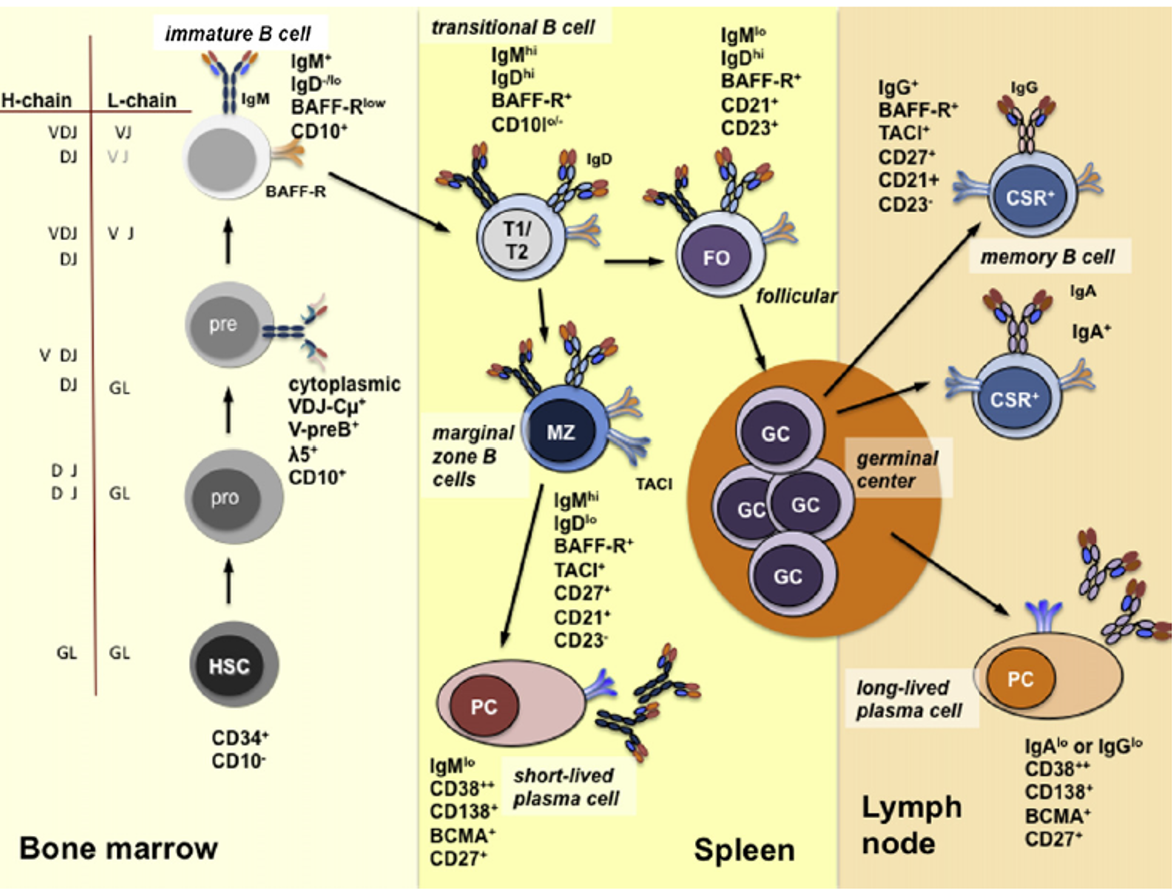
2026-07-15B cells, as the main force of humoral immunity, work synergistically with T cells, which are responsible for cellular immunity, to form adaptive immunity. When antigens enter the body, they induce the activation, proliferation, and eventual differentiation of antigen-specific B cells into plasma cells, which produce specific antibodies that enter the humoral system to exert immune effects. Additionally, abnormalities in the morphology and function of B cells are associated with various diseases, including B-cell tumors, autoimmune diseases, and neuroimmune disorders.
View details
- Immunity/Inflamma
- B Cell
APRIL/TNFSF13 protein: A Key Target for B-cell Immunomodulation and Disease Therapy
2026-02-09APRIL (a proliferation-inducing ligand, TNFSF13) is an important member of the tumor necrosis factor ligand superfamily and functions as a type II transmembrane protein.
View details
- Immunity/Inflamma
- APRIL/TNFSF13 protein
- B cell
- Immunoregulation
- 1

Link:





©2021-2026 all rights reserved UNIV Biotechnology Co.,Ltd.
Privacy Policy
网站备案号 苏ICP备2025207586号-2 浙公网安备33010202004867号
 Business license (three certificates in one)
 Tel:+86-25-56221161
E-mail:order@ua-bio.com
All products sold on this website shall not be used for clinical diagnosis or treatment of humans or animals, and shall only be used for non-medical purposes such as industrial or scientific research.


