




Technical Articles
CD28

Enhancing In Vitro T Cell Expansion: Synergy in Signaling as a Pathway to Standardized Solutions
 2025-10-30
Obtaining large numbers of highly active human peripheral blood-derived T cells is a critically important technical step in immunotherapy development, oncology research, and the exploration of immune response mechanisms. Traditional T cell expansion requires researchers to independently optimize the concentrations of anti-CD3 and anti-CD28 antibodies, as well as the ratio of IL-2 - a process that is cumbersome and involves variables that are difficult to control.
View details
- Drug Research
- T cell
- CD3
- CD28
- IL-2
- recombinant protein
- UA Bio
Th2 Cells: How Do They Orchestrate Immune Regulation and Drive Disease Pathogenesis?
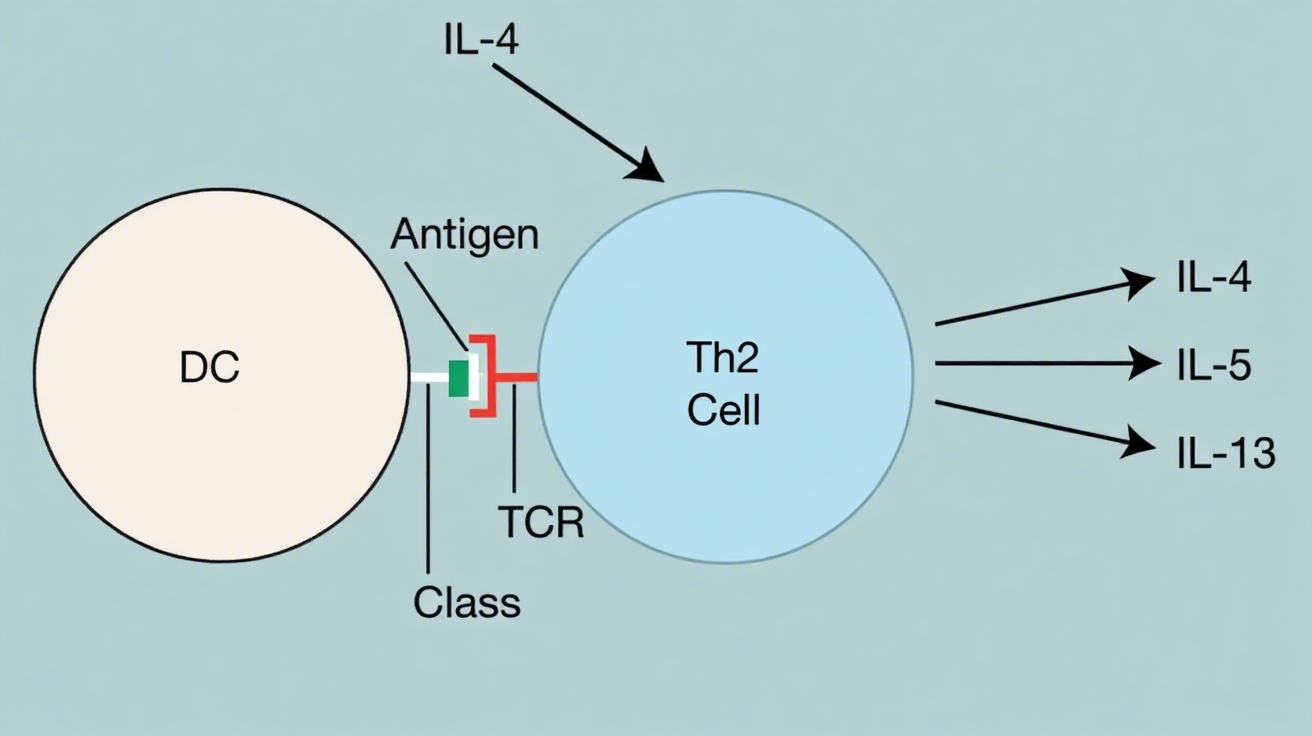
2025-10-12Th2 cells, as a crucial subset of CD4+ helper T cells, undergo a precisely regulated differentiation process. Naïve CD4+ T cells recognize the MHC class II-peptide complex on the surface of antigen-presenting cells through their T cell receptor, receiving the first signal; simultaneously, they obtain the second signal through costimulatory molecules such as CD28, thereby completing the dual-signal activation.
View details
- Immunity/Inflamma
- IL-2
- IL-4
- CD3
- CD28
- IFN-γ
- 1

Link:





©2021-2026 all rights reserved UA Biotechnology Co.,Ltd.
Privacy Policy 
网站备案号 浙ICP备2022019033号-2 浙公网安备33010202004867号
 Business license (three certificates in one)
 Tel:+86-25-56221161
E-mail:order@ua-bio.com
All products sold on this website shall not be used for clinical diagnosis or treatment of humans or animals, and shall only be used for non-medical purposes such as industrial or scientific research.
