




Technical Articles
EphA2
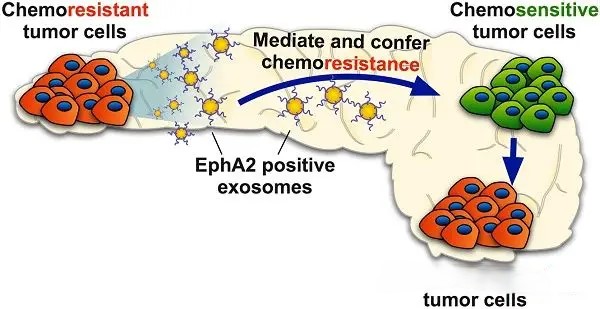
EphA2: The key "messenger" for pancreatic cancer resistance transmission
 2025-05-21
In the battlefield of cancer treatment, pancreatic cancer (PC) has always been one of the most difficult fortresses to conquer. It is not only highly invasive and metastatic, but also highly resistant to treatment, which makes the patient's survival rate extremely low.
View details
- Cancer
- EphA2
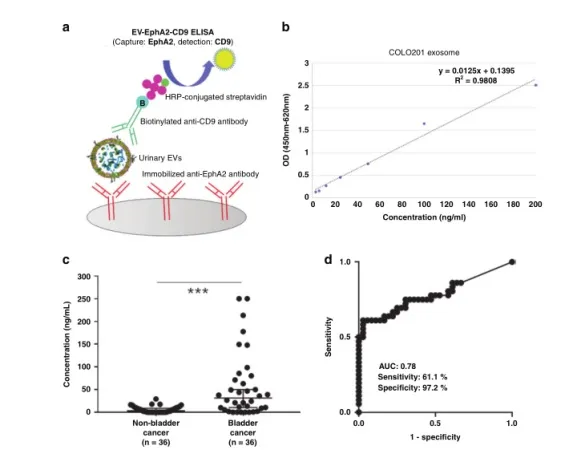
"Signal Light" in Urine: EphA2 Brings New Hope to Bladder Cancer Diagnosis
2025-05-19In the long journey of fighting cancer, scientists have been looking for "signal lights" that can detect cancer cells early. Recently, a study from Kazutoshi Fujita's research group at Osaka University in Japan has brought us new hope: they found that EphA2 protein on urine extracellular vesicles (uEVs) can be used as a new biomarker to help us diagnose bladder cancer early.
View details
- Cancer
- EphA2
- ECK

EphA2 protein: new hope and cutting-edge strategy for cancer treatment
2025-04-22EphA2 is a tyrosine kinase receptor, so using tyrosine kinase inhibitors (TKIs) to inhibit the kinase activity of EphA2 is a potential therapeutic strategy. The multiple signaling pathways and non-kinase-dependent functions of EphA2 make targeted therapy complicated, and appropriate treatment methods need to be selected according to different tumor types and environments.
View details
- Cancer
- EphA2
- Tyrosine kinase inhibitors (TKIs)
- signaling pathways
- targeting
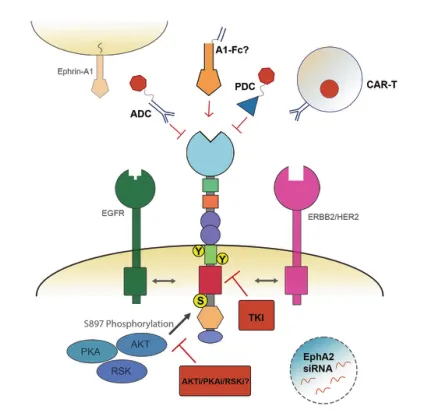
EphA2 protein: a new target for cancer treatment
2025-04-22The important role of EphA2 in tumor biology makes it a promising therapeutic target, and ongoing efforts to target EphA2 in the clinic may provide a valuable new weapon in the fight against cancer. Future efforts include continued in-depth understanding of EphA2-Ephrin A1 signaling and precise elucidation of crosstalk with other oncogenic pathways. Completed clinical studies and new biological findings provide clues for the development of the next generation of EphA2-targeted therapies: (I) the focus should be on improving efficacy and selectivity while preventing off-target side effects; and (II) combination with other therapies may be helpful.
View details
- Cancer
- EphA2
- Therapeutic target
- EphA2 Ephrin A1 signaling
- non targeted side effects
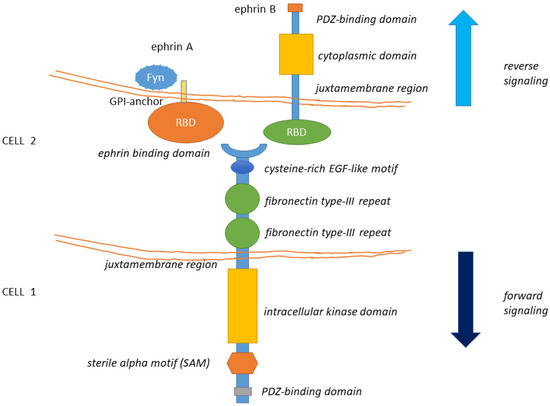
EphA2: A Key Target for Cancer Treatment
2025-04-03EphA2 is mainly restrictedly expressed in the proliferating epithelial cells of adults. However, an increasing number of studies have demonstrated that EphA2 is highly expressed in various cancers and is associated with poor prognosis, metastasis, and low survival rates. The active involvement of EphA2 in the tumor process, along with its relatively low expression in most normal adult tissues, makes this protein another potential therapeutic target for cancer.
View details
- Cancer
- EphA2
- Tumor treatment
- 1

Link:





©2021-2026 all rights reserved UA Biotechnology Co.,Ltd.
Privacy Policy 
网站备案号 浙ICP备2022019033号-2 浙公网安备33010202004867号
 Business license (three certificates in one)
 Tel:+86-25-56221161
E-mail:order@ua-bio.com
All products sold on this website shall not be used for clinical diagnosis or treatment of humans or animals, and shall only be used for non-medical purposes such as industrial or scientific research.
