

Technical Articles
IL-21
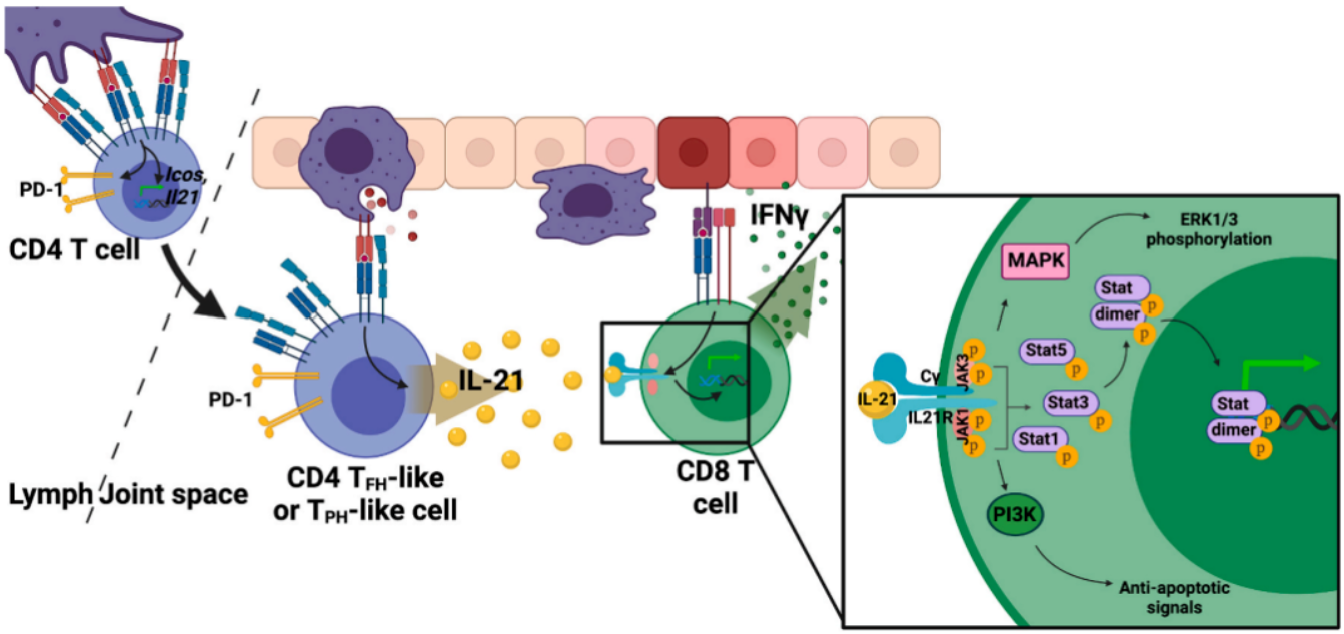
IL-21: From Tfh Cell Effector Molecule to Key Driver of Autoimmune Diseases
 2026-09-16
This article systematically elucidates the molecular characteristics and biological functions of interleukin-21 (IL-21), focusing on its role as a key effector secreted by Tfh, Tph, and Th17 cells. It details the molecular mechanisms by which IL-21 activates the JAK-STAT, MAPK, and PI3K signaling pathways through IL-21R, and analyzes its pathological driving effects in ten autoimmune diseases, including systemic lupus erythematosus and rheumatoid arthritis.
View details
- Immunity/Inflamma
- IL-21
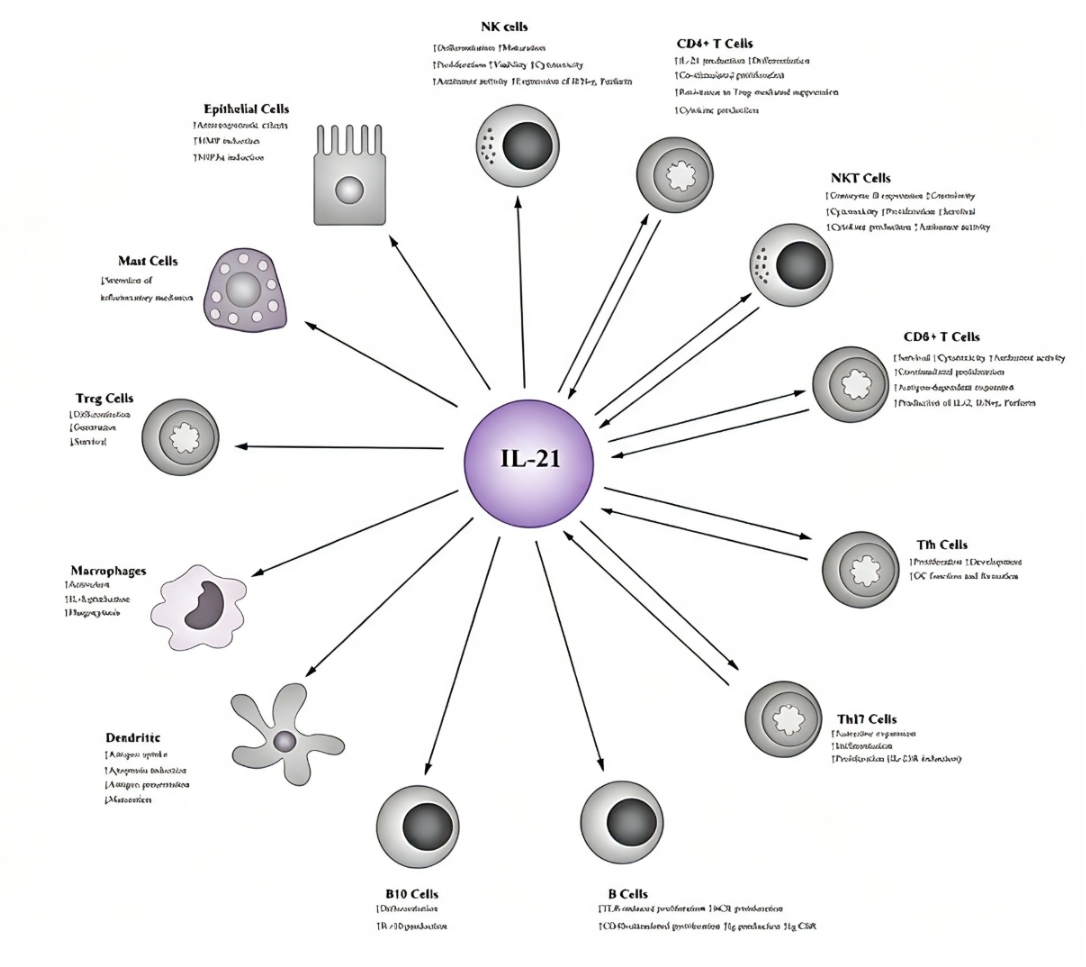
IL-21: A Synergistic Enhancer in CAR-T Cell Therapy and Novel Strategy for Tumor Immunomodulation
2026-08-17This article systematically elaborates on the molecular characteristics and biological functions of IL-21, focusing on its core role as a member of the IL-2 cytokine superfamily in regulating the proliferation, differentiation, and effector functions of T cells, NK cells, and NKT cells. It also analyzes its potential value in enhancing the anti-tumor activity of CAR-T cells and improving treatment safety.
View details
- Immunity/Inflamma
- IL-21
IL-21: The Immune System's "Versatile Coordinator" and the Double-Edged Sword in Disease Treatment
2025-12-03Interleukin-21 (IL-21) is a pleiotropic cytokine produced by activated T cells, serving as a central messenger in coordinating humoral immunity, cellular immunity, and immune tolerance. It plays a complex and critical role in promoting antibody production, cytotoxic cell activation, and immune regulation.
View details
- Cancer
- IL-21
- Interleukin-21
- Follicular Helper T Cells (Tfh)
- Germinal Center
- Autoimmune Diseases
B cell-polarizing cytokines: The "directors" of immune response and the root of disease imbalance
2025-12-03B-cell polarizing cytokines are a group of key signaling molecules that direct B-cell differentiation, antibody class switching, and functional specialization.
View details
- Immunity/Inflamma
- B Cell Polarization
- Cytokines
- IL-4
- IL-21
- BAFF
The mechanism and research progress of IL-21 in immune regulation and autoimmune diseases
2025-07-15IL-21 is a four alpha helix cytokine composed of 133 amino acids, belonging to the gamma chain cytokine family (gamma c family). The family members include IL-2, IL-4, IL-7, IL-9, IL-15, and IL-21, all of which utilize a common gamma chain (γ c, CD132) as a receptor signaling subunit. Structurally, IL-21 contains four conserved alpha helical domains (A, B, C, D) that bind to receptors through specific spatial conformations.
View details
- Immunity/Inflamma
- IL-21
- Immune regulation
- autoimmune diseases
- 1

Link:





©2021-2026 all rights reserved UNIV Biotechnology Co.,Ltd.
Privacy Policy
网站备案号 苏ICP备2025207586号-2 浙公网安备33010202004867号
 Business license (three certificates in one)
 Tel:+86-25-56221161
E-mail:order@ua-bio.com
All products sold on this website shall not be used for clinical diagnosis or treatment of humans or animals, and shall only be used for non-medical purposes such as industrial or scientific research.