

Technical Articles
IL-4
Human IL-4/IL-4R Binding Kit: Standard Protocol for BLI-Based IL-4 Signaling Pathway Kinetics and Inhibitor Screening
 2026-01-04
This article elaborates in detail on the Human IL-4/IL-4R binding detection kit based on Bio-Layer Interferometry (BLI), systematically introducing its applications in analyzing Type I/II receptor complexes, evaluating the efficacy of therapeutic antibodies and small-molecule inhibitors, and providing a quantitative analysis tool for research and drug development in the fields of allergies, asthma, and immune diseases.
View details
- Immunity/Inflamma
- IL-4
- IL-4R
- allergy
- asthma
- immune diseases.
B cell-polarizing cytokines: The "directors" of immune response and the root of disease imbalance
2025-12-03B-cell polarizing cytokines are a group of key signaling molecules that direct B-cell differentiation, antibody class switching, and functional specialization.
View details
- Immunity/Inflamma
- B Cell Polarization
- Cytokines
- IL-4
- IL-21
- BAFF
Th2 Cells: How Do They Orchestrate Immune Regulation and Drive Disease Pathogenesis?
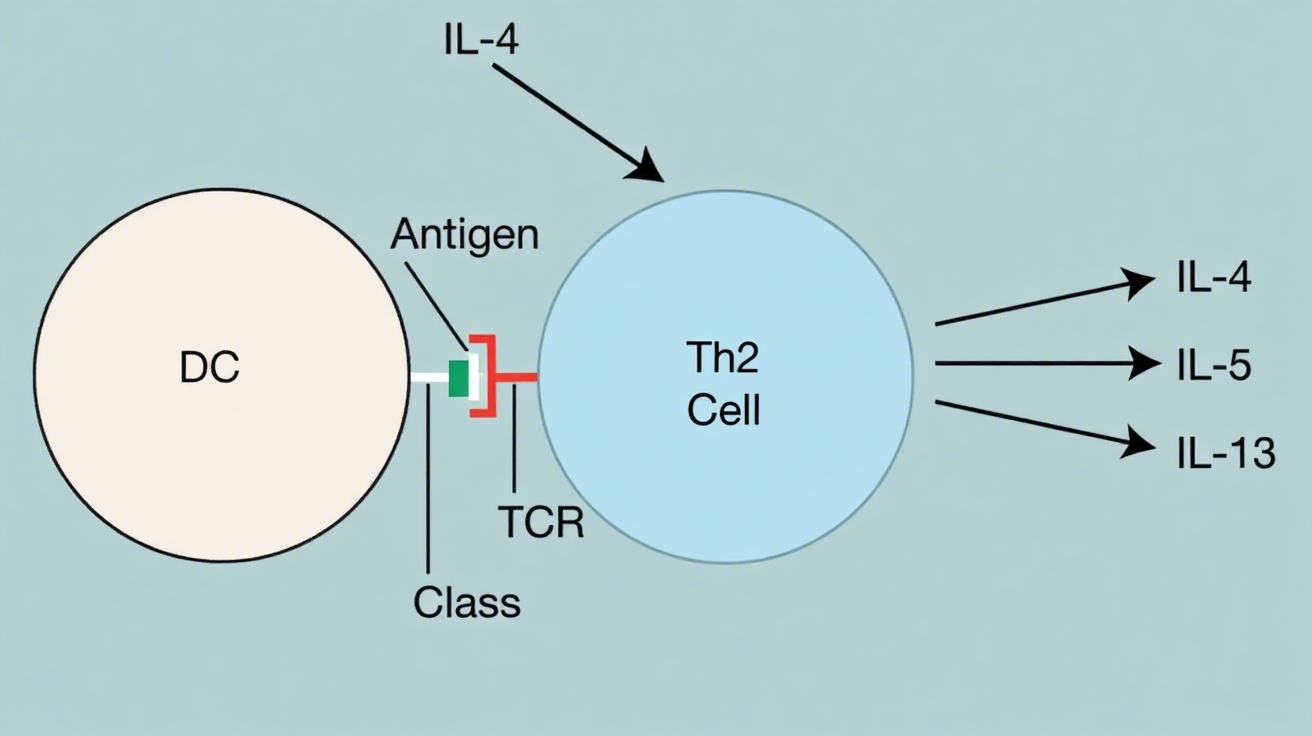
2025-10-12Th2 cells, as a crucial subset of CD4+ helper T cells, undergo a precisely regulated differentiation process. Naïve CD4+ T cells recognize the MHC class II-peptide complex on the surface of antigen-presenting cells through their T cell receptor, receiving the first signal; simultaneously, they obtain the second signal through costimulatory molecules such as CD28, thereby completing the dual-signal activation.
View details
- Immunity/Inflamma
- IL-2
- IL-4
- CD3
- CD28
- IFN-γ
Breaking the Therapeutic Bottleneck in Allergic Diseases by Targeting IL-4Rα
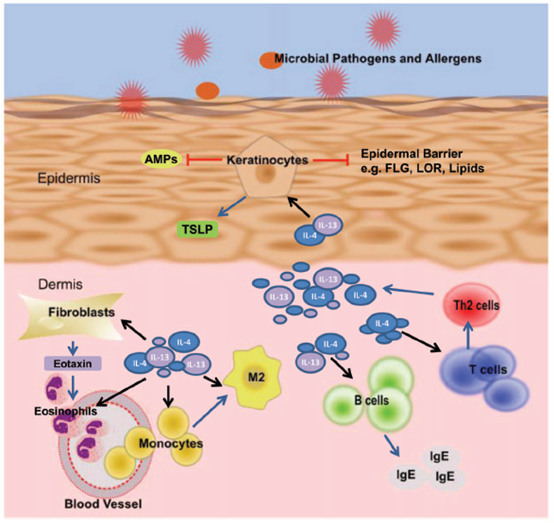
2025-09-29The core pathogenesis of allergic diseases lies in the abnormal activation of the type 2 inflammatory pathway. This pathway, primarily mediated by T helper 2 (Th2) cells, regulates the direction of the immune response through a complex cytokine network. As a crucial subset of CD4+ T cells, Th2 cells differentiate into effector cells upon allergen stimulation and initiate and sustain the type 2 immune response by secreting the key cytokines interleukin (IL)-4, IL-5, and IL-13.
View details
- Immunity/Inflamma
- IL-4
- IL-4R
- Allergy
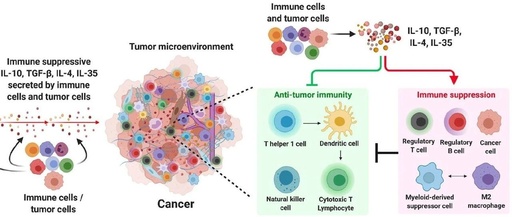
Research progress on the regulatory role and mechanism of IL-4 in tumor immune escape
2025-07-16During the occurrence and development of tumors, the dynamic balance between the body's immune system and tumor cells is disrupted, and tumors achieve immune escape by reshaping the immune microenvironment.
View details
- Cancer
- IL-4
- Tumor
- immunity
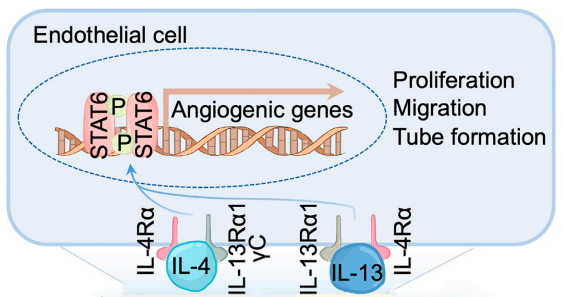
IL-4Rα: The Janus Receptor Underlying Contrasting Fates in Allergy and Cancer
2025-05-12In Type 2 immune response-mediated allergic diseases, IL-4Rα serves as the shared subunit of interleukin-4 (IL-4) and interleukin-13 (IL-13) receptors, emerging as one of the most sought-after targets in the global biopharmaceutical sector. Through dual inhibition of IL-4/IL-13 signaling pathways, it has not only revolutionized therapeutic paradigms for conventional conditions like atopic dermatitis and asthma but also demonstrated remarkable potential across interdisciplinary fields including tumor immunology and viral infections.
View details
- Cancer
- IL-4Rα
- Nanjing Youai
- interleukin-4
- IL-4
- Interleukin-13
- IL-13
- 1

Link:





©2021-2026 all rights reserved UNIV Biotechnology Co.,Ltd.
Privacy Policy
网站备案号 苏ICP备2025207586号-2 浙公网安备33010202004867号
 Business license (three certificates in one)
 Tel:+86-25-56221161
E-mail:order@ua-bio.com
All products sold on this website shall not be used for clinical diagnosis or treatment of humans or animals, and shall only be used for non-medical purposes such as industrial or scientific research.