Technical Articles
Osteoarthritis
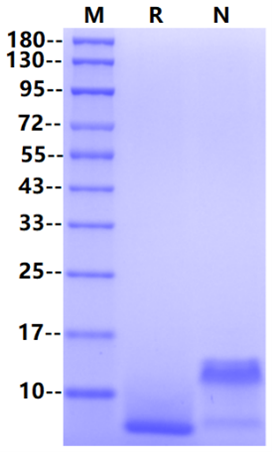
Application of Alexa Fluor 488-labeled EGF protein in the study of EGFR signaling pathway in cartilage
 2026-04-23
Osteoarthritis is a common degenerative joint disease characterized by pathological features such as joint cartilage degeneration, subchondral bone sclerosis, and synovial inflammation.
View details
- Signaling Pathway
- EGF Protein
- Osteoarthritis
- Degenerative Joint Disease
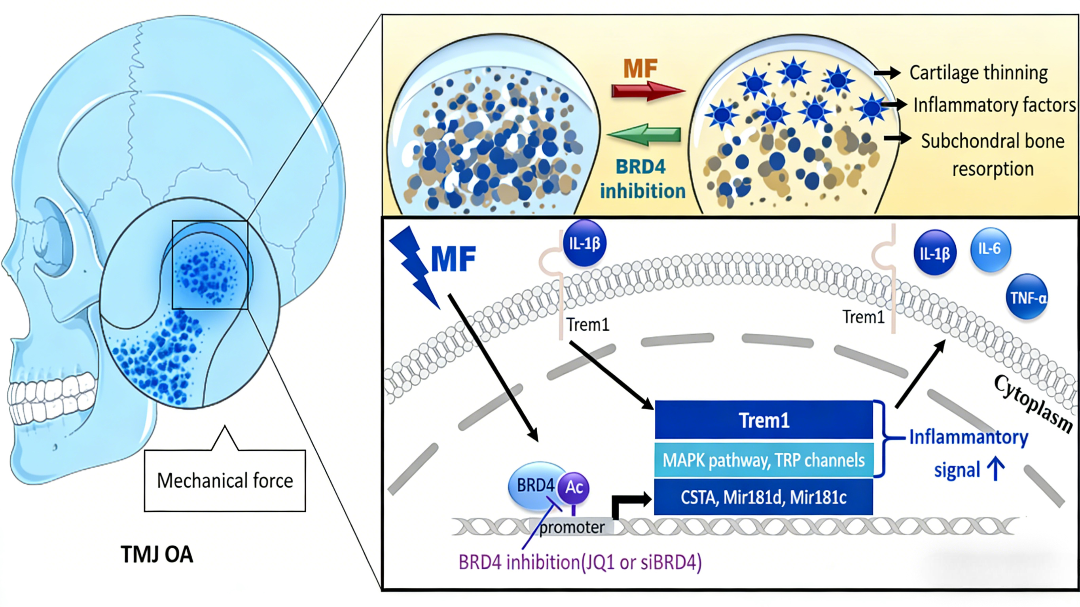
The role and mechanism of BRD4 signaling pathway in stress-induced osteoarthritis and targeted degradation therapy strategies
2026-01-21Temporomandibular joint osteoarthritis is a chronic disease characterized by degenerative changes in articular cartilage, subchondral bone resorption, and extracellular matrix damage, with excessive mechanical stress considered a key pathogenic factor in its development and progression.
View details
- Immunity/Inflamma
- BRD4/CRBN PROTAC Kit
- Osteoarthritis
- Temporomandibular joint osteoarthritis
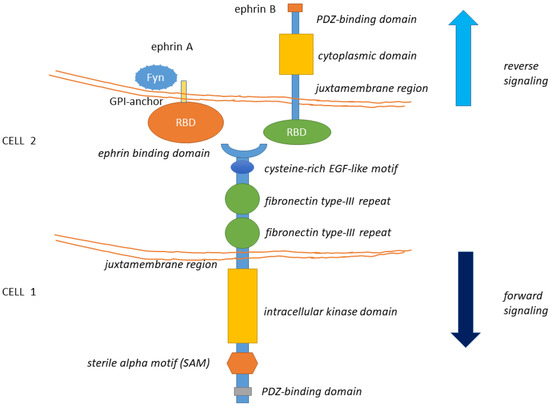
FGF-9: From Development to Disease, Unveiling the Dual Role of the "Versatile Messenger"
2025-11-21In the intricate cellular signaling network of the human body, there exists a family of proteins known as fibroblast growth factors, which act as precise messengers, regulating cell growth, differentiation, and repair.
View details
- Immunity/Inflamma
- FGF-9
- Osteoarthritis
- Tissue fibrosis
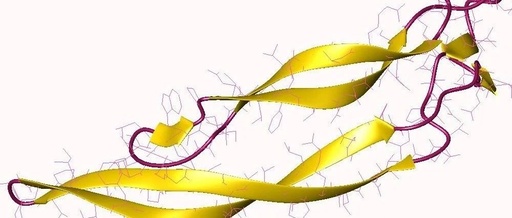
Study on the Mechanism of PDGF-BB in the Pathological Process of Osteoarthritis
2025-07-28Osteoarthritis, as a common degenerative joint disease, is characterized by abnormal angiogenesis of subchondral bone and vascular invasion into avascular joint cartilage tissue in its early stages. This process not only accelerates joint cartilage degeneration, but also leads to joint pain caused by nerve growth.
View details
- Signaling Pathway
- PDGF-BB
- osteoarthritis
- 1

Link:





©2021-2026 all rights reserved UNIV Biotechnology Co.,Ltd.
Privacy Policy
网站备案号 苏ICP备2025207586号-2 浙公网安备33010202004867号
 Business license (three certificates in one)
 Tel:+86-25-56221161
E-mail:order@ua-bio.com
All products sold on this website shall not be used for clinical diagnosis or treatment of humans or animals, and shall only be used for non-medical purposes such as industrial or scientific research.