




Technical Articles
TR-FRET Technology
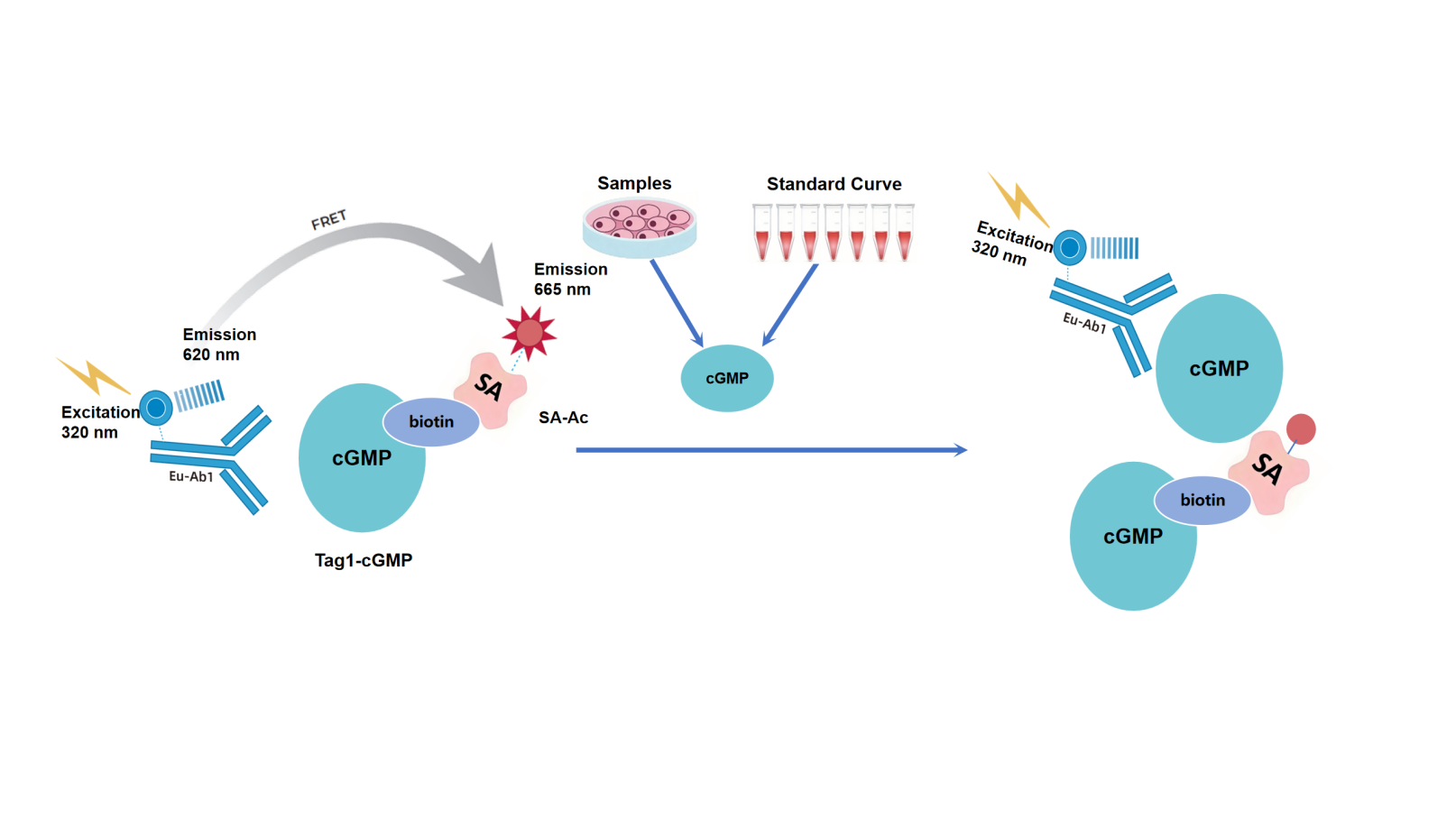
Principle and Application Analysis of cGMP Detection Method Based on TR-FRET Technology
 2026-04-20
The time-resolved fluorescence resonance energy transfer (TR-FRET) technology combines the dual advantages of time-resolved fluorescence detection and fluorescence resonance energy transfer, providing an efficient homogeneous detection solution for the precise quantification of cyclic guanosine monophosphate (cGMP).
View details
- Immunity/Inflamma
- TR-FRET Technology
- cGMP Detection
- Cyclic Guanosine Monophosphate
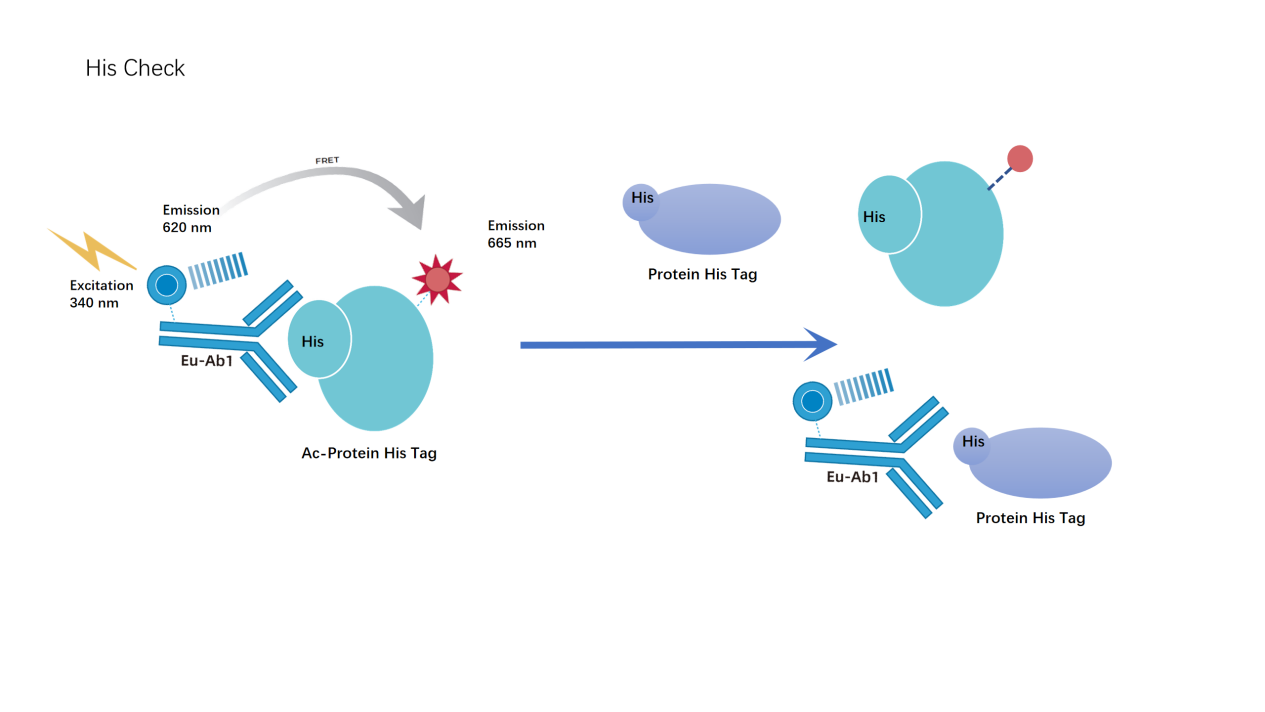
Application of His-Tag Detection Kits Based on TR-FRET Technology in Protein Research
2026-04-17The histidine tag is one of the most widely used affinity tags in recombinant proteins, consisting of 6 to 10 consecutive histidine residues, typically fused to the N-terminus or C-terminus of the target protein.
View details
- Drug Research
- TR-FRET Technology
- His-Tag Detection
- Protein Research

Application of Total IgG Detection Kit Based on TR-FRET Technology in Immunological Research
2026-04-17IgG is the most abundant and functionally core antibody molecule in human humoral immunity, featuring a Y-shaped tetrapeptide chain glycoprotein structure composed of two heavy chains and two light chains connected by disulfide bonds, with a molecular weight of approximately 150 kDa.
View details
- Immunity/Inflamma
- TR-FRET Technology
- IgG Detection Kit
- Immunology Research
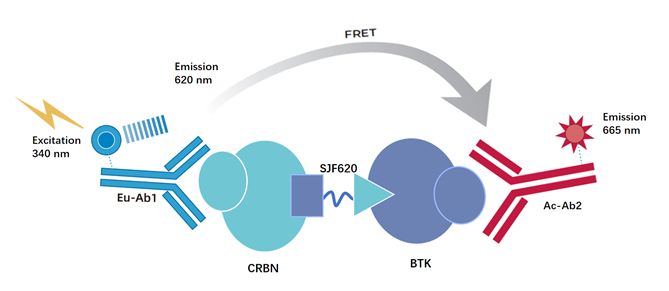
Mechanism study, molecular design, and TR-FRET detection application of PROTAC-mediated BTK degradation
2026-04-17In 2001, the concept of PROTAC was first proposed, which involves using bifunctional ligands to specifically bind to target proteins while recruiting E3 ligases for ubiquitination, ultimately leading to the degradation of the target proteins.
View details
- Drug Research
- BTK/CRBN
- TR-FRET Technology
- PROTAC Technology
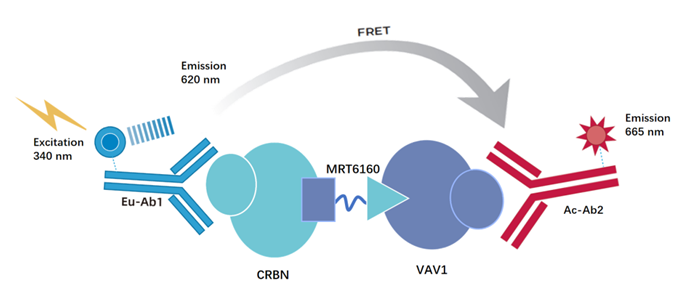
Application of TR-FRET Technology in Quantitative Evaluation of VAV1/CRBN-Targeting PROTACs
2026-04-16Targeted protein degradation technology has become a key research direction in the field of chemical biology. Among these, PROTAC technology achieves selective degradation of specific proteins by inducing interactions between the target protein and E3 ubiquitin ligase.
View details
- Drug Research
- TR-FRET Technology
- VAV1/CRBN
- PROTAC
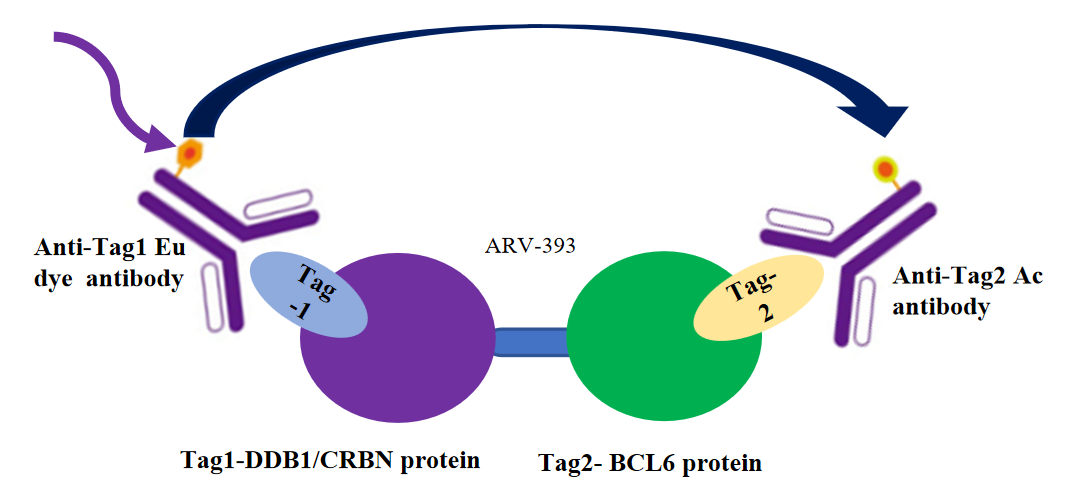
TR-FRET BCL6/CRBN PROTAC Assay Kit Technical Principle and Applications
2026-04-16Targeted protein degradation technologies have made significant progress in the fields of chemical biology and drug discovery in recent years. Among them, PROTAC technology achieves specific ubiquitination and proteasomal degradation of target proteins by inducing proximity between the target protein and E3 ubiquitin ligase.
View details
- Drug Research
- BCL6/CRBN
- Chemical Biology
- TR-FRET Technology
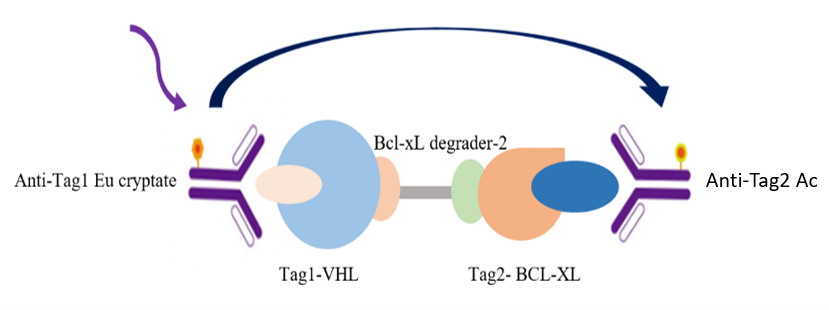
Research on BCL-xL/VHL PROTAC Degraders Based on TR-FRET Technology in Antitumor Therapy
2026-04-16BCL-xL is an important anti-apoptotic protein in the BCL-2 family, overexpressed in various cancer cells, and is a well-established therapeutic target for anti-tumor effects.
View details
- Cancer
- BCL-xL/VHL
- Cancer Therapy
- TR-FRET Technology

Study of GSPT1 Degraders Based on TR-FRET Technology in Neuroblastoma
2026-04-15Targeted protein degradation is a rapidly evolving therapeutic modality that works by harnessing intracellular degradation pathways to eliminate disease-causing proteins. The fundamental principle involves redirecting E3 ligases to ubiquitinate and degrade target proteins that would not normally be recognized or bound.
View details
- Cancer
- TR-FRET Technology
- GSPT1
- Neuroblastoma
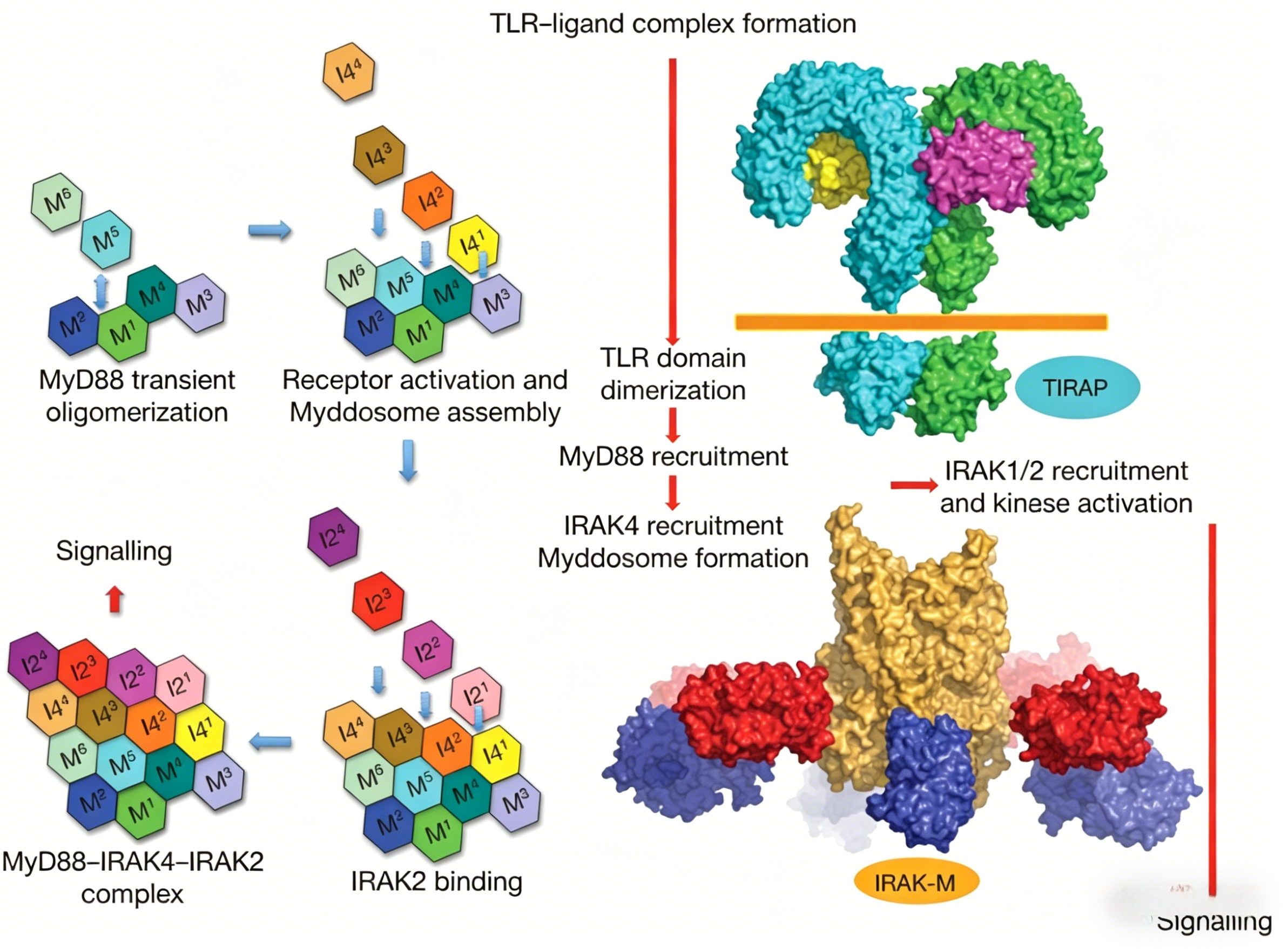
Research on IRAK4-Targeted PROTAC Degrader Screening Kit Based on TR-FRET Technology
2026-04-15IRAK4 is a key adaptor molecule in the Toll-like receptor and IL-1 receptor signaling pathways. TLR and IL-1R share conserved TIR domains and activate similar signaling pathways.
View details
- Immunity/Inflamma
- TR-FRET Technology
- Inflammatory Diseases
- Tumor Immunity

Application of TR-FRET in the Screening of KRAS G12V-Targeting PROTACs
2026-04-14KRAS, a core member of the small GTPase family, loses its endogenous GTP hydrolysis activity due to the G12V mutation, causing the protein to remain locked in an activated conformation and thereby driving constitutive activation of downstream signaling pathways.
View details
- Cancer
- KRAS [G12V]/CRBN
- Signaling Pathway
- TR-FRET Technology
- 1
- 2
- 3

Link:





©2021-2026 all rights reserved UA Biotechnology Co.,Ltd.
Privacy Policy 
网站备案号 浙ICP备2022019033号-2 浙公网安备33010202004867号
 Business license (three certificates in one)
 Tel:+86-25-56221161
E-mail:order@ua-bio.com
All products sold on this website shall not be used for clinical diagnosis or treatment of humans or animals, and shall only be used for non-medical purposes such as industrial or scientific research.
