Technical Articles
immunity
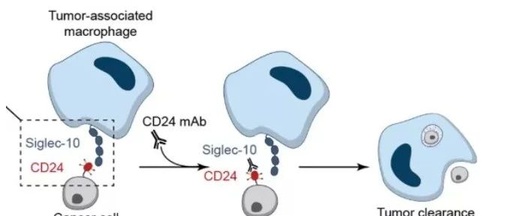
Beyond CD47: The Next Cancer Immunotherapy Star Target - CD24 Emerges
 2025-09-05
CD24 is another important "don't eat me" signaling protein. CD24 (differentiation cluster 24) is a highly glycosylated membrane protein
View details
- Immunity/Inflamma
- CD47
- Cancer
- immunity
- CD24
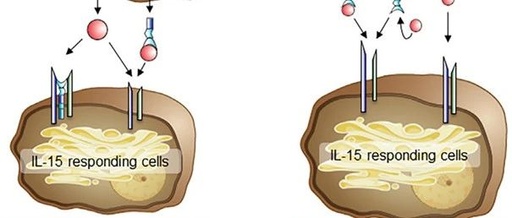
Exploring CD215 (IL-15R α): a key receptor for immune regulation
2025-09-01CD215, Also known as the interleukin-15 receptor alpha subunit (IL-15R alpha), it is a specific component of the IL-15 receptor and belongs to the type I cytokine receptor family. Its structural features include an extracellular domain (capable of binding IL-15 with high affinity), a transmembrane region, and a shorter intracellular tail.
View details
- Immunity/Inflamma
- CD215
- IL-15Rα
- immunity
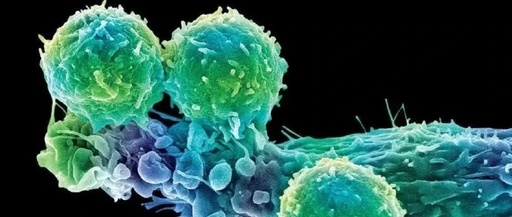
Unveiling Siglec-2: A New Immune Checkpoint in the Field of Cancer Treatment
2025-08-28Siglec-2 (also known as CD22) is a member of the sialic acid binding immunoglobulin like lectin (Siglec) receptor family, primarily expressed on the surface of B cells. As an inhibitory receptor, it regulates immune response by recognizing sialylated polysaccharides on the cell surface.
View details
- Cancer
- Siglec-2
- Cancer
- immunity
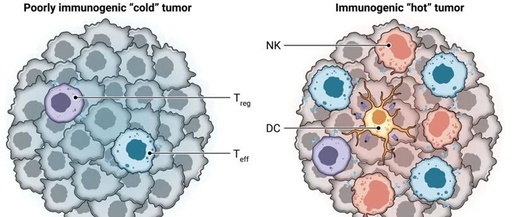
Comprehensive Analysis of IL-2: The 'Double Angel' in the Immune System
2025-08-28IL-2 (interleukin-2) is a pleiotropic cytokine, originally known as "T cell growth factor", mainly secreted by CD4 ⁺ T cells after activation by T cell receptor (TCR) and CD28 co stimulation.
View details
- Immunity/Inflamma
- IL-2
- immunity

The role of GM-CSF in immune, inflammatory, and therapeutic applications
2025-08-27Granulocyte macrophage colony-stimulating factor (GM-CSF) is a glycoprotein initially identified as a hematopoietic growth factor that promotes the differentiation of bone marrow progenitor cells into granulocytes and macrophages. With the deepening of research, it has been found that its biological function goes far beyond hematopoietic function.
View details
- Immunity/Inflamma
- GM-CSF
- Immunity
- Inflammation
Exploring Non Classical Immune Recognition: The New Frontier of MHC Ib Tetramer Technology
2025-08-25MHC-Ib molecules belong to non classical MHC class I proteins, including subtypes such as HLA-E, HLA-G, MR1, etc. Compared with highly polymorphic classical MHC-Ia (such as HLA-A, B, C), their polymorphism is lower and their expression patterns are more specific.
View details
- Immunity/Inflamma
- Immunity
- MHC Ib tetramer
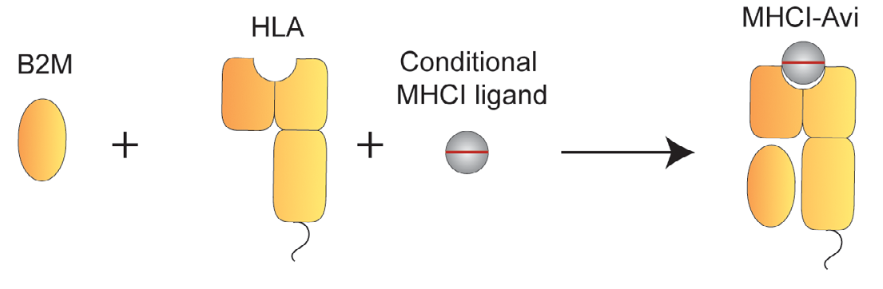
MHC antigen peptide oligomerization technology: unlocking new dimensions of T cell immune research
2025-08-22MHC antigen peptide oligomerization technology is a breakthrough tool in modern immunology research. How can it help researchers accurately identify and track antigen-specific T cells? The core of this technology is to utilize the complex formed by the binding of major histocompatibility complex (MHC) molecules with specific antigen peptides, and then enhance the detection sensitivity through polymerization.
View details
- Cell Biology
- MHC antigen peptide oligomers
- T cells
- immunity
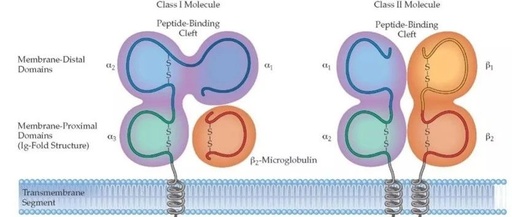
Immunological core mechanism: How MHC peptide complexes achieve antigen presentation and T cell immune response?
2025-08-22The major histocompatibility complex (MHC) was initially discovered for its role in organ transplant rejection, but with the development of immunology, we gradually realize that its more fundamental function is to participate in antigen presentation. MHC molecules can be divided into class I, class II, and class III, among which class I and class II glycoproteins form complexes on the cell surface, which can bind to antigenic peptides and present them to T cells, thereby initiating specific immune responses. This mechanism not only helps distinguish between "self" and "non self", but also plays a key role in infections, tumors, and autoimmune diseases.
View details
- Immunity/Inflamma
- Immunity
- MHC peptide complexes
- antigen presentation
- T cell immune response
New perspective on immunotherapy for ovarian cancer: How MHC tetramer technology can promote research on specific T cell responses?
2025-08-22Ovarian cancer, as the most lethal type of gynecological malignancy, is mostly diagnosed in the advanced stage and is prone to developing chemotherapy resistance. In recent years, immunotherapy has brought new hope to patients with advanced ovarian cancer, especially T cell-based adoptive immunotherapy and vaccine strategies. However, how to accurately identify and amplify T cells that can specifically recognize ovarian cancer-related antigens has become a key scientific issue in this field. MHC tetramer technology, as the "gold standard" for antigen-specific T cell detection, is gradually becoming an important tool for exploring the immune response mechanism of ovarian cancer and optimizing immunotherapy regimens.
View details
- Cancer
- Ovarian cancer
- MHC tetramer technology
- specific T cells
- immunity

HPV MHC Tetramers: A Precise Monitoring Tool for Immunotherapy of Cervical Cancer
2025-08-21Cervical cancer is a common malignant tumor of the female reproductive system worldwide, with 90% of cases associated with persistent high-risk HPV infection, HPV16、 Type 18 has the highest degree of association. It ranks fourth among malignant tumors in women worldwide and second among women aged 15-44; There are 530000 new cases globally annually, with approximately 130000 cases in China.
View details
- Cancer
- HPV MHC tetramer
- cervical cancer
- immunity
- 1
- 2
- 3

Link:





©2021-2026 all rights reserved UNIV Biotechnology Co.,Ltd.
Privacy Policy
网站备案号 苏ICP备2025207586号-2 浙公网安备33010202004867号
 Business license (three certificates in one)
 Tel:+86-25-56221161
E-mail:order@ua-bio.com
All products sold on this website shall not be used for clinical diagnosis or treatment of humans or animals, and shall only be used for non-medical purposes such as industrial or scientific research.