




Technical Articles
target selection
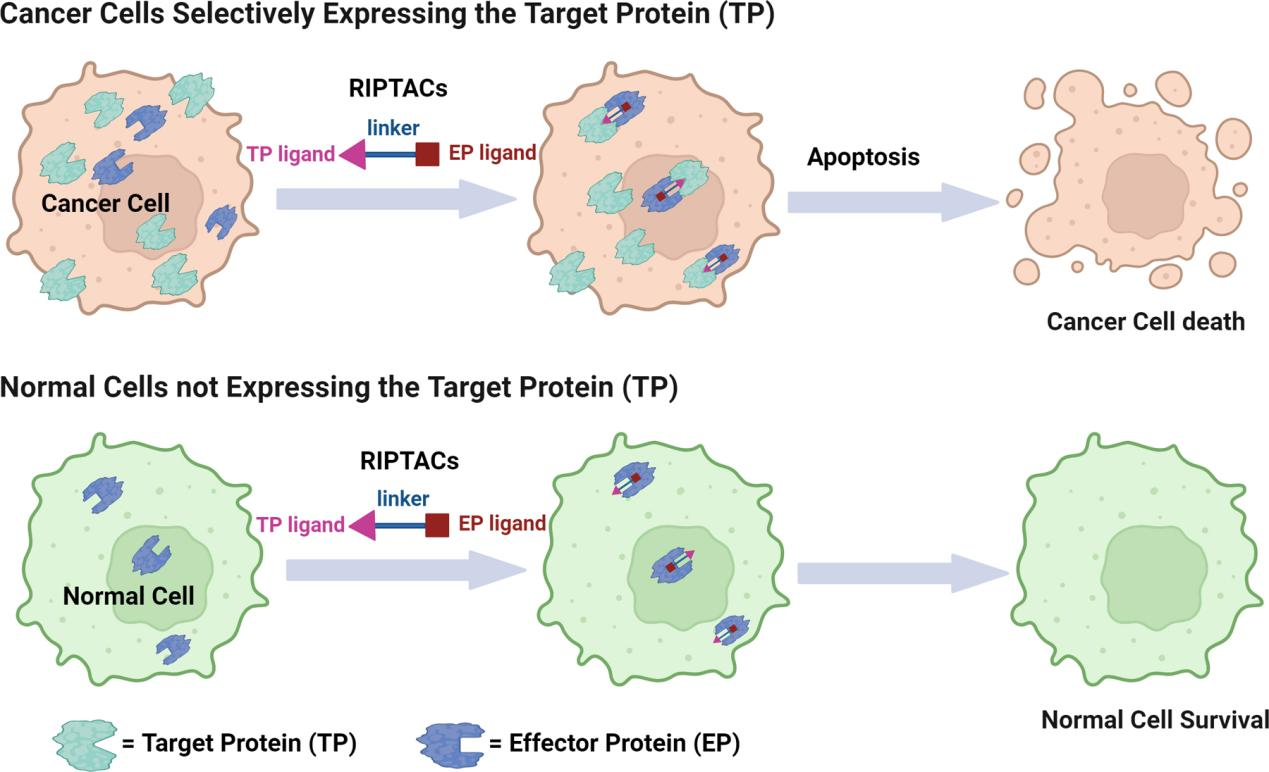
RIPTAC's target selection logic and complex formation thermodynamics—molecular design strategies beyond "undruggable"
 2026-06-22
The uniqueness of RIPTAC technology lies not only in its "hold and kill" mechanism of action but also in the flexibility and breadth of its target selection. Traditional small-molecule inhibitors require targets to have well-defined active pockets and druggable chemical space; PROTACs demand that target proteins be recognized and degraded by the ubiquitin-proteasome system; whereas RIPTAC's sole requirement for a target protein is—its specific overexpression in tumor cells. This extremely low target threshold enables RIPTAC to potentially target a vast number of proteins previously deemed "undruggable." This article dissects the core scientific challenges in RIPTAC molecular design from two dimensions: target selection logic and the thermodynamics of ternary complex formation.
View details
- Cancer
- RIPTAC
- target selection
- ternary complex
- positive cooperativity
- high expression of target protein
- effector protein
- 1

Link:





©2021-2026 all rights reserved UA Biotechnology Co.,Ltd.
Privacy Policy 
网站备案号 浙ICP备2022019033号-2 浙公网安备33010202004867号
 Business license (three certificates in one)
 Tel:+86-25-56221161
E-mail:order@ua-bio.com
All products sold on this website shall not be used for clinical diagnosis or treatment of humans or animals, and shall only be used for non-medical purposes such as industrial or scientific research.
