




Structural characteristics, signaling pathways, and immunoregulatory functions of IL-12 protein


Cytokines are a broad category of soluble proteins, including monokines, glycoproteins, lymphokines, interferons, and interleukins. These secreted proteins act on targets through various immunological pathways such as apoptosis, growth, development, and differentiation, regulated by a series of control and negative feedback mechanisms.
- Recent Advances
- Product Information
I. Overview of Interleukin Family and Cytokines
Cytokines are a broad category of soluble proteins including monokines, glycoproteins, lymphokines, interferons, and interleukins. These secretory proteins act on target sites through various immunological pathways such as apoptosis, growth, development, and differentiation, regulated by a series of control and negative feedback mechanisms. When infections or diseases invade a host, the immune system begins secreting cytokines as the body's response to foreign invasion and stress. Interleukins exhibit diverse structures and functions, playing crucial roles in regulating the immune system's response to infections, autoimmune diseases, and tumors. Among the numerous interleukins discovered, members of the IL-12 family show distinct differences from others due to their unique dimeric structure.
II. Molecular Structure of IL-12 Protein
IL-12 protein is one of the most important factors regulating the immune system, with a molecular weight of approximately 70 kilodaltons, producing strong effector responses against pathogenic microorganisms. Structurally, IL-12 protein consists of two subunits: the α subunit and the β subunit. The α subunit has a helical structure similar to IL-6 protein, while the β subunit resembles the IL-6 receptor. Each subunit is encoded by its respective chromosome and linked via covalent bonds. B cells, dendritic cells, and macrophages are the primary sources of IL-12 protein. This unique heterodimeric structure endows IL-12 protein with special biological characteristics that distinguish it from other interleukins, giving it a pivotal position in the immune regulatory network.
III. IL-12 Protein Family Members and Their Functions
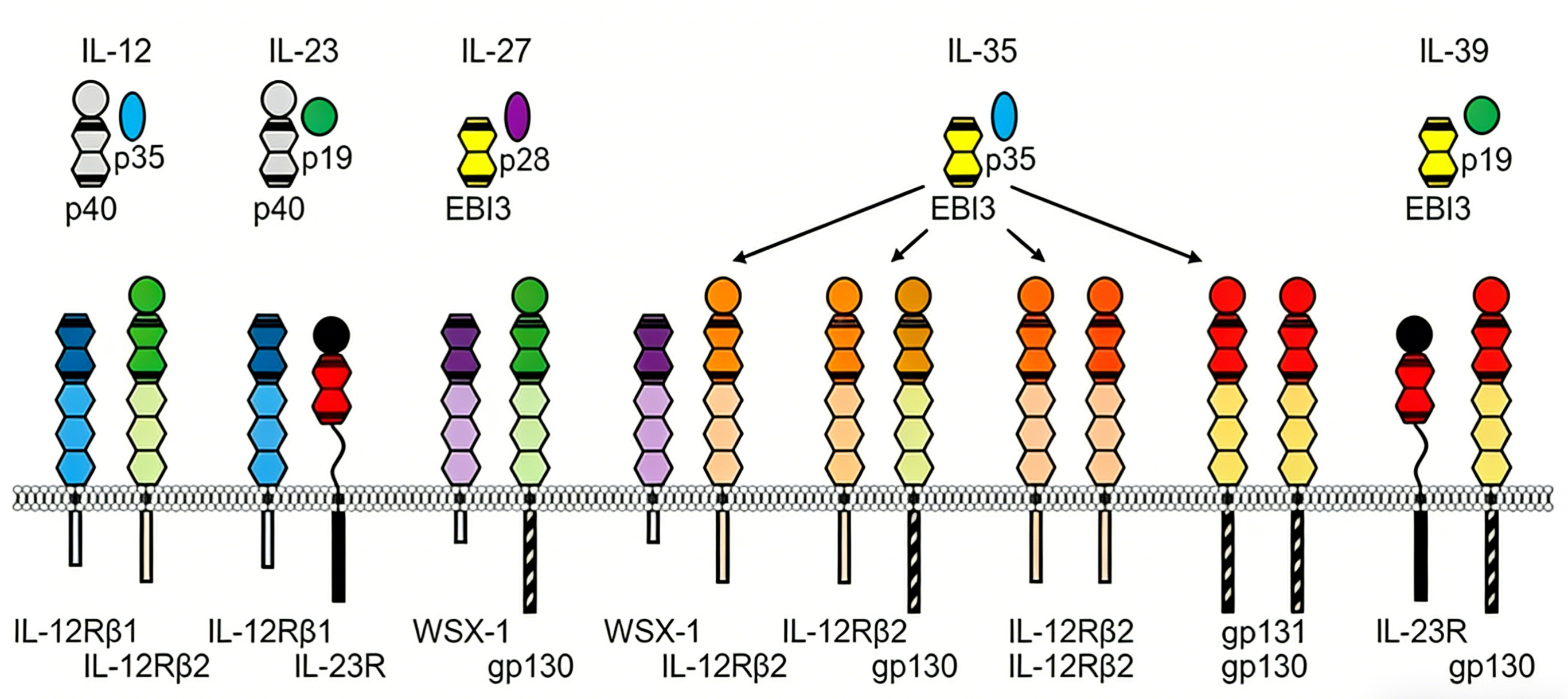
The IL-12 protein family comprises four members: IL-12, IL-23, IL-27, and IL-35, which collectively regulate immune system functions to combat infectious diseases, autoimmune disorders, and tumors. Among them, IL-27, IL-23, and IL-12 can activate antigen-presenting cells, generating high concentrations of IL-35 through T cell activation and regulation, while B cells produce low concentrations of IL-35. These four family members can convert immature CD4-positive T cells into memory T cells and helper T cells, thereby linking innate defense systems with adaptive immunity. IL-12 and IL-23 are primary stimulators of memory T cell proliferation. Naive helper T cells can differentiate into four cell types: Th1 cells, Th2 cells, Th17 cells, and regulatory T cells, with IL-12 and IL-23 being essential for the activation of Th1 and Th17 cells.
IV. Gene Expression Regulation of IL-12 Protein
The secretion, degradation, activation, and termination of cytokines, including the IL-12 family, are regulated by transcription factors, post-transcriptional factors, translation, and post-translational factors. Transcriptional regulation initiates mRNA molecules that encode immune proteins with different functions. The expression of IL-12 family members begins with DNA transcription into mRNA, followed by translation of mRNA information into various cytokines that regulate immune responses. Recent studies indicate that the initiation and termination of immune responses, including the expression of anti-inflammatory and pro-inflammatory factors, are also finely controlled by translational and post-translational regulation. This multi-level regulatory mechanism ensures that IL-12 protein exerts its biological functions at appropriate times and intensities.
V. Structure and Composition of IL-12 Protein Receptors
IL-12 protein activates the immune system by binding to its receptors. The IL-12 receptor consists of two subunits, β1 and β2, each located on different chromosomes. The β1 subunit binds to the p40 subunit of IL-12 protein, while the β2 subunit binds to the p35 subunit, with each receptor subunit having distinct biological functions. The intracellular region of the IL-12 receptor β1 subunit lacks three tyrosine residues and binds to tyrosine kinase 2. Due to the absence of tyrosine residues, the β1 subunit cannot directly participate in signal transduction and primarily serves a ligand-binding role. This structural characteristic determines the specific mode of IL-12 receptor signal transduction.
VI. Signal Transduction Pathways of IL-12 Protein
The IL-12 receptor β2 subunit binds to JAK2 kinase and conducts signals through its three tyrosine residues, which are optimal binding sites for signal transducer and activator of transcription 4 (STAT4). Upon binding of IL-12 protein to its receptor, the JAK-STAT signaling pathway is activated. During signal transduction, STAT molecules are phosphorylated and dimerize before entering the nucleus to bind DNA. IL-12 protein is primarily associated with signaling molecules such as STAT1, STAT3, STAT4, STAT5a, and STAT5b, with STAT4 being the most critical. Activation of STAT4 leads to the production of interferon-γ, a key step in IL-12-mediated Th1-type immune responses. The JAK kinase family includes four members—JAK1, JAK2, JAK3, and TYK2—which play synergistic roles in the IL-12 signaling pathway.
VII. Immunoregulatory Significance of IL-12 Protein
As a key molecule linking innate and adaptive immunity, IL-12 protein plays a central role in defending against pathogen infections, antitumor immunity, and autoimmune regulation. This protein enhances cell-mediated immune responses by promoting Th1 cell differentiation and interferon-γ production. The four members of the IL-12 protein family share structural and functional similarities while exhibiting differences, collectively forming a complex immune regulatory network. In-depth research on the structure, function, and signaling pathways of IL-12 protein helps elucidate its mechanisms in infectious diseases, autoimmune disorders, and tumor immunity. Future studies will further explore the synergistic and antagonistic relationships among IL-12 protein family members and their dynamic regulatory patterns during different stages of immune responses, providing theoretical foundations for research on immune-related diseases.
VIII. Which Manufacturers Provide IL-12 Protein?
Nanjing UA-Bio Technology Co., Ltd. (UA-Bio) has independently developed "IL-12 Protein, Human", a high-quality recombinant protein reagent specifically designed for Th1-type immune response, antitumor immunity, and infection immunity research. This protein is human interleukin-12 (IL-12), a heterodimeric cytokine composed of p35 and p40 subunits that efficiently activates the IL-12 receptor signaling pathway, promoting NK cell and T cell activation, proliferation, and IFN-γ production. It provides a stable and reliable standardized tool for tumor immunotherapy, infection immunity mechanism exploration, and vaccine development.
| Core Product Advantages |
|---|
| High Purity and Complete Biological Activity: The product utilizes internationally advanced recombinant expression systems and highly standardized purification processes, validated through multi-dimensional quality control to ensure >95% purity, correct natural heterodimeric conformation, and full biological functionality. The protein effectively binds to the human IL-12 receptor complex (IL-12Rβ1/IL-12Rβ2), authentically simulating IL-12-mediated Th1 cell differentiation, NK cell activation, and IFN-γ induction signals under physiological conditions. |
| Exceptional Batch-to-Batch Consistency and Stability: Strict management from gene construction, protein expression to purification quality control, combined with a comprehensive release testing system, ensures each batch of product exhibits stable biological activity, consistent purity, and excellent long-term stability. This provides solid and reliable quality assurance for long-term and continuous immunological and tumor research. |
| Ideal Tool for Multiple Applications: This protein performs excellently in various application systems, including NK cell activation and expansion, Th1 cell differentiation induction, cytotoxic T lymphocyte (CTL) function enhancement, dendritic cell maturation regulation, and signaling pathway analysis. It is widely applicable to tumor immunotherapy research, infection immunity mechanism exploration, autoimmune disease model construction, and drug activity evaluation. |
| Complete Solutions and Professional Support: We provide thoroughly validated standard experimental protocols, typical biological activity data, and detailed product analysis certificates to help you quickly establish stable and reproducible experimental workflows. Nanjing UA-Bio's professional technical team offers comprehensive consultation and support for research design, experimental optimization, and data analysis. |
Nanjing UA-Bio Technology Co., Ltd. is committed to providing cutting-edge, high-quality core reagents and tools for immunology, cell therapy, and innovative drug development. For detailed technical parameters, validation data, or specific application inquiries regarding "IL-12 Protein, Human" (Catalog No.: UA040200), please feel free to contact us.
This article is reviewed and published by the technical expert team of UA
Disclaimer: This article partially utilizes artificial intelligence assistance in its creation. If any content involves copyright or intellectual property issues, please let us know and we promise to verify and remove it as soon as possible.
Purchase recombinant protein, choose Nanjing UA-Bio
UA protein focuses on providing various protein reagents, raw materials, and services required for drug research and development, cell therapy, gene therapy, and basic scientific research, including drug target proteins, immune checkpoint proteins, cytokines, tool enzymes, customized protein expression, and full-length transmembrane protein development. Youai is committed to providing customers with high-quality products and professional services, and building a High-tech Biological Enterprise with International Competitiveness.







 Business license (three certificates in one)