




Structural Characteristics and Biological Functions of Klotho β Protein


The Klotho gene was discovered by Japanese researchers while studying spontaneous hypertension, and it is closely related to the aging process. The researchers named the gene after the Greek goddess of fate, Klotho.
- Recent Advances
- Product Information
1. Discovery and Naming of the Klotho Gene
The Klotho gene was discovered by Japanese researchers while studying spontaneous hypertension. This gene is closely related to the aging process and was named after the Greek fate goddess Klotho. During life development and health maintenance, the Klotho gene exerts multiple biological functions such as anti-aging, kidney protection, cardiovascular protection, anti-tumor effects, and metabolic regulation by modulating ion channels, Wnt signaling pathways, and the expression of target genes. The discovery of the Klotho gene provides new insights into understanding aging mechanisms and metabolic regulation.
2. Classification and Structural Features of the Klotho Protein Family
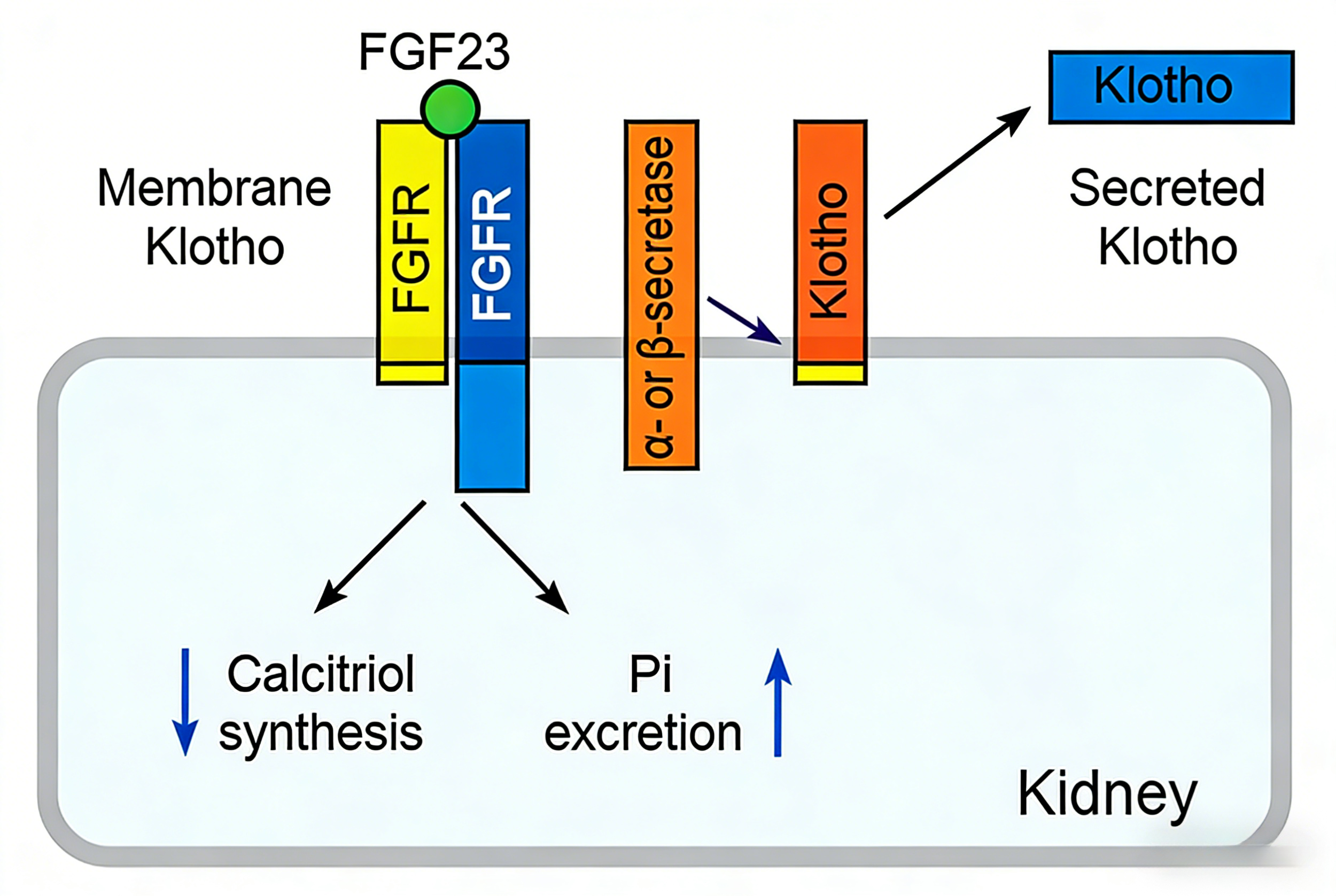
Based on gene sequence and structural differences, the Klotho protein family is divided into three members: α-Klotho, β-Klotho, and γ-Klotho. The Klotho protein is a single-pass transmembrane protein composed of a large extracellular domain, a transmembrane domain, and a short intracellular domain. It exists in two forms: membrane-bound Klotho and secreted Klotho. Membrane-bound Klotho acts as a hormone receptor, regulating phosphate secretion and vitamin D synthesis in the kidneys. Secreted Klotho functions as a humoral factor, participating in the regulation of various physiological functions, including the inhibition of growth factor signaling and the modulation of ion channels and transporters. Klotho β protein is an important member of this family, primarily distributed in the liver and white adipose tissue.
3. Synergistic Role of Klotho β Protein in FGF Signaling Pathways
FGF19, FGF21, and FGF23 are special members of the FGF superfamily with endocrine functions. The signaling of these FGF factors requires the synergistic action of FGF receptors and membrane-bound Klotho proteins. Klotho β protein plays a critical role in the FGF19 and FGF21 signaling pathways. Specifically, the FGF19 signaling pathway requires the participation of β-Klotho and γ-Klotho, while the FGF21 signaling pathway specifically depends on β-Klotho. This synergistic mechanism ensures the specific binding of FGF ligands to receptors and the precise activation of signaling pathways. As a co-receptor, Klotho β protein significantly enhances the binding affinity of FGF21 to its receptor and is indispensable for FGF21 signal transduction. Tissues lacking Klotho β protein do not respond to FGF21 signaling, further confirming its central role in the FGF21 signaling pathway.
4. Role of Klotho β Protein in Metabolic Regulation
FGF21 is an important potential target for metabolic diseases such as obesity and type 2 diabetes. This factor acts on adipose tissue and the liver to regulate energy metabolism, glucose homeostasis, and insulin sensitivity. Studies have shown that FGF21 can promote glucose uptake, increase energy expenditure, improve insulin resistance, and reduce blood lipid levels. However, recombinant FGF21 protein has a short half-life and is rapidly degraded in the circulatory system, losing its activity, which severely limits its clinical application. Klotho β protein, as a co-receptor in the FGF21 signaling pathway, plays a central role in metabolic regulation. Research indicates that the expression level of Klotho β protein directly affects the intensity and duration of FGF21 signaling, thereby influencing the body's energy metabolism state. In animal models of obesity and diabetes, the expression level of Klotho β protein is typically downregulated, leading to weakened FGF21 signaling, which may be a significant factor in the development of metabolic disorders.
5. Intervention Strategies Targeting the Klotho β Signaling Pathway
Given the important role of the FGF21-Klotho β signaling pathway in metabolic regulation, intervention strategies targeting this pathway have attracted widespread attention. Due to the short half-life and poor stability of recombinant FGF21 protein, developing molecules with longer-lasting effects has become a research focus. Recombinant monoclonal antibody strategies offer an alternative approach. Antagonist antibodies targeting FGFR1c have shown weight-reducing effects in animal experiments, providing new insights for obesity treatment. Another strategy involves developing antibodies that can bind to the Klotho β protein and FGFR1c complex, stabilizing or mimicking FGF21 signaling to exert metabolic regulatory effects. These antibodies have a longer half-life and better stability, enabling sustained activation of the FGF21 signaling pathway and demonstrating potential value in metabolic disease treatment research. Additionally, small-molecule agonists and gene therapy strategies are also under exploration.
6. Research Significance and Future Perspectives of Klotho β Protein
As an important member of the Klotho family, Klotho β protein plays a central role in FGF signaling and metabolic regulation. By synergizing with FGF receptors, this protein mediates the biological effects of FGF19 and FGF21, participating in the regulation of energy metabolism, glucose homeostasis, and insulin sensitivity. Research on the structure, distribution, and function of Klotho β protein contributes to a deeper understanding of the pathogenesis of metabolic diseases. The discovery of the FGF21-Klotho β signaling pathway provides new targets for metabolic disease intervention. Future research will further elucidate the regulatory mechanisms of Klotho β protein expression under different metabolic conditions and the molecular details of its interaction with FGF ligands and receptors. Intervention strategies based on Klotho β protein, such as monoclonal antibodies and small-molecule agonists targeting this protein, show broad application potential in metabolic disease treatment research. As our understanding of the biological functions of Klotho β protein continues to deepen, its value in metabolic regulation and disease intervention will continue to expand.
7. Which Companies Provide Klotho β Protein?
Nanjing UA-Bio Technology Co., Ltd. (UA-Bio) has independently developed "Klotho β Protein, Human," a high-quality recombinant protein reagent specifically designed for research on metabolic regulation, bile acid homeostasis, and the FGF19 signaling pathway. This protein is human-derived Klotho β protein, serving as a key co-receptor for FGF19 and FGF21 signal transduction. It synergizes with receptors such as FGFR1c and FGFR4 to participate in bile acid metabolism, energy balance, and glucose-lipid metabolism regulation. This product provides a stable and reliable standardized tool for research in metabolic diseases, non-alcoholic steatohepatitis (NASH) mechanism exploration, and drug development.
| Core Product Advantages |
|---|
| High Purity and Intact Biological Activity: The product employs internationally leading recombinant expression systems and highly standardized purification processes, validated through multi-dimensional quality control to ensure >95% high purity, correct native conformation, and intact biological function. The protein efficiently synergizes with FGFR receptors to bind FGF19 and FGF21, accurately simulating the physiological state of Klotho β-mediated bile acid metabolism regulation, glucose-lipid homeostasis maintenance, and energy balance signaling. |
| Excellent Batch-to-Batch Consistency and Stability: Strict management is implemented throughout gene construction, protein expression, purification, and quality control, combined with a comprehensive release testing system to ensure each batch of product has stable biological activity, consistent purity, and excellent long-term stability. This provides a solid and reliable quality guarantee for long-term and continuous metabolic regulation research. |
| Ideal Tool for Multiple Applications: This protein performs excellently in various application systems, including FGF19/FGF21 signaling pathway research, hepatocyte metabolic regulation analysis, bile acid homeostasis studies, NASH model construction, and drug activity evaluation. It is widely applicable to metabolic disease mechanism exploration, non-alcoholic steatohepatitis (NASH) drug screening, diabetes research, and energy metabolism analysis, among other needs. |
| Complete Solutions and Professional Support: We provide fully validated standard experimental protocols, typical biological activity data, and detailed product analysis certificates to help you quickly establish stable and reproducible experimental processes. The Nanjing UA-Bio professional technical team offers comprehensive technical consultation and support for your research design, experimental optimization, and data analysis. |
Nanjing UA-Bio Technology Co., Ltd. is committed to providing cutting-edge, high-quality core reagents and tools for immunology, cell therapy, and innovative drug development. For detailed technical parameters, validation data, or specific application inquiries regarding "Klotho β Protein, Human" (Catalog No.: UA040050), please feel free to contact us.
This article is reviewed and published by the technical expert team of UA
Disclaimer: This article partially utilizes artificial intelligence assistance in its creation. If any content involves copyright or intellectual property issues, please let us know and we promise to verify and remove it as soon as possible.
Purchase recombinant protein, choose Nanjing UA-Bio
UA protein focuses on providing various protein reagents, raw materials, and services required for drug research and development, cell therapy, gene therapy, and basic scientific research, including drug target proteins, immune checkpoint proteins, cytokines, tool enzymes, customized protein expression, and full-length transmembrane protein development. Youai is committed to providing customers with high-quality products and professional services, and building a High-tech Biological Enterprise with International Competitiveness.







 Business license (three certificates in one)