





IL-2 is a 15 kDa four-α-helix cytokine primarily secreted by activated T cells as a soluble molecule. IL-2 binds to the IL-2 receptor subunit CD25 with a dissociation constant of approximately 10⁻⁸ M. Subsequently, the IL-2-CD25 dimer recruits CD122, followed by the common cytokine receptor γ-chain, forming a quaternary IL-2-IL-2R complex with a dissociation constant of approximately 10⁻¹¹ M. In cells lacking CD25 expression, IL-2 can directly bind to the dimeric IL-2R with a dissociation constant of approximately 10⁻⁹ M. Additionally, IL-2 derived from T cells or dendritic cells can bind to CD25 molecules expressed on dendritic cells and then be trans-presented to adjacent T cells expressing CD122 and γc. Upon binding to CD122 and γc, IL-2 induces the transcription of target genes such as Cd25 through various signaling pathways, primarily STAT5, thereby influencing T cell proliferation and differentiation. The TR-FRET IL-2/IL-2R Kit can be used to detect the binding activity of IL-2 to its receptors, providing a technical tool for studying this signaling axis.
High-dose IL-2 promotes the proliferation of effector T cells, including CD8-positive T cells and natural killer cells, which express CD122 and γc, driving anti-cancer activity. In contrast, low-dose IL-2 selectively activates regulatory T cells, which express CD25, CD122, and γc, potentially suppressing anti-cancer immune responses and causing other toxic side effects. Activated T cells continuously consume IL-2, resulting in a very short half-life, which severely limits its application in immunotherapy. Therefore, most research strategies focus on altering IL-2's binding affinity to the IL-2 receptor α subunit to achieve biased activation of specific T cell populations. TR-FRET technology can be applied to quantitatively assess the binding properties of different IL-2 variants to receptor subunits, providing a high-throughput analytical method for screening mutant proteins with selective activation capabilities.
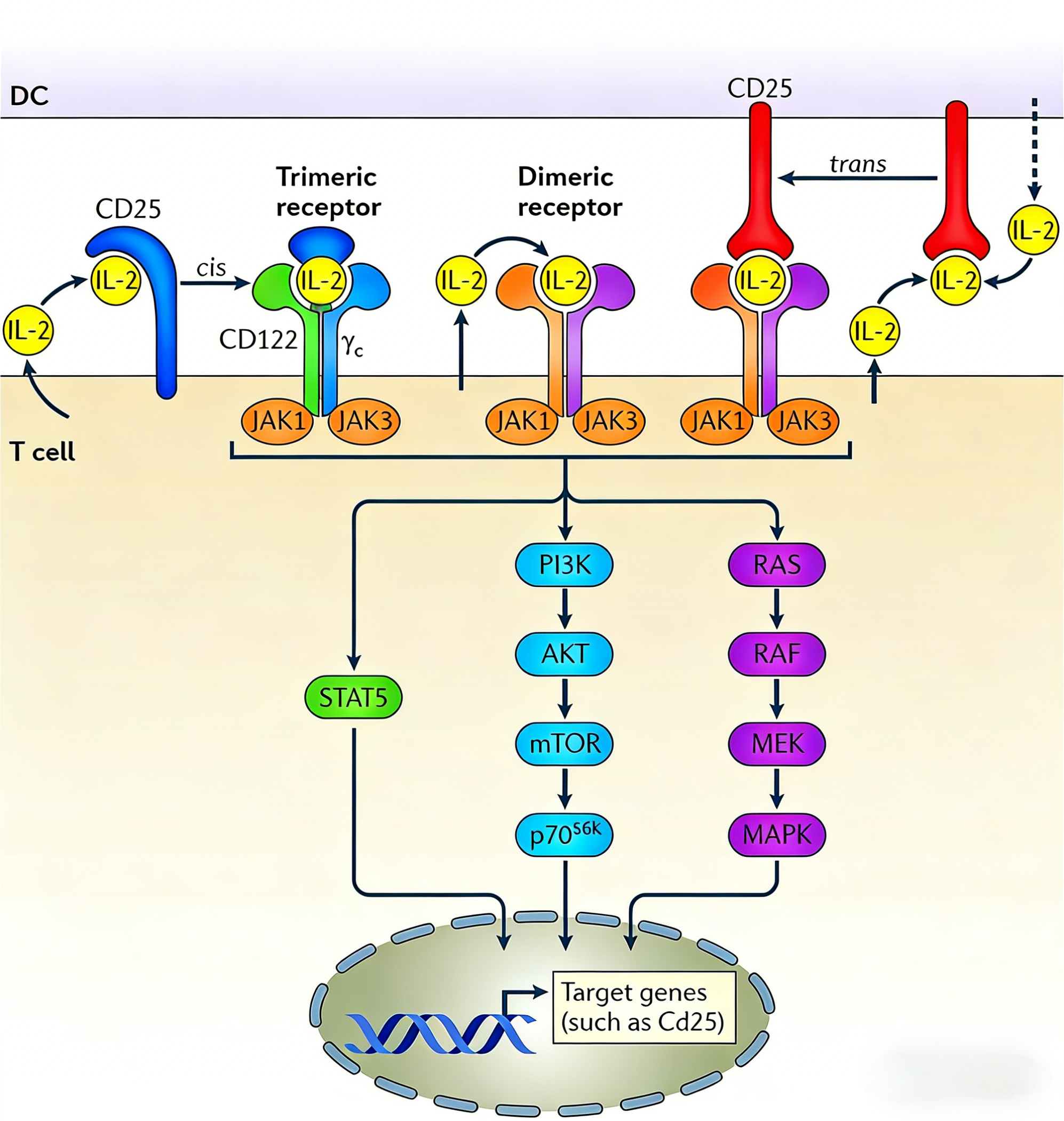
Researchers have developed a lipid-delivered mRNA encoding a human IL-2 mutant protein with an extended half-life. This mutant protein enhances binding to CD25, selectively activating and expanding regulatory T cells in mice and non-human primates while reducing disease severity in acute graft-versus-host disease and experimental autoimmune encephalomyelitis mouse models. In vitro cell experiments, the research team compared the mutant protein's ability to induce STAT5 phosphorylation in peripheral blood mononuclear cells with that of the wild-type protein. After 30 minutes of incubation, all T cells responded to the wild-type protein, exhibiting STAT5 phosphorylation, whereas only regulatory T cells responded to the mutant protein. In kinetic experiments, wild-type protein stimulation led to rapid STAT5 phosphorylation in all examined T cell subsets, peaking at 10 minutes and declining slowly after 30 minutes. In contrast, the mutant protein induced STAT5 phosphorylation only in regulatory T cells. These data demonstrate the mutant protein's selectivity for regulatory T cells in vitro. The TR-FRET IL-2/IL-2R Kit can quantitatively evaluate the binding affinity of mutant proteins to different receptor subunits, providing a molecular basis for understanding their selective mechanisms.
To support IL-2-related drug development, researchers constructed STAT5-Luc2 reporter cell lines based on Ba/F3 tool cells. STAT5 is a key transcription factor in the IL-2 signaling pathway, and its phosphorylation and nuclear translocation can drive reporter gene expression. Further, cell lines overexpressing IL-2 receptor subunits, including combinations of CD25, CD122, and γc, were established. These cell models can be used to assess the biological activity of IL-2 and its variants and to detect compounds that agonize or inhibit IL-2 signaling. Pharmacological validation with IL-2 treatment showed that the cell model exhibits concentration-dependent responses to IL-2, making it suitable for high-throughput drug screening. Combining this cell model with the TR-FRET IL-2/IL-2R Kit allows comprehensive evaluation of IL-2-related drug activity at both cellular functional and molecular binding levels.
TR-FRET technology is homogeneous, wash-free, highly sensitive, and high-throughput, making it suitable for the quantitative analysis of interactions between IL-2 and IL-2 receptors. In IL-2 drug screening studies, the TR-FRET IL-2/IL-2R Kit can be used to detect the binding affinity of IL-2 variants to receptor subunits and evaluate the selectivity of candidate molecules for CD25, CD122, and γc. This technology can also screen for compounds that block or enhance IL-2-receptor binding, identifying lead molecules with IL-2 signaling modulation functions. Compared to reporter gene cell models, TR-FRET technology provides molecular-level binding information, complementing each other to form a complete IL-2 drug screening system.
Reporter gene cell models and TR-FRET technology can be synergistically applied in IL-2 drug screening. Cell models reflect the overall functional output of the IL-2 signaling pathway, including phenotypic indicators such as STAT5 phosphorylation, reporter gene expression, and cell proliferation. TR-FRET technology directly detects intermolecular interactions between IL-2 and receptor subunits, providing quantitative data on binding affinity, kinetics, and selectivity. Combining these two methods allows comprehensive assessment of candidate molecule activity and specificity. When screening for IL-2 variants with selective activation of regulatory T cells, TR-FRET technology can detect the degree of enhanced binding to CD25, while cell models can validate selective activation of regulatory T cell signaling. This multi-tiered screening strategy improves the efficiency and accuracy of candidate molecule selection.
Nanjing UA-Bio Technology Co., Ltd. (UA-Bio) has independently developed the "UniOne® TR-FRET Human IL2/IL2R Binding Kit" (Catalog No.: UA086010), a high-performance analysis platform specifically designed for studying the interaction between interleukin-2 (IL-2) and its specific receptor complex. This kit is based on time-resolved fluorescence resonance energy transfer (TR-FRET) technology and aims to accurately and efficiently evaluate the binding activity between human IL-2 and its receptor complex composed of IL-2Rα (CD25), IL-2Rβ (CD122), and γc (CD132). It provides stable and reliable standardized solutions for research areas such as immunomodulation, autoimmune disease drug screening, and cell therapy development.
| Product Name | Catalog No. | Core Advantages | Primary Application Areas |
|---|---|---|---|
| UniOne® TR-FRET Human IL2/IL2R Binding Kit | UA086010 | High purity/complete biological activity (IL-2 and receptor complex); excellent batch-to-batch consistency; homogeneous TR-FRET wash-free; compatible with automation platforms | Immunomodulation research, autoimmune disease drug screening, anti-IL-2 antibody/antagonist screening, receptor blocker evaluation, competitive binding analysis, biosimilar activity assessment |
| Protein/Kit Custom Development Services | Customized based on requirements | Recombinant protein expression and TR-FRET system optimization platform: covers design, development, and validation processes | Research customization/process development/large-scale production/high-throughput screening system establishment |
✨ Core Product Advantages:
- High Purity and Complete Biological Activity: The kit's core components include high-purity, biologically active human IL-2 protein and its receptor subunits (IL-2Rα/β/γc complex), validated through multi-dimensional quality control. All proteins maintain correct native conformations and complete binding functions, accurately simulating the specific interactions between IL-2 and high/medium/low-affinity receptor complexes under physiological conditions, ensuring experimental data accuracy, reproducibility, and functional relevance.
- Exceptional Batch-to-Batch Consistency and Stability: Leveraging an internationally leading protein expression platform and highly standardized production processes, combined with a stringent quality control release system, the product offers outstanding long-term stability and excellent batch-to-batch consistency, providing solid and reliable quality assurance for long-term, continuous drug screening and mechanistic research.
- Ready-to-Use Flexible Experimental Platform: Based on homogeneous TR-FRET technology, the kit adopts a simple "add-incubate-read" operation mode, eliminating tedious washing steps. Its optimized formulation is compatible with multi-well plate (96/384-well) automation platforms, flexibly applicable to various research needs such as anti-IL-2 antibody/antagonist screening, receptor blocker evaluation, competitive binding experiments, affinity analysis, and biosimilar activity assessment.
- Complete Solutions and Professional Support: We provide fully validated standard experimental protocols, typical dose-response curves, and detailed result interpretation guidelines to help quickly establish stable and reproducible experimental workflows. Nanjing UA-Bio's professional technical team offers comprehensive technical consultation and support for research design, experimental optimization, and data analysis.
Nanjing UA-Bio Technology Co., Ltd. is committed to providing cutting-edge, high-quality core reagents and tools for immunology, cell therapy, and innovative drug development. For detailed technical parameters, validation data, or specific application inquiries regarding the "UniOne® TR-FRET Human IL2/IL2R Binding Kit" (Catalog No.: UA086010), please feel free to contact us.








