





Guanylate cyclase C is an enzyme encoded by the GUCY2C gene in humans, belonging to the family of receptor guanylate cyclases. This enzyme serves as the intestinal receptor for bacterial heat-stable enterotoxins, hence also referred to as the heat-stable enterotoxin receptor. The human GUCY2C gene is located on chromosome 12q12, and its encoded product is a type I transmembrane protein with a molecular weight of approximately 120 kDa. The GUCY2C protein structure primarily consists of five domains: an extracellular N-terminal receptor-binding region, comprising 40% of the protein, which binds specific ligands; a hydrophobic transmembrane region that transmits extracellular signals intracellularly; a cytoplasmic kinase homology region that relays signals from the ligand-bound receptor to the catalytic domain; the catalytic domain; and the C-terminal region. Extensive research has shown that activation of guanylate cyclase C stimulates the production of the intracellular second messenger cyclic guanosine monophosphate (cGMP), playing roles in regulating homeostasis, maintaining intestinal barrier function, and exerting anti-inflammatory activity. PE-labeled GUCY2C Fc and Avi-tagged proteins can be used to quantitatively measure GUCY2C protein expression levels and binding activity, providing technical tools for colorectal cancer research.
GUCY2C modulates homeostatic circuits that are commonly dysregulated during tumorigenesis. The loss of GUCY2C ligands, resulting in silenced receptor signaling, is a prevalent early step in tumorigenesis, leading to genomic instability, metabolic reprogramming, and uncontrolled proliferation. The loss of endogenous GUCY2C-activating ligands during early transformation and in chronically inflamed epithelial cells reveals the mechanistic basis of colorectal cancer risk factors. Studies indicate that GUCY2C is abnormally overexpressed in metastatic colorectal cancer cells and stably expressed in primary colorectal cancer cells. GUCY2C expression exceeds 90% in colorectal cancers across all tumor stages. Strong positive expression of GUCY2C in the peripheral blood of colorectal cancer patients suggests its potential as an early detection marker for postoperative recurrence and metastasis. Thus, GUCY2C may serve as a specific molecular marker for metastatic colorectal cancer.
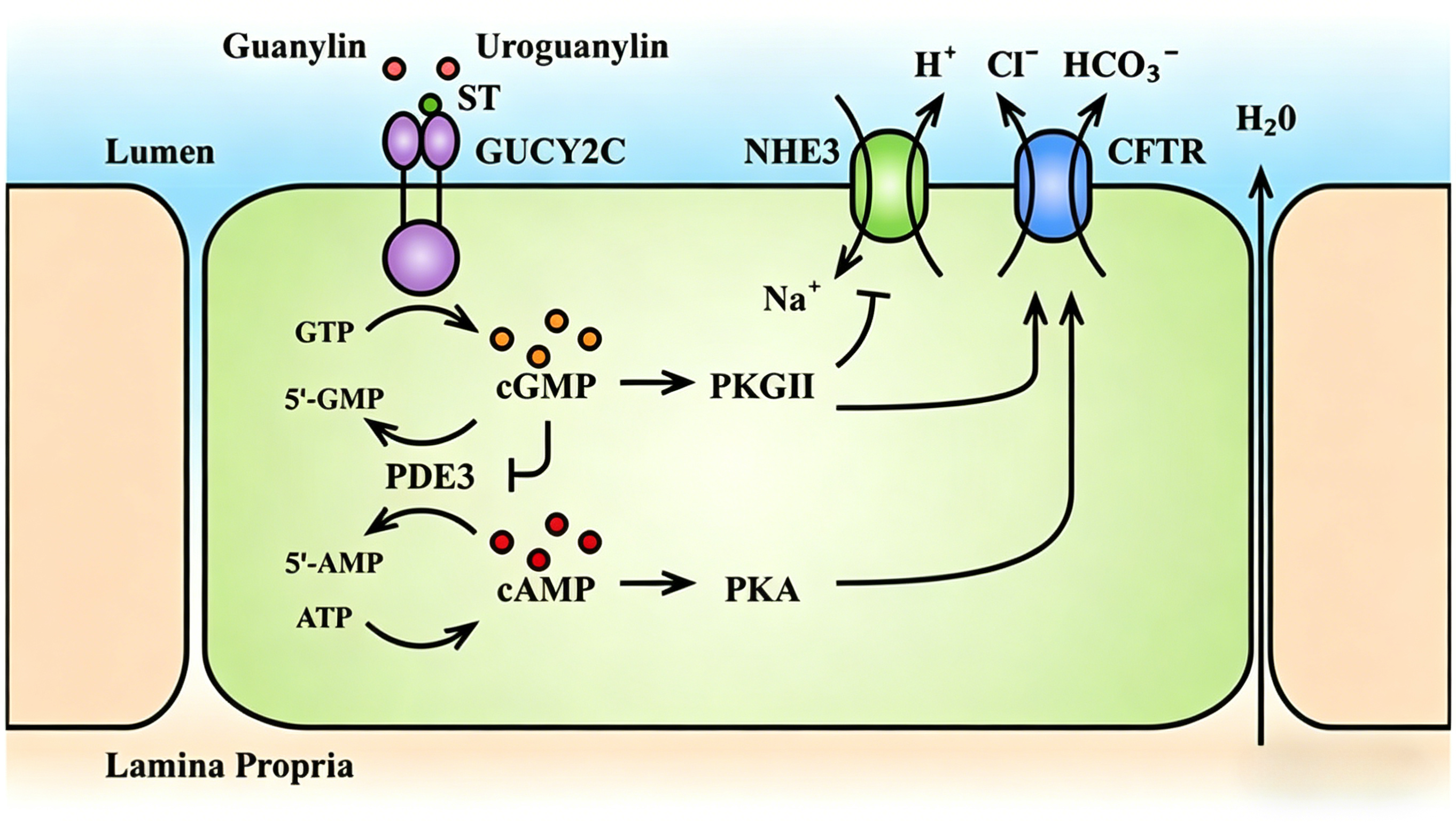
The expression of GUCY2C in metastatic cancer cells provides a biomarker for immunotherapies, including vaccines, CAR-T cells, and immunotoxins. Due to its high expression in colorectal cancer tissues and limited expression in normal tissues, GUCY2C is an ideal therapeutic target. GUCY2C expression abnormalities occur early in tumorigenesis and persist throughout disease progression, offering potential for early diagnosis and dynamic monitoring. Clinical studies demonstrate that GUCY2C-targeted CAR-T cells can safely and effectively eliminate colorectal cancer cells. The stable expression of GUCY2C on tumor cell surfaces ensures the sustained efficacy of immunotherapy strategies. PE-labeled GUCY2C Fc and Avi-tagged proteins can be used to detect GUCY2C expression distribution in tumor tissues, providing quantitative data for target validation.
To investigate the biological functions of GUCY2C and screen targeted drugs, researchers have constructed GUCY2C overexpression cell models. These models involve transducing the GUCY2C gene into target cell lines to achieve stable high expression of GUCY2C protein. Overexpression cell models can be used to assess the effects of GUCY2C on cell proliferation, migration, and signaling pathways, as well as to screen antibody drugs and CAR-T cells targeting GUCY2C. In CAR-T cell development, GUCY2C-overexpressing cells serve as target cells to validate the killing activity and specificity of CAR-T cells. Compared to tumor cells with endogenous GUCY2C expression, overexpression models provide more uniform target antigen expression levels, facilitating standardized evaluation. PE-labeled GUCY2C Fc and Avi-tagged proteins can be used to verify GUCY2C expression levels in overexpression models, ensuring model reliability.
GUCY2C-targeted CAR-T cell therapy is a promising direction for colorectal cancer immunotherapy. CAR-T cells expressing chimeric antigen receptors specific for GUCY2C can precisely target and eliminate GUCY2C-expressing tumor cells. Clinical studies show that GUCY2C-targeted CAR-T cell therapy exhibits favorable safety and efficacy in advanced colorectal cancer patients. Compared to conventional treatments, CAR-T cell therapy offers advantages such as high specificity, potent killing activity, and the generation of immune memory. The high expression rate and stability of GUCY2C in colorectal cancer make it an ideal target for CAR-T cell therapy. PE-labeled GUCY2C Fc and Avi-tagged proteins can be used to evaluate the binding capacity of CAR-T cells to GUCY2C antigens, validate functional activity, and provide standardized tools for CAR-T cell quality control and release testing.
GUCY2C, as a specific molecular marker for colorectal cancer, holds broad application prospects in immunotherapy. PE-labeled GUCY2C Fc and Avi-tagged proteins provide sensitive and efficient detection tools for studying GUCY2C protein expression, distribution, and interactions, applicable to CAR-T cell functional evaluation, antibody screening, and immune monitoring. Future research will further explore the molecular mechanisms of GUCY2C in colorectal cancer development, develop GUCY2C-targeted drugs with higher affinity and specificity, and evaluate synergistic effects of combination therapies. As understanding of GUCY2C's biological functions deepens, its value in colorectal cancer diagnosis and treatment will continue to expand.
Nanjing UA-Bio Technology Co., Ltd. (UA-Bio) has independently developed the "PE-Labeled GUCY2C Fc&Avi Tag Protein, Human" (Product Code: UA011280), a high-performance fluorescently labeled probe specifically designed for GUCY2C-targeted research and colorectal cancer immunotherapy evaluation. This protein consists of the human GUCY2C extracellular domain fused with Fc and Avi tags and labeled with PE fluorescence. It efficiently binds to anti-GUCY2C antibodies or affinity ligands, providing a stable and reliable standardized tool for CAR-T cell therapy evaluation, antibody drug screening, colorectal cancer biomarker research, and other applications.
| High Purity and Intact Biological Activity | The product is produced using internationally leading eukaryotic expression systems and highly standardized purification processes, validated through multi-dimensional quality control to ensure >95% purity and correct native conformation (retaining intact glycosylation modifications). The Fc tag enhances protein stability and proper folding, while the Avi tag supports biotinylation applications. The PE labeling process is optimized to maintain high labeling efficiency while preserving GUCY2C's high-affinity binding to antibodies, accurately mimicking the antigenic properties of GUCY2C on colorectal cancer cell surfaces under physiological conditions.-- |
| Exceptional Batch-to-Batch Consistency and Stability | From protein expression and labeling to purification and quality control, the entire process is strictly managed under a comprehensive release testing system, ensuring consistent binding activity, uniform fluorescence intensity, and excellent long-term stability across batches. This provides a solid foundation for long-term and continuous GUCY2C-targeted research.-- |
| Versatile Tool for Multiple Applications | This protein performs exceptionally in various applications, including CAR-T cell positivity rate flow cytometry, anti-GUCY2C antibody/antagonist screening, competitive binding assays, colorectal cancer biomarker detection, and flow cytometry. It is widely applicable to GUCY2C-targeted CAR-T cell therapy development, colorectal cancer diagnostic tool research, and drug activity evaluation.-- |
| Comprehensive Solutions and Professional Support | We provide thoroughly validated standard protocols, exemplary flow cytometry data, and detailed result interpretation guidelines to help you establish stable and reproducible GUCY2C-targeted molecular detection workflows. Nanjing UA-Bio's professional technical team offers full-range support for research design, experimental optimization, and data analysis.-- |
Nanjing UA-Bio Technology Co., Ltd. is committed to providing cutting-edge, high-quality core reagents and tools for immunology, cell therapy, and innovative drug development. For detailed technical parameters, validation data, or application consultations regarding the "PE-Labeled GUCY2C Fc&Avi Tag Protein, Human" (Product Code: UA011280), please feel free to contact us.








