





B7-H3 is a newly discovered immune checkpoint belonging to the B7 superfamily, classified as a type I transmembrane glycoprotein. Human B7-H3 possesses four conserved structural cysteines, an extracellular domain composed of IgC-like and IgV-like domains, and distinct intracellular domains. Human B7-H3 has two isoforms: 4Ig-B7-H3 containing two identical IgC-like and IgV-like domains, and 2Ig-B7-H3 containing one pair of IgC-like and IgV-like domains, with 4Ig-B7-H3 being the predominant configuration in humans. The mechanism of action of B7-H3 remains unclear—it can function as either a co-stimulatory or co-inhibitory molecule, pro-tumor or anti-tumor agent, making its role ambiguous. Alexa Fluor 647-labeled B7-H3/CD276 Fc chimera protein can be used for quantitative detection of B7-H3 protein expression levels and binding activity, providing a technical tool for tumor immunotargeting research.
In normal human tissues, B7-H3 exhibits nonspecific cytoplasmic expression only in the abdomen, liver, pancreas, renal cortex, salivary gland acinar cells, and gastric epithelial cells. B7-H3 is absent in monocytes, granulocytes, and most normal human tissues but is expressed on some dendritic cells, T cells, natural killer cells, and B cells. Clinical studies reveal that B7-H3 is aberrantly overexpressed in various tumor tissues, including non-small cell lung cancer, pancreatic cancer, primary liver cancer, colorectal cancer, breast cancer, prostate cancer, laryngeal cancer, and melanoma, as well as on stromal cells, fibroblasts, and epithelial cells within the tumor microenvironment. Its overexpression in tumor tissues is often associated with poor patient prognosis and shorter overall and progression-free survival. The widespread expression of B7-H3 in the tumor microenvironment makes it a potential immune checkpoint with clinical therapeutic value. Alexa Fluor 647-labeled B7-H3/CD276 Fc chimera protein can be used to detect B7-H3 expression distribution in tumor tissues, providing quantitative data for target validation.
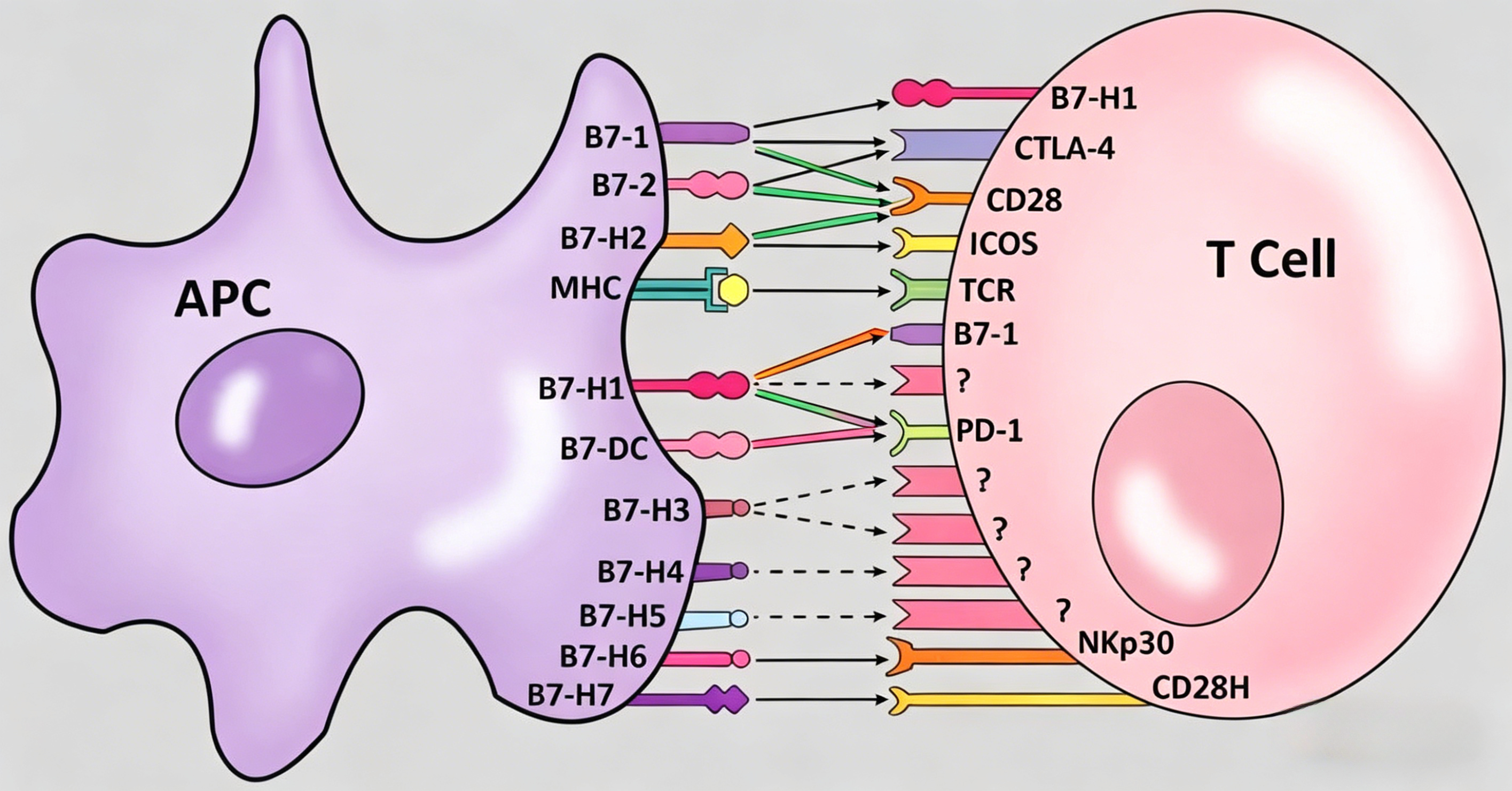
Most current studies indicate that B7-H3 is a negative member of the B7 family, inhibiting T cell activation and exerting negative regulatory effects in tumor immunity. B7-H3 can suppress the proliferation of CD4-positive and CD8-positive T cells and reduce the secretion of IL-2 and IFN-γ through signaling pathways regulated by NF-κB, nuclear factor of activated T cells, and activator protein, thereby facilitating tumor immune escape. Blocking B7-H3 enhances cytotoxic lymphocyte and NK cell activity, reduces tumor burden, and significantly slows tumor growth. Beyond immune system suppression, B7-H3 also promotes cancer progression via non-immune mechanisms such as metastasis, drug resistance, and angiogenesis. Compared to other immune checkpoints, the B7-H3 pathway not only regulates innate and adaptive immunity but also drives tumor development through multiple mechanisms. Alexa Fluor 647-labeled B7-H3/CD276 Fc chimera protein can be used to study B7-H3 interactions with immune cells and evaluate its impact on T cell activation.
B7-H3 promotes tumorigenesis by enhancing tumor cell proliferation, epithelial-mesenchymal transition (EMT), migration, angiogenesis, radio/chemotherapy resistance, and tumor metabolism. It activates the PI3K-AKT pathway, upregulates Smad1 expression, and induces EMT in colorectal cancer cells, thereby influencing metastasis and invasion. B7-H3 promotes angiogenesis by increasing VEGF secretion and inducing VEGFA expression via the NF-κB pathway. It also contributes to therapy resistance: studies show B7-H3 induces paclitaxel resistance by interfering with the JAK2/STAT3 pathway and confers radiotherapy resistance in colorectal cancer by regulating the KIF15-activated ERK1/2 pathway. Aerobic glycolysis is critical for colorectal cancer progression, and B7-H3 enhances glucose consumption and lactate production by promoting HK2 expression in cancer cells, while its inhibition has the opposite effect. These non-immune mechanisms position B7-H3 as a multifunctional target for cancer therapy.
Current targeted therapies predominantly view B7-H3 as a negative regulator of T cell-mediated immune responses in tumors, and its specific blockade offers novel targeted treatments analogous to anti-CTLA-4 monoclonal antibody therapy. B7-H3-targeted agents include monoclonal antibodies, bispecific antibodies, radio-labeled antibodies, antibody-drug conjugates (ADCs), and CAR-T cells. Multiple drug formats targeting B7-H3—such as monoclonal antibodies, bispecific antibodies, ADCs, CAR-T/NK cells, and radioimmunotherapy—have emerged, with some entering clinical trials and demonstrating potent anti-tumor activity. Given its dual immune and non-immune functions, widespread overexpression in human tumors, and close association with malignant biological features, B7-H3 holds significant therapeutic potential. Alexa Fluor 647-labeled B7-H3/CD276 Fc chimera protein can assess the binding capacity of antibody drugs and CAR-T cells to B7-H3 antigen, validating their functional activity.
Nanjing UA-Bio Technology Co., Ltd. (UA-Bio) has independently developed "Alexa Fluor 647-Labeled B7-H3/CD276 Fc Chimera Protein, Human" (Catalog No.: UA011269), a high-performance far-red fluorescent probe designed for B7-H3-targeted research and solid tumor multicolor flow cytometry analysis. B7-H3 (also known as CD276) is a key immune checkpoint molecule in the B7 family, aberrantly overexpressed on the surface of various solid tumor cells (e.g., non-small cell lung cancer, prostate cancer, breast cancer, renal cancer). Its association with tumor immune evasion and poor prognosis makes it a promising anti-tumor target. This protein is a chimera of the human B7-H3 extracellular domain fused with human IgG Fc, labeled with Alexa Fluor 647. It efficiently binds anti-B7-H3 antibodies or affinity ligands, serving as a stable, reliable standardized tool for CAR-T cell therapy evaluation, antibody drug screening, and tumor immune microenvironment multiparameter studies.
| Core Product Advantages | Detailed Parameters / Functional Description |
|---|---|
| High Purity and Intact Bioactivity | Produced using an advanced eukaryotic expression system and highly standardized purification process, the product undergoes multidimensional quality control to ensure >95% purity and correct native conformation (retaining full glycosylation). The Fc chimera format enhances protein stability and proper folding. The Alexa Fluor 647 labeling process is optimized to maintain high labeling efficiency while preserving B7-H3's high-affinity antibody binding, accurately mimicking its antigenic properties on tumor cell surfaces under physiological conditions. |
| Far-Red Fluorescence and Multicolor Compatibility | Labeled with Alexa Fluor 647, a bright, photostable dye with low background noise (excitation ~650 nm, emission ~665 nm), it operates in the far-red spectrum, avoiding overlap with FITC, PE, and other common fluorophores. Ideal for multicolor flow cytometry and multichannel fluorescence microscopy. |
| Exceptional Batch Consistency and Stability | Rigorous process control from expression to labeling and purification, combined with comprehensive release testing, ensures consistent binding activity, uniform fluorescence intensity, and excellent long-term stability. Provides reliable quality assurance for continuous B7-H3-targeted research. |
| Versatile Applications | Excels in CAR-T cell positivity rate detection (supports multicolor panel design), anti-B7-H3 antibody/antagonist screening, competitive binding assays, solid tumor (e.g., NSCLC/prostate/breast cancer) multiparameter marker analysis, and flow cytometry. Suitable for CAR-T therapy development, tumor immunotherapy research, and drug activity evaluation. |
| Comprehensive Solutions and Expert Support | Includes validated protocols, representative flow cytometry data, and detailed interpretation guides to expedite robust B7-H3 detection workflows. Nanjing UA-Bio's technical team offers end-to-end consultation for experimental design, optimization, and data analysis. |
Nanjing UA-Bio Technology Co., Ltd. is dedicated to providing cutting-edge, high-quality core reagents and tools for immunology, cell therapy, and innovative drug development. For detailed technical specifications, validation data, or application guidance on "Alexa Fluor 647-Labeled B7-H3/CD276 Fc Chimera Protein, Human" (Catalog No.: UA011269), please contact us.








