
NS1 protein of Avian Influenza A virus: The key to mutation and cross-species transmission


Through experiments, scientists found that the NS1 protein of avian influenza virus showed similar abilities to human influenza viruses in inhibiting IFN-β induction in human cells. However, NS1 proteins in some avian influenza strains differ in inhibiting IFN-induced gene expression, which may be related to the virus's cross-species transmission ability.
- Recent Advances
- Product Information
NS1 protein of Avian Influenza A virus: The key to mutation and cross-species transmission
Avian influenza A virus (IAV) is a pathogen that is potentially threatening to both avians and humans. The virus not only causes serious disease in avians, but may also gain the ability to infect mammals through mutation and recombination, which in turn triggers cross-species transmission. In recent years, scientists have discovered that the non-structural protein 1 (NS1) of avian influenza viruses has played a key role in the virus's cross-species transmission and pathogenicity.
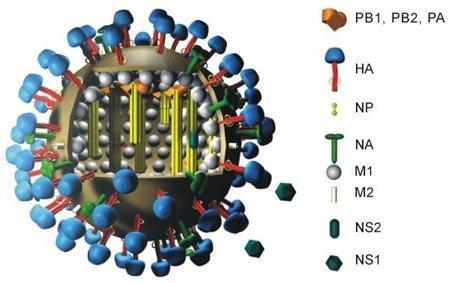
NS1 protein: The "game" between viruses and host immunity
The NS1 protein is an important non-structural protein of avian influenza viruses and plays a variety of functions in the life cycle of the virus. Studies have shown that the NS1 protein can inhibit the interferon (IFN) response in host cells, which is one of the key mechanisms for the virus to escape the host immune system. Specifically, NS1 proteins can repress host IFN responses through two mechanisms:
1. Early mechanism: NS1 protein is able to bind to the host cell's polyadenylation-specific factor 30 (CPSF30), thereby repressing cell gene expression.
2. Mechanism after mutation: Most of the mutated NS1 proteins repress the host cell IFN activation genes by specifically interfering with the host cell's JAK/STAT signaling pathway.
This variant allows the NS1 protein to more effectively evade the host's immune surveillance, thereby promoting cross-species transmission of the virus.
Viral mutation and cross-species transmission
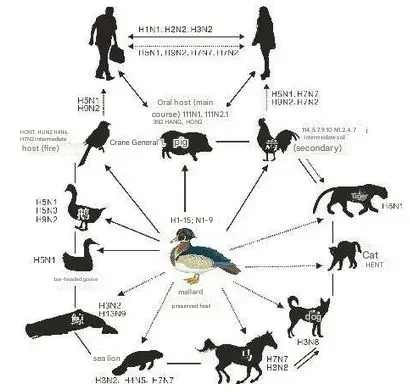
The NS1 protein of avian influenza viruses has significant sequence diversity, which allows the virus to adapt to different host environments. Studies have shown that the NS1 protein of avian influenza virus can be divided into two alleles (A and B). Avian influenza viruses usually carry B alleles, while human influenza viruses contain two alleles A and B. This genetic diversity provides the possibility for cross-species transmission of viruses.
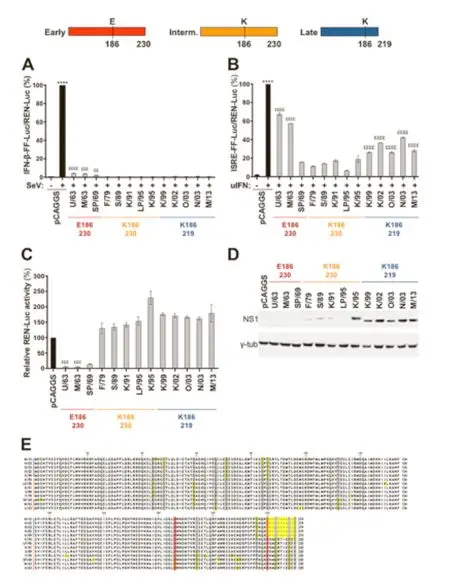
Through experiments, scientists found that the NS1 protein of avian influenza virus showed similar abilities to human influenza viruses in inhibiting IFN-β induction in human cells. However, NS1 proteins in some avian influenza strains differ in inhibiting IFN-induced gene expression, which may be related to the virus's cross-species transmission ability.
Research significance and future direction
This study reveals the important role of the avian influenza virus NS1 protein in cross-species transmission, laying the foundation for understanding the interspecies adaptive transmission mechanism of influenza viruses. By studying the variants and functions of the NS1 protein, scientists can better predict the risk of transmission of avian influenza viruses and develop more effective vaccines and antiviral drugs.
Future research directions may include:
1.Deeply study the structural and functional relationship of NS1 protein: By analyzing the three-dimensional structure of 2.NS1 protein, we can further understand how it interacts with the molecules of host cells.
Explore the effect of NS1 protein mutation on viral transmission: predict the evolution direction of viruses by monitoring the mutation trend of NS1 protein.
3.Develop antiviral strategies for NS1 protein: Based on the function of NS1 protein, design small molecule drugs or vaccines that can block their activity.
This article is reviewed and published by the technical expert team of UA
Disclaimer: This article partially utilizes artificial intelligence assistance in its creation. If any content involves copyright or intellectual property issues, please let us know and we promise to verify and remove it as soon as possible.
Purchase recombinant protein, choose 
UA protein focuses on providing various protein reagents, raw materials, and services required for drug research and development, cell therapy, gene therapy, and basic scientific research, including drug target proteins, immune checkpoint proteins, cytokines, tool enzymes, customized protein expression, and full-length transmembrane protein development. Nanjing Univ is committed to providing customers with high-quality products and professional services, and building a High-tech Biological Enterprise with International Competitiveness.







 Business license (three certificates in one)