




Challenges and solutions for membrane protein expression and purification


Membrane proteins are important components of cell membranes, accounting for more than 25% of all cellular proteomes.
- Recent Advances
- Product Information
Challenges and solutions for membrane protein expression and purification
Membrane proteins are important components of cell membranes, accounting for more than 25% of all cellular proteomes. They play key roles in physiological activities such as signal transduction, cell adhesion, and transmembrane transport. However, the expression and purification of membrane proteins face many challenges, mainly because they are insoluble in water and easily lose activity when extracted from the cell membrane. This article will introduce common problems and solutions for membrane protein expression and purification to help researchers overcome these difficulties.
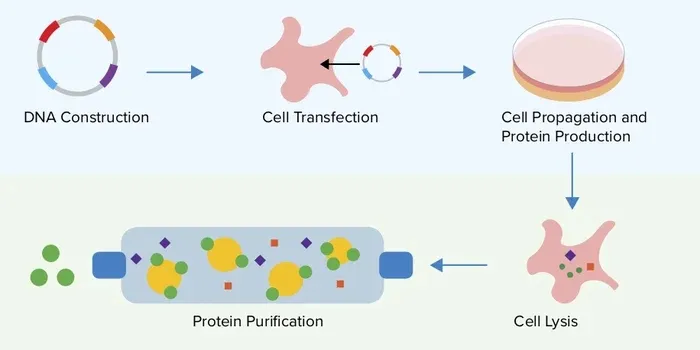
1. Recommendations for membrane protein expression
Changing competent cells
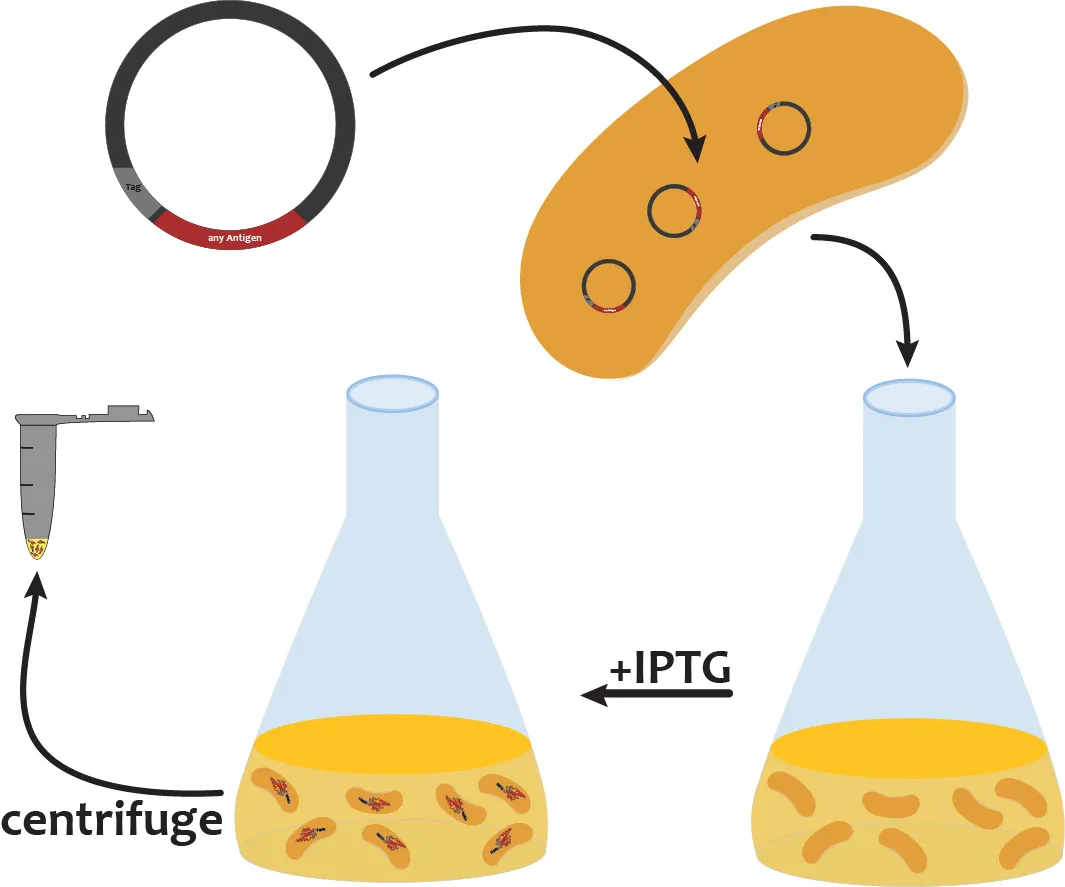
Use C41 (DE3) competent Escherichia coli cells: This strain contains some point mutations in the lacUV5 promoter to reduce the transcription rate. This reduced expression rate is milder to host cells and is particularly suitable for expressing toxic proteins.
Try other host cells: If E. coli expression does not work well, consider using eukaryotic expression systems such as yeast, insect cells, or mammalian cells. Eukaryotic cells are capable of complex post-translational modifications, such as glycosylation and phosphorylation, which help improve the activity of membrane proteins.
Use minimal growth medium
Reducing cell growth rate: Using a non-rich bacterial growth medium (such as M9 basal medium) may improve sample expression. Reducing cell growth rate can reduce the possibility of peptide misfolding in the cell membrane.
Try to express homologs
Choose appropriate homologous genes: If the target membrane protein is difficult to express, consider expressing homologous genes from other species or genera. Slight differences in primary sequence may significantly improve protein stability and expression.
Add soluble tags
Improve expression yield and stability: Soluble tags are additional amino acid sequences added to the target protein, which, if selected properly, can significantly improve expression yield and sample stability. For example, green fluorescent protein (GFP) is a common choice because it enables you to use fluorescence detection samples at every step.
2. Recommendations for extracting membrane proteins from cell membranes
Use detergent extraction
Choice of detergent: Detergents are commonly used extraction reagents, but the chemical environment they provide is different from that of the cell membrane and may disrupt the quaternary structure and function of membrane proteins. Nevertheless, detergents are well suited for X-ray crystallography because the micelles they form are smaller than lipid polymers and nanodisc assemblies, providing more homogeneous samples.
Optimize detergent concentration: Screening for the right detergent type and concentration is required to ensure stability and activity of membrane proteins.
Extraction using nanodiscs and lipopolymers
Retain native lipids: Nanodiscs and lipopolymers can engulf entire sections of the cell membrane, where membrane proteins are embedded. This approach can obtain all native lipids, making membrane proteins more suitable for functional assays.
Capture native oligomerization states: This approach is more likely to capture the native oligomerization state of membrane proteins, but the size of the resulting complex may be incompatible with some experiments.
Control time and temperature
Extend the extraction time: No matter which reagent is used to extract the sample from the cell membrane, allow enough time for the process to occur. Overnight extractions are generally better.
Heating appropriately: Don't be afraid to heat the mixture slightly. The extraction efficiency at 20–30°C may be much higher than at 4°C.
3. Recommendations for purifying membrane proteins using nickel affinity chromatography
Use loose resins
Promote binding: When it comes to membrane protein purification, using loose packings rather than static chromatography columns is more conducive to binding. Loose resins can physically mix with the sample, promoting binding.
Alternatives: If you don’t have access to loose resin, you can use a closed loop on a peristaltic pump to pass the sample over and over through the column.
Dilute the solubilizer
Improve chances of binding: Dilute the sample by diluting the solubilizer (at least 2x) to give it a better chance of binding to the column.
Adjust affinity tags
Change tag position: If you find that it is still not binding to the column after a day of mixing, consider moving the affinity tag to the other end of the protein.
Extend tag length: Go from 6×His to 12×His, or clone some arbitrary residues to push the tag away from the protein surface.
Fill affinity packing with cobalt
Improve purity: Cobalt adopts fewer oxidation states, which can improve purity, but will reduce sample recovery.
Size exclusion chromatography
Improve protein purity: If higher purity is required, size exclusion chromatography with UV detection is a good option.
Be aware of the effects of solubilizers: Solubilizers add mass to the sample, and the shape may be odd. This means that, unlike cytoplasmic proteins, the molecular weight and oligomeric state of the sample may not be determined from the chromatogram.
Optimize chromatographic conditions: This can be alleviated by loading the sample onto the column in the smallest possible volume or by replacing the detergent with one that does not interact with the column or forms smaller micelles.
Summary
Membrane proteins have important application value in biopharmaceuticals, but their expression and purification processes face many challenges. The expression efficiency and purification effect of membrane proteins can be significantly improved by selecting a suitable expression system, optimizing culture conditions, adding soluble tags, and rationally selecting purification methods. It is hoped that the suggestions in this article can help researchers overcome common problems in membrane protein research and promote research progress in related fields.
This article is reviewed and published by the technical expert team of UA
Disclaimer: This article partially utilizes artificial intelligence assistance in its creation. If any content involves copyright or intellectual property issues, please let us know and we promise to verify and remove it as soon as possible.
Purchase recombinant protein, choose Nanjing UA-Bio
UA protein focuses on providing various protein reagents, raw materials, and services required for drug research and development, cell therapy, gene therapy, and basic scientific research, including drug target proteins, immune checkpoint proteins, cytokines, tool enzymes, customized protein expression, and full-length transmembrane protein development. Youai is committed to providing customers with high-quality products and professional services, and building a High-tech Biological Enterprise with International Competitiveness.







 Business license (three certificates in one)