




Exploring FGFR2b: A new dawn for cancer treatment


In the long journey of cancer treatment, scientists have been exploring tirelessly, trying to find more effective therapeutic targets. Today, let us walk into the mysterious world of FGFR2b and see how it brings new hope for cancer treatment.
- Recent Advances
- Product Information
Exploring FGFR2b: A new dawn for cancer treatment
In the long journey of cancer treatment, scientists have been exploring tirelessly, trying to find more effective therapeutic targets. Today, let us walk into the mysterious world of FGFR2b and see how it brings new hope for cancer treatment.
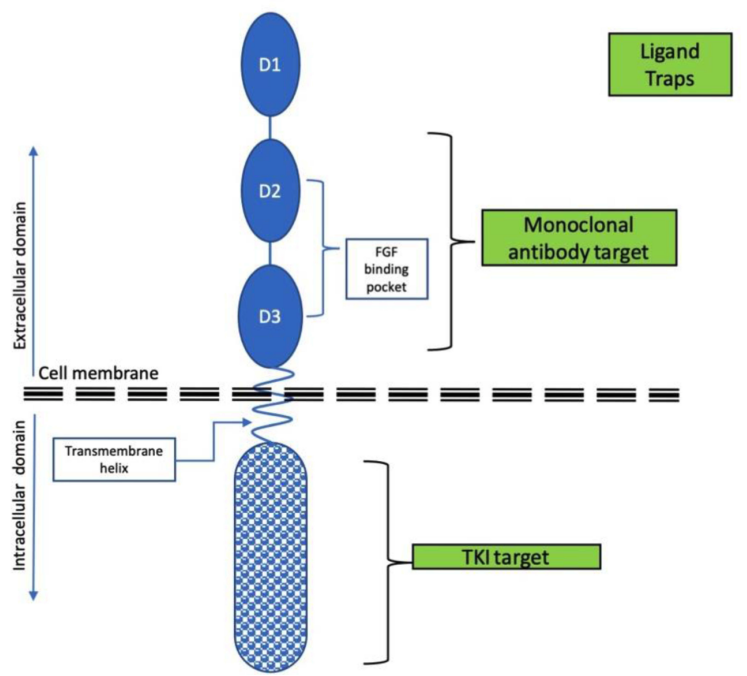
FGFR2b, the full name of fibroblast growth factor receptor 2b, is a homologous isomer of the receptor tyrosine kinase family FGFR2. It is like a "signal sentinel" on the cell surface, always sensing changes in the external environment. FGFR2b consists of three parts: the extracellular domain, the transmembrane helix, and the intracellular tyrosine kinase domain. The extracellular domain is like its "antenna", which can tightly bind to the fibroblast growth factor (FGF) ligand; the transmembrane helix is the "bridge" connecting the inside and outside of the cell; and the intracellular tyrosine kinase domain is the "core hub" of signal transduction. Once activated, it can trigger a series of complex downstream signal pathways, affecting important processes such as cell proliferation, differentiation, migration and survival.
Under normal physiological conditions, FGFR2b plays a key role in embryonic development and tissue repair. However, when it "goes bad", it becomes an "accomplice" of cancer. In many malignant tumors such as breast cancer, gastric cancer, and lung cancer, the expression of FGFR2b is often dysregulated, such as amplification, mutation, or overexpression. These abnormal changes are like putting an "accelerator" on cancer cells, causing them to proliferate wildly, resulting in continuous tumor growth, worsening of the disease, and poor prognosis for patients.
However, scientists are not intimidated by the "two-sidedness" of FGFR2b, but are actively looking for countermeasures. The emergence of a new drug, Bemarituzumab, has brought new hope for cancer treatment. It is a specially designed monoclonal antibody that can accurately bind to the extracellular domain of FGFR2b, just like putting a "tight ring" on FGFR2b, effectively inhibiting its activation. In clinical trials, Bemarituzumab has shown remarkable efficacy. In a phase I monotherapy study of patients with chemotherapy-resistant gastric adenocarcinoma, some patients with FGFR2 amplification and highly overexpressed FGFR2b showed objective responses. In the subsequent main analysis and updated analysis of clinical studies, patients who used Bemarituzumab combined with chemotherapy had significantly improved progression-free survival and overall survival.
In addition to Bemarituzumab, scientists are also continuously developing other types of FGFR2b targeted drugs. These drugs can be divided into small molecule tyrosine kinase inhibitors, antagonistic monoclonal antibodies, FGF ligand traps, and antibody-drug conjugates according to their mechanism of action. They are like precise "missiles" that attack FGFR2b from different angles, bringing more treatment options to cancer patients.
What's more exciting is that the expression level of FGFR2b may also become an indicator for predicting tumor efficacy in clinical practice. As the expression level of FGFR2b increases, patients may gain greater survival benefits. This means that in the future, doctors can develop more personalized treatment plans based on the expression of FGFR2b in patients to improve the targetedness and effectiveness of treatment.
FGFR2b is like a double-edged sword, playing a complex role in the occurrence and development of cancer. However, as scientific research continues to deepen, our understanding of it is also getting deeper and deeper. I believe that in the near future, treatment strategies targeting FGFR2b will bring more hope and vitality to cancer patients.
This article is reviewed and published by the technical expert team of UA
Disclaimer: This article partially utilizes artificial intelligence assistance in its creation. If any content involves copyright or intellectual property issues, please let us know and we promise to verify and remove it as soon as possible.
Purchase recombinant protein, choose Nanjing UA-Bio
UA protein focuses on providing various protein reagents, raw materials, and services required for drug research and development, cell therapy, gene therapy, and basic scientific research, including drug target proteins, immune checkpoint proteins, cytokines, tool enzymes, customized protein expression, and full-length transmembrane protein development. Youai is committed to providing customers with high-quality products and professional services, and building a High-tech Biological Enterprise with International Competitiveness.







 Business license (three certificates in one)