




Predictive value and mechanism exploration of FGFR4 mutation in tumor immunotherapy


FGFR4 (fibroblast growth factor receptor 4) is an important member of the receptor tyrosine kinase family, and its signaling pathway plays a key role in regulating cell proliferation, differentiation and immune response. In recent years, the predictive value of FGFR4 mutation in immunotherapy of non-small cell lung cancer (NSCLC) has gradually attracted attention. Many studies have shown that FGFR4 mutation is not only significantly associated with the efficacy of immunotherapy, but also affects the treatment response by reshaping the tumor immune microenvironment, providing a new molecular target for optimizing immunotherapy strategies.
- Recent Advances
- Product Information
Predictive value and mechanism exploration of FGFR4 mutation in tumor immunotherapy
FGFR4 (fibroblast growth factor receptor 4) is an important member of the receptor tyrosine kinase family, and its signaling pathway plays a key role in regulating cell proliferation, differentiation and immune response. In recent years, the predictive value of FGFR4 mutation in immunotherapy of non-small cell lung cancer (NSCLC) has gradually attracted attention. Many studies have shown that FGFR4 mutation is not only significantly associated with the efficacy of immunotherapy, but also affects the treatment response by reshaping the tumor immune microenvironment, providing a new molecular target for optimizing immunotherapy strategies.
Correlation between FGFR4 mutation and immunotherapy efficacy
Studies have shown that NSCLC patients with FGFR4 mutations have a significantly higher objective response rate (ORR) than FGFR4 wild-type patients after treatment with immune checkpoint inhibitors (ICIs). In the exploration cohort, the ORR of patients with FGFR4 mutations reached 50.0%, while that of wild-type patients was only 19.4%. Further analysis found that the median progression-free survival (mPFS) and median overall survival (mOS) of patients with FGFR4 mutations were significantly prolonged, and FGFR4 mutations were an independent predictor of PFS (p=0.014) and OS (p=0.005). This phenomenon was repeatedly verified in multiple public validation cohorts, indicating that FGFR4 mutations have predictive stability across cohorts.
Synergistic effect of FGFR4 mutations and tumor mutation burden (TMB)
TMB is an important predictor of immunotherapy efficacy, but about half of TMB-high patients still cannot benefit from immunotherapy. The study found that the TMB level of patients with FGFR4 mutations was significantly higher than that of wild-type patients, and this association remained significant after eliminating driver gene mutations (such as EGFR, ALK, etc.). In the TMB-high subgroup, the mPFS and mOS of patients with FGFR4 mutations were significantly better than those of wild-type patients, suggesting that FGFR4 mutations can be used as a supplementary indicator of TMB to further screen patients who may benefit from immunotherapy.
Remodeling of the tumor immune microenvironment by FGFR4 mutations
The efficacy of immunotherapy is highly dependent on the composition of the tumor immune microenvironment (TIME). Studies have found that the infiltration of CD8+ T cells in the tumor stroma of patients with FGFR4 mutations is significantly increased, and CD8+ T cells are the core effector cells that mediate anti-tumor immune responses. In addition, the ratio of M1 macrophages (proinflammatory type) to M2 macrophages (immunosuppressive type) in the tumor parenchyma and stroma of patients with FGFR4 mutations is significantly increased, indicating that FGFR4 mutations may enhance local immune responses by regulating macrophage polarization. These findings provide a mechanistic explanation for the prediction of immunotherapy efficacy by FGFR4 mutations.
Independent predictive value of FGFR4 mutations
Further analysis showed that FGFR4 mutations are a predictor of immunotherapy efficacy independent of driver gene mutations. After excluding patients with driver gene mutations such as EGFR and ALK, FGFR4 mutations are still significantly associated with better PFS and OS. In addition, FGFR4 mutations are not a prognostic factor for NSCLC, suggesting that its predictive value is only apparent in the context of immunotherapy. This characteristic makes FGFR4 variation a specific indicator for predicting the efficacy of immunotherapy.
Potential application of FGFR4 targeted intervention
Although current research focuses on the predictive value of FGFR4 variation, the abnormal activation of its signaling pathway also provides a theoretical basis for combined therapy. FGFR4 inhibitors can inhibit tumor cell proliferation by blocking FGFR4 signaling, and may enhance the efficacy of immunotherapy by regulating the tumor immune microenvironment. In the future, the combined use of FGFR4 variation detection and FGFR4 targeted drugs may become a new strategy to improve the response rate of immunotherapy.
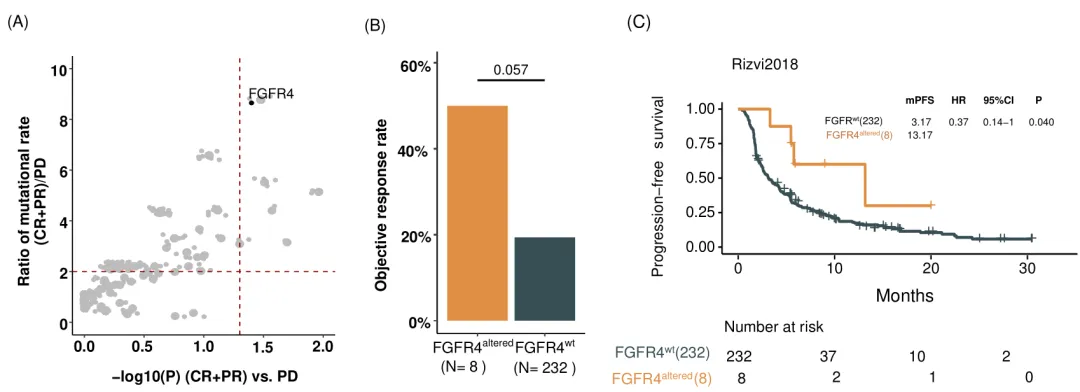
FGFR4 variation significantly affects the response of NSCLC patients to immunotherapy by regulating the tumor immune microenvironment and TMB levels. Its characteristics as an independent predictor provide a new molecular marker for immunotherapy and a scientific basis for optimizing treatment strategies. With the in-depth analysis of the FGFR4 signaling pathway, precision therapy based on FGFR4 variation is expected to become an important direction for NSCLC immunotherapy.
This article is reviewed and published by the technical expert team of UA
Disclaimer: This article partially utilizes artificial intelligence assistance in its creation. If any content involves copyright or intellectual property issues, please let us know and we promise to verify and remove it as soon as possible.
Purchase recombinant protein, choose Nanjing UA-Bio
UA protein focuses on providing various protein reagents, raw materials, and services required for drug research and development, cell therapy, gene therapy, and basic scientific research, including drug target proteins, immune checkpoint proteins, cytokines, tool enzymes, customized protein expression, and full-length transmembrane protein development. Youai is committed to providing customers with high-quality products and professional services, and building a High-tech Biological Enterprise with International Competitiveness.







 Business license (three certificates in one)