




Exploring MHC IIa tetramer technology: how to reveal the immune secrets of CD4 ⁺ T cells


MHC IIa molecules are a classic subtype of the major histocompatibility complex class II, primarily expressed on the surface of specialized antigen-presenting cells such as dendritic cells and B cells. Unlike MHC-I, which is primarily responsible for endogenous antigen presentation, MHC-IIa specifically presents exogenous antigen peptides to CD4 ⁺ T helper cells to initiate and regulate adaptive immune responses.
- Recent Advances
- Product Information
What are MHC-IIa molecules, and how do they fundamentally differ from MHC-I?
MHC-IIa molecules are a classical subtype of the major histocompatibility complex class II, primarily expressed on the surface of professional antigen-presenting cells such as dendritic cells and B cells. Unlike MHC-I, which mainly presents endogenous antigens, MHC-IIa specializes in presenting exogenous antigen peptides to CD4⁺ T helper cells, thereby initiating and regulating adaptive immune responses. This process is critical for antibody class switching, the formation of immune memory, and the coordination of cytokine networks.
Why are MHC-IIa tetramers a key tool for studying CD4⁺ T cells?
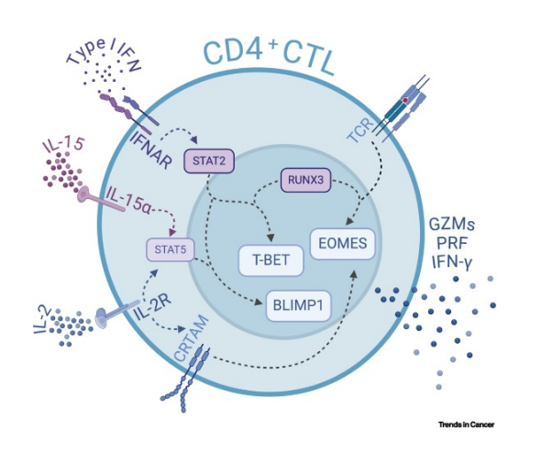
Due to the inherently low affinity between TCRs on CD4⁺ T cells and pMHC-IIa complexes, traditional functional assays struggle to accurately identify antigen-specific cells. MHC-IIa tetramers address this by coupling four pMHC-IIa molecules with fluorescently labeled streptavidin, forming a multivalent complex that significantly enhances binding capability to TCRs. This enables highly sensitive detection, quantification, and sorting of specific CD4⁺ T cells.
What technical challenges are involved in constructing MHC-IIa tetramers?
MHC-IIa molecules feature an open peptide-binding groove that can accommodate longer antigen peptides (typically 12–25 amino acids). However, peptide-MHC complexes exhibit relatively low stability and are prone to dissociation. Additionally, the high polymorphism of class II molecules necessitates optimized peptide-loading strategies for different HLA alleles. Current approaches, such as acid-mediated peptide exchange, UV-cleavable peptides, or directionally anchored peptides, are employed to improve complex stability and assembly efficiency.
In which disease research areas do MHC-IIa tetramers play a significant role?
This technology is widely used in infectious immunity (e.g., HIV, malaria, and tuberculosis) to precisely track pathogen-specific CD4⁺ T cell response dynamics. In autoimmune diseases (such as type 1 diabetes and multiple sclerosis), it helps identify autoreactive pathogenic T cells. In cancer immunology, MHC-IIa tetramers are used to evaluate CD4⁺ T cell responses induced by neoantigen vaccines, providing insights for combination immunotherapy.
What improved MHC-IIa multimer technologies are currently available?
To enhance detection performance, researchers have developed various derivative technologies:
MHC-IIa pentamers/octamers: Increase antigen valency to strengthen binding affinity;
Reversible tetramers (e.g., Strep-tag systems): Enable gentle dissociation via biotin competition, preserving cell viability;
Barcoded multimer technology: Incorporates fluorescent encoding for simultaneous detection of multiple antigen specificities in a single sample;
MHC-IIa magnetic bead systems: Combine flow sorting and molecular analysis, supporting clinical translation research.
What challenges and limitations does this technology currently face?
Key challenges include: the need for improved stability of pMHC-IIa complexes; complex peptide-binding conditions required for different HLA-II subtypes; limited sensitivity for detecting low-abundance or low-affinity T cells; signal interference in multiplex fluorescence detection; and high reagent costs with insufficient standardization of protocols. These factors currently restrict large-scale clinical application.
How will MHC-IIa tetramer technology evolve in the future?
Cutting-edge directions include: integrating artificial intelligence to predict TCR-pMHC interactions and enhance epitope screening efficiency; developing universal MHC-IIa tetramer platforms to cover broader HLA polymorphism; combining single-cell sequencing and transcriptomic analysis to deeply resolve CD4⁺ T cell functional states; enabling synchronous monitoring of CD4⁺/CD8⁺ T cells to construct comprehensive immune profiles; and advancing personalized tumor neoantigen therapy and precision intervention strategies for autoimmune diseases.
This article is reviewed and published by the technical expert team of UA
Disclaimer: This article partially utilizes artificial intelligence assistance in its creation. If any content involves copyright or intellectual property issues, please let us know and we promise to verify and remove it as soon as possible.
Purchase recombinant protein, choose Nanjing UA-Bio
UA protein focuses on providing various protein reagents, raw materials, and services required for drug research and development, cell therapy, gene therapy, and basic scientific research, including drug target proteins, immune checkpoint proteins, cytokines, tool enzymes, customized protein expression, and full-length transmembrane protein development. Youai is committed to providing customers with high-quality products and professional services, and building a High-tech Biological Enterprise with International Competitiveness.







 Business license (three certificates in one)