




Exploring MHC IIb tetramer technology: unlocking new dimensions of non classical CD4 ⁺ T cell immune response


The MHC IIb molecule belongs to the non classical MHC class II subtype, and its gene localization, protein structure, and antigen presentation mechanism differ significantly from the classical MHC IIa molecule. These types of molecules (such as H2-O and H2-M in mice and HLA-DM and HLA-DO in humans) do not directly participate in the exogenous presentation of antigen peptides, but indirectly affect the activation and immune response intensity of CD4 ⁺ T cells by regulating the peptide loading, editing, and exchange processes of classical MHC-II molecules.
- Recent Advances
- Product Information
What are MHC-IIb molecules, and how do they differ from classical MHC-IIa?
MHC-IIb molecules belong to a non-classical subtype of MHC class II molecules, exhibiting significant differences from classical MHC-IIa in terms of gene localization, protein structure, and antigen presentation mechanisms. These molecules (such as H2-O and H2-M in mice, and HLA-DM and HLA-DO in humans) do not directly participate in the exogenous presentation of antigen peptides. Instead, they indirectly influence CD4⁺ T cell activation and immune response intensity by regulating the peptide loading, editing, and exchange processes of classical MHC-II molecules. This unique immunoregulatory function has made them a new focus in immunological research.
Why is there a need to develop MHC-IIb-specific tetramer technology?
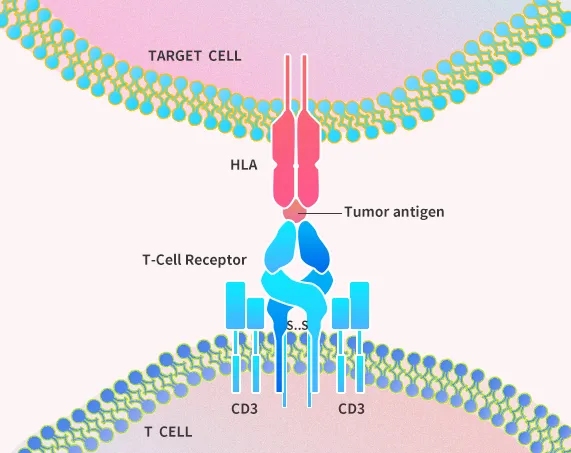
Since MHC-IIb molecules do not directly bind to T cell receptors (TCRs), traditional methods are inadequate for studying their functions or isolating related immune cells. By constructing pMHC-IIb tetramers (e.g., HLA-DM or HLA-DO multimers loaded with specific regulatory peptides), researchers can visualize the interactions between these molecules and classical MHC-II or T cells. This enables the analysis of their roles in thymic selection, peripheral tolerance maintenance, and immune regulation, providing new tools for understanding autoimmune diseases and infection immunity.
What unique challenges are faced in constructing MHC-IIb tetramers?
MHC-IIb molecules typically exhibit weak peptide-binding stability and unique conformational dynamics, making in vitro recombination and tetramer assembly particularly challenging. Additionally, their functionality highly depends on acidic environments (such as endosomal pH conditions) and accessory proteins (e.g., HLA-DM catalytic activity). Current strategies often involve directed mutagenesis, chaperone co-expression, and acid stability modifications to improve complex yield and functional reliability.
What are the applications of this technology in disease mechanism research?
MHC-IIb tetramers have been used to study various immune-related diseases: In autoimmunity (e.g., lupus erythematosus, rheumatoid arthritis), they reveal how HLA-DM/DO-mediated peptide editing abnormalities break tolerance; in chronic infections (e.g., HIV, HCV), they help analyze how pathogens exploit the MHC-IIb pathway to evade immune surveillance; in tumor microenvironment studies, they assess the activation regulatory pathways of immunosuppressive CD4⁺ T cells (e.g., Tregs).
What innovative MHC-IIb multimer technologies are currently available?
Recent technological advancements include:
Fluorescent reporter tetramers: Integrate pH-sensitive fluorophores to monitor MHC-IIb activity in endosomes in real time;
Reversible dimer/tetramer systems: Based on Strep-Tactin® or His-tag technology, enabling gentle cell separation;
Membrane-anchored multimers: Simulate physiological membrane environments to study the dynamics of MHC-IIb and immune synapse formation;
High-throughput single-cell multi-omics integration platforms: Combine tetramer sorting with scRNA-seq/ATAC-seq to regulatory T cell developmental trajectories.
What are the main limitations of current technologies?
Key challenges include: The short half-life of MHC-IIb-peptide complexes makes long-term storage difficult; high interspecies polymorphism limits cross-species comparative studies; detection sensitivity for low-abundance regulatory T cell populations is insufficient; and there is a lack of standardized reagents and commercial reference platforms. Additionally, the complexity of their mechanisms often requires functional validation experiments for data interpretation.
How will this technology advance immunotherapy in the future?
Cutting-edge directions include: Developing MHC-IIb tetramer libraries derived from human pluripotent stem cells for personalized immune status screening; designing "smart tetramer" probes for real-time in vivo imaging of immune regulation processes; integrating CRISPR screening technology to systematically MHC-IIb-related immune pathways; and promoting the development of MHC-IIb-targeted agonists/antagonists to provide new treatment strategies for autoimmune diseases and cancer.
This article is reviewed and published by the technical expert team of UA
Disclaimer: This article partially utilizes artificial intelligence assistance in its creation. If any content involves copyright or intellectual property issues, please let us know and we promise to verify and remove it as soon as possible.
Purchase recombinant protein, choose Nanjing UA-Bio
UA protein focuses on providing various protein reagents, raw materials, and services required for drug research and development, cell therapy, gene therapy, and basic scientific research, including drug target proteins, immune checkpoint proteins, cytokines, tool enzymes, customized protein expression, and full-length transmembrane protein development. Youai is committed to providing customers with high-quality products and professional services, and building a High-tech Biological Enterprise with International Competitiveness.







 Business license (three certificates in one)