




The potential of CD30/TNFRSF8 as a target for lymphoma immunotherapy and research tools


In the complex landscape of lymph system malignancies, identifying highly specific tumor-associated antigens is crucial for developing effective immunotherapies.
- Recent Advances
- Product Information
I. Biological Basis of CD30 as an Immunotherapy Target
In the complex landscape of hematological malignancies, identifying highly specific tumor-associated antigens is crucial for developing effective immunotherapies. CD30 (TNFRSF8, Tumor Necrosis Factor Receptor Superfamily Member 8) represents such a target with significant translational potential. CD30 is a type I transmembrane protein that exhibits only weak expression on activated lymphocytes under normal physiological conditions. However, in specific subtypes such as classical Hodgkin lymphoma and systemic anaplastic large cell lymphoma, tumor cells demonstrate persistent and high-level CD30 expression. This "high tumor expression, low normal tissue expression" characteristic makes CD30 an ideal target for designing cellular immunotherapies, particularly chimeric antigen receptor T-cell (CAR-T) therapies, enabling effective targeting of tumor cells while minimizing off-target toxicity to normal tissues.
II. CD30-Targeted Strategies in the Wave of Cellular Immunotherapy
Cellular immunotherapy, especially CAR-T therapy, has become a cutting-edge direction in cancer treatment. Since the approval of the first CD19-targeted CAR-T product, this field has entered a rapid development phase globally, including in China. Although CD19-targeted products dominate, exploring new targets is imperative for relapsed or refractory lymphomas, especially for patients who are unresponsive or ineligible for CD19-targeted therapies (e.g., CD19-negative tumors). In this context, CD30-targeted CAR-T therapies have emerged as a research hotspot due to their clear biological basis and clinical need. They aim to provide a novel treatment option for refractory diseases with high CD30 expression, such as classical Hodgkin lymphoma and systemic anaplastic large cell lymphoma.
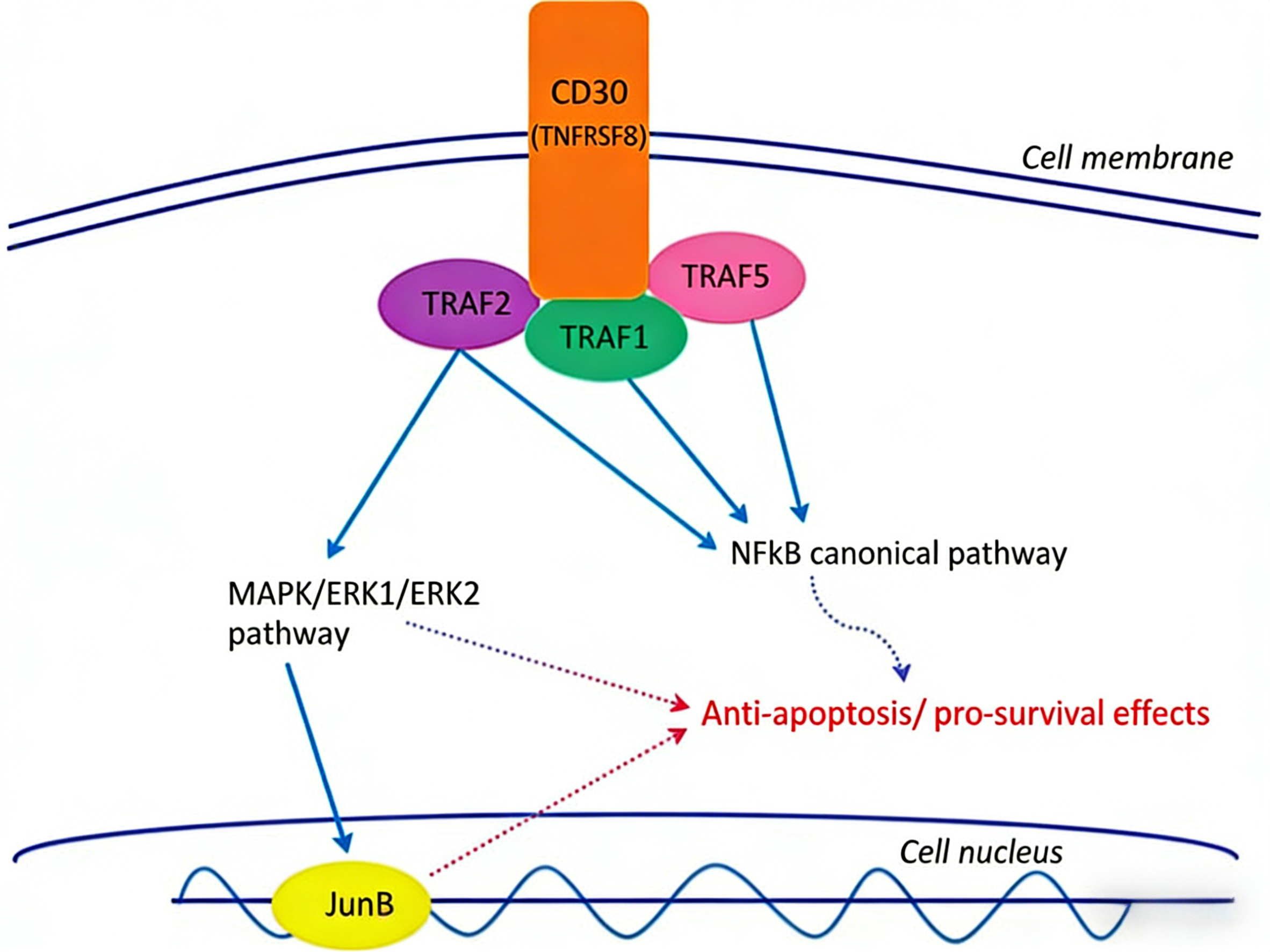
III. Research Value of Alexa Fluor 647-Labeled CD30/TNFRSF8 His Tag Protein
In the development of CD30-targeted immunotherapies like CAR-T, precise evaluation of CAR-T cell functionality, specificity, and their ability to recognize and kill target cells is critical. The Alexa Fluor 647-Labeled CD30/TNFRSF8 His Tag Protein serves as an indispensable in vitro research tool in this process.
1. Molecular Design and Technical Advantages: This protein combines the extracellular domain of human CD30 with a polyhistidine tag (His Tag) for fusion expression. The His Tag facilitates standardized preparation of high-purity protein via metal chelate chromatography. The pre-conjugated Alexa Fluor 647 dye is a far-red fluorescent dye with excellent photostability and high fluorescence intensity, making it particularly suitable for multicolor flow cytometry analysis.
2. Core Applications:
- Validation of CAR-T Cell Binding Specificity: Using this fluorescently labeled protein, flow cytometry can directly and quantitatively detect the binding capacity of candidate CD30-CAR-T cells to CD30 protein, verifying the correctness of their functional conformation and binding affinity.
- Precise Quantification of CD30 Expression on Target Cells: As a standardized reagent, it is used in flow cytometry to analyze CD30 expression levels on lymphoma cell lines or primary patient tumor cells, providing key data for assessing potential CAR-T therapy candidates.
- Target Simulation in Functional Assays: In in vitro co-culture killing experiments, this protein can be used to pre-label or block target cells to study whether CAR-T cell activation, proliferation, and cytokine secretion strictly depend on CD30 recognition.
- Auxiliary Tool for Off-Target Risk Assessment: It can screen for potential cross-reactivity of CAR-T cells with unrelated normal cells that may express low levels of CD30, aiding in safety evaluations.
IV. Summary and Outlook
CD30, as a tumor-specific, highly expressed membrane protein receptor, shows broad prospects in lymphoma immunotherapy, serving as an important complementary target to CD19. CD30-targeted CAR-T therapies for relapsed/refractory classical Hodgkin lymphoma and systemic anaplastic large cell lymphoma are transitioning from laboratory research to clinical applications. In this process, the Alexa Fluor 647-Labeled CD30/TNFRSF8 His Tag Protein, as a functionally integrated high-quality research tool, will continue to provide robust technical support for CD30 target validation, CAR-T product functional evaluation, and optimization. With deeper research and accumulated clinical experience, CD30-targeted cellular immunotherapies may offer new hope to more lymphoma patients and further enrich the options for precision immunotherapy.
V. Which Manufacturers Provide Alexa Fluor 647-Labeled CD30/TNFRSF8 His Tag Protein?
Nanjing UniLove Biotech's independently developed Alexa Fluor 647-Labeled CD30/TNFRSF8 His Tag Protein, Human (Catalog No.: UA011322) is an innovative, ready-to-use monomeric detection probe combining high specificity, strong fluorescent signals, and versatile applications. This product features the extracellular domain of human CD30/TNFRSF8 fused with a C-terminal His tag and covalently labeled with the high-performance Alexa Fluor 647® fluorescent dye. Unlike Fc-fused dimeric forms, the monomeric design with His tag offers advantages in specific applications (e.g., precise affinity measurement, epitope analysis). As CD30 is a critical target in lymphoma, this product provides a high-quality tool for flow cytometry, imaging, and interaction studies from another perspective.
| Core Advantages |
|---|
| Superior Monomeric Probe Design: Compared to dimeric forms, the monomeric His tag design avoids affinity amplification due to multivalent binding, more accurately reflecting monovalent interactions. This is ideal for experiments requiring precise affinity constant (KD) measurement or single binding site studies. |
| High-Performance Fluorescent Labeling: Labeled with Alexa Fluor 647®, it offers high brightness, excellent photostability, and strong anti-bleaching properties. Its far-red emission spectrum (~668 nm) effectively avoids interference from most cellular autofluorescence, ensuring high signal-to-noise ratios in flow cytometry and imaging. |
| Ready-to-Use & Highly Flexible: As a ready-to-use fluorescent probe, it can be directly applied in flow cytometry, immunofluorescence, and microscopy. The C-terminal His tag allows reversible immobilization via nickel columns, enabling directional fixation on biosensor chips (e.g., SPR, BLI) for precise kinetic binding analysis. |
| Strict Quality Control: The product undergoes meticulous labeling process control to ensure uniform and stable fluorophore-to-protein (F/P) ratios while retaining biological activity (CD30 binding capability). Rigorous quality control guarantees high batch-to-batch consistency. |
| Clear and Differentiated Applications |
|---|
| Precise Molecular Interaction Analysis: When directionally immobilized via His tag on SPR or BLI biosensor platforms, it enables quantitative analysis of binding kinetics (ka, kd) and affinity (KD) with CD30 antibodies, ligands, or candidate drugs. |
| High-Sensitivity Flow Cytometry & Imaging: Directly used for detecting cell surface CD30 expression, especially suitable for multicolor flow panels and confocal microscopy. |
| Competitive Binding Assays: Serves as a standardized fluorescent ligand to evaluate the competitive inhibitory capacity (IC50 determination) of unlabeled molecules (e.g., therapeutic antibodies). |
| Epitope Mapping Studies: Its monomeric form aids in analyzing potential steric hindrance between different antibodies, facilitating epitope classification. |
Nanjing UniLove Biotech is committed to providing precise, high-performance molecular tools for tumor immunology, antibody engineering, and biopharmaceutical R&D. For detailed technical parameters (e.g., F/P ratio), specific application protocols in biosensor analysis, or comparisons with other CD30 protein formats of the Alexa Fluor 647-Labeled CD30/TNFRSF8 His Tag Protein, Human (Catalog No.: UA011322), please feel free to contact us.
Disclaimer: This article partially utilizes artificial intelligence assistance in its creation. If any content involves copyright or intellectual property issues, please let us know and we promise to verify and remove it as soon as possible.
Purchase recombinant protein, choose Nanjing UA-Bio
UA protein focuses on providing various protein reagents, raw materials, and services required for drug research and development, cell therapy, gene therapy, and basic scientific research, including drug target proteins, immune checkpoint proteins, cytokines, tool enzymes, customized protein expression, and full-length transmembrane protein development. Youai is committed to providing customers with high-quality products and professional services, and building a High-tech Biological Enterprise with International Competitiveness.







 Business license (three certificates in one)