




Study on the Mechanism of BDNF Protein in the Neuroprotective Effects of Acupuncture


The neuroprotective effects of acupuncture are closely related to changes in various signaling pathways, and accumulating evidence suggests that endogenous biological mediators such as members of the neurotrophic protein family are involved.
- Recent Advances
- Product Information
I. Research Background on the Neuroprotective Effects of Acupuncture
The neuroprotective effects of acupuncture are closely related to changes in multiple signaling pathways. Accumulated evidence suggests that endogenous biological mediators such as members of the neurotrophin family are involved. BDNF protein, as a key member of the neurotrophic factor family, plays a critical role in acupuncture-mediated neuroprotection. Studies have shown that acupuncture can inhibit neurodegenerative processes by promoting the expression and activation of BDNF protein. Additionally, recent research has found that acupuncture can increase ATP levels at local stimulation sites, suggesting that acupuncture may stimulate ATP to activate monocytes and upregulate BDNF protein expression. As a key molecule connecting physical stimulation to neuroprotective effects, the regulatory mechanisms of BDNF protein warrant in-depth exploration.
II. Regulatory Effects of Physical Stimulation on BDNF Protein Expression
Various physical stimuli can activate the BDNF protein signaling pathway. Repetitive transcranial magnetic stimulation (rTMS) can alter BDNF protein expression levels. Research has confirmed that this stimulation can upregulate the expression of neurotrophic factors in Parkinson's disease models, with BDNF protein being one of the most important neuroprotective proteins. High-frequency rTMS can increase BDNF protein levels in patients with neuropsychiatric disorders, regulating the nigrostriatal dopamine system through BDNF protein and other neurotrophic factors to promote functional recovery. Physical exercise also enhances neuroprotective effects. Rats with cerebral ischemia-reperfusion injury showed improved motor function after exercise, with neuroprotection linked to the upregulation of BDNF protein and its receptor TrkB. Various electrical stimulation devices promote the survival of degenerating neurons by increasing BDNF protein levels. Experimental evidence indicates that electrical stimulation can directly upregulate BDNF protein transcription in glial cells and induce Müller cells to produce endogenous BDNF protein, thereby modulating microglial activation. These findings highlight the importance of BDNF protein as a common target for multiple physical stimuli.
III. Neuroprotective Mechanisms of the BDNF/TrkB Signaling Pathway
BDNF protein is widely distributed in neuronal cell bodies, axons, and dendrites of the central nervous system, playing a significant role in neuroplasticity related to learning and memory. Neuronal activity, such as electrically evoked stimulation, can regulate the transport of BDNF protein mRNA to dendrites. This mechanism allows BDNF protein to be locally translated and modulate synaptic transmission and synaptogenesis. BDNF protein can function through autocrine and paracrine mechanisms. Its binding to the receptor TrkB activates various intracellular signaling pathways, including the MAPK/ERK pathway, PLCγ pathway, and PI3K pathway. Studies have shown that BDNF protein protects cortical and cerebellar neurons from DNA damage-induced cell death by activating the ERK pathway. The anti-apoptotic effects of BDNF protein require not only the activation of the PI3K/Akt pathway but also the inhibition of GSK-3β and activation of CREB. In cortical-striatal organ cultures, BDNF protein can prevent neuronal death caused by NMDA receptor blockade, an effect dependent on the activation of the ERK and PI3K/Akt signaling cascades. BDNF protein constructs a complex neuroprotective network through the synergistic action of multiple pathways.
IV. Potential Mechanisms of Acupuncture in Regulating BDNF Protein
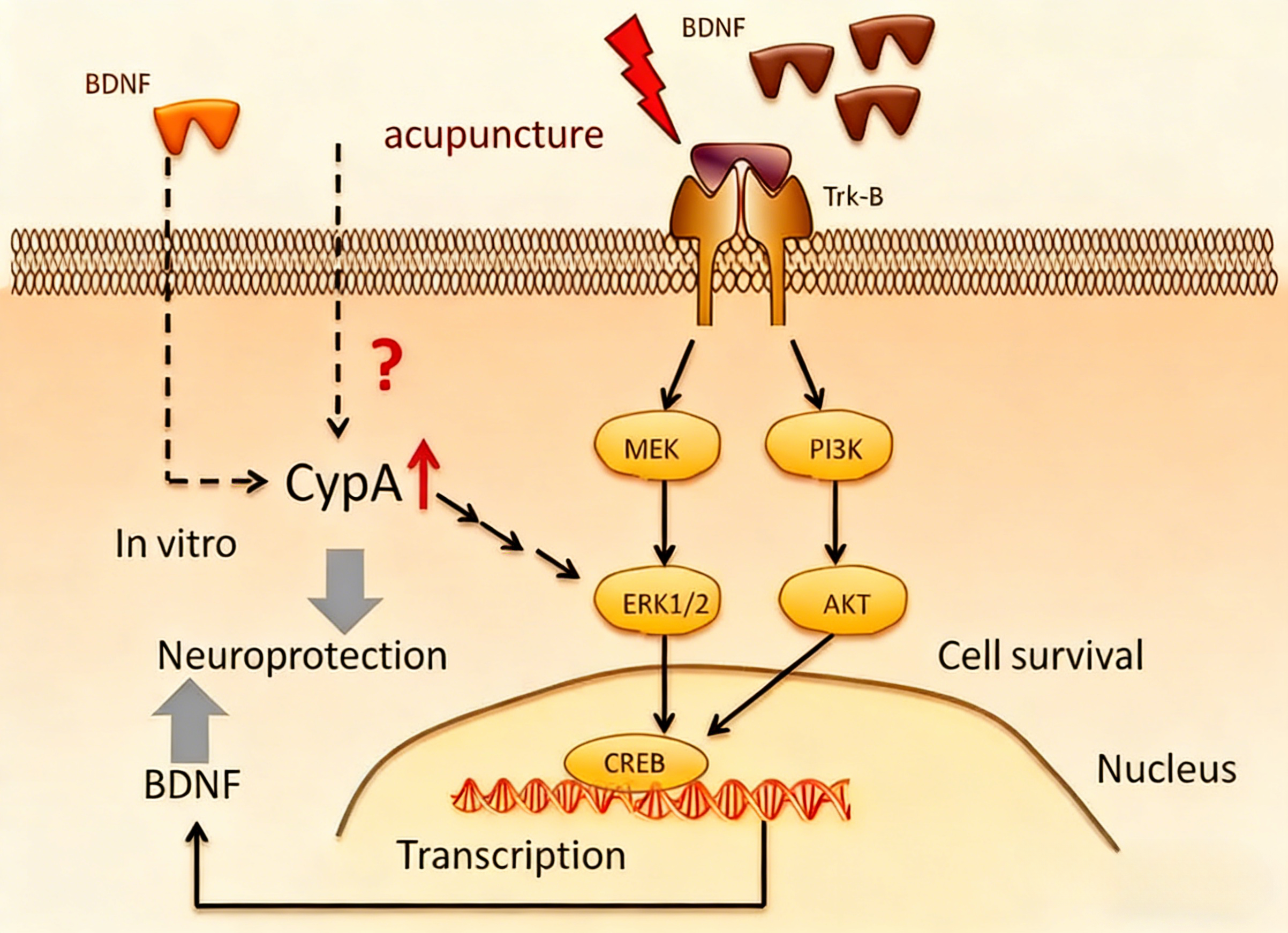
The role of acupuncture in promoting BDNF protein expression has been confirmed in numerous studies. In a Parkinson's disease mouse model, acupuncture increased the expression of BDNF protein and CypA, suggesting that the protective effect of acupuncture against dopaminergic neuron degeneration may be related to elevated CypA levels. CypA is primarily localized in neurons in the brain and is involved in neuronal differentiation and adult cortical plasticity. Research indicates that acupuncture stimulation may activate BDNF protein and its signaling pathways through CypA. Simultaneously, BDNF protein treatment can induce CypA expression in neural cells, suggesting that BDNF protein may be an important upstream factor regulating CypA expression during acupuncture therapy. Acupuncture exerts neuroprotective effects by triggering orderly signaling pathways, with BDNF protein potentially located upstream of other endogenous defense systems. In vitro studies have confirmed that CypA stimulation can activate the ERK1/2 signaling pathway in cultured cortical neurons and protect neurons from oxidative and ischemic damage through this pathway. A plausible explanation for the mechanism of acupuncture is the activation of the CypA-ERK pathway to upregulate BDNF protein expression and improve neuronal dysfunction.
V. Integration of BDNF Protein Signaling Pathways Activated by Acupuncture
Acupuncture can increase BDNF protein expression by activating the TrkB receptor via the PI3K/Akt and MEK/ERK1/2 signaling pathways. This process ultimately leads to the phosphorylation and activation of the transcription factor CREB, mediating BDNF protein gene transcription and achieving neuroprotective effects. In the mechanism of acupuncture-regulated BDNF protein, CypA may play a significant role, while BDNF protein may also be an important upstream factor regulating CypA expression, forming a positive feedback loop. Clinical studies based on BDNF protein function and acupuncture effects show that acupuncture can accelerate nerve regeneration in patients with certain neurological disorders through neurotrophic factor-mediated actions. Animal studies have confirmed that acupuncture-induced endothelial BDNF protein increase can exert neuroprotective effects after nerve injury.
VI. Which Manufacturers Provide BDNF Protein?
Nanjing UA-Bio Technology Co., Ltd. (UA-Bio) has independently developed "BDNF Protein, Human/Mouse/Rat", a high-quality recombinant protein reagent specifically designed for neuroscience research and cell therapy development. This protein, derived from human, mouse, and rat brain-derived neurotrophic factor (BDNF), exhibits broad cross-species reactivity and efficiently activates the TrkB receptor signaling pathway. It provides a stable and reliable standardized tool for research in neurodevelopment, neuroprotective mechanism exploration, stem cell differentiation, and other fields.
| Core Product Advantages |
|---|
| High Purity and Intact Bioactivity: The product employs internationally leading prokaryotic or eukaryotic expression systems and highly standardized purification processes, validated through multi-dimensional quality control. It ensures >95% high purity, correct native conformation, and complete biological function. The protein efficiently binds to the TrkB receptor, authentically simulating the BDNF-mediated processes of neuronal survival, differentiation, and synaptic plasticity regulation under physiological conditions. |
| Cross-Species Reactivity: This protein exhibits high activity in human, mouse, and rat species, making it widely applicable to cross-species research systems. There is no need to switch reagents for different species, greatly enhancing experimental convenience and data comparability. |
| Excellent Batch Consistency and Stability: From gene construction and protein expression to purification and quality control, the entire process is strictly managed. Combined with a comprehensive release testing system, each batch of products ensures stable biological activity, consistent purity, and excellent long-term stability. It provides solid and reliable quality assurance for long-term and continuous neuroscience research. |
| Ideal Tool for Multiple Applications: This protein performs excellently in primary neuron culture, stem cell differentiation, organoid construction, ELISA, and cell signaling pathway research. It is widely suitable for exploring neuroprotective mechanisms, studying neuronal survival, analyzing synaptic function, and constructing neurodegenerative disease models, among other applications. |
| Complete Solutions and Professional Support: We provide fully validated standard experimental protocols, typical biological activity data, and detailed product analysis certificates to help you quickly establish stable and reproducible experimental workflows. Nanjing UA-Bio's professional technical team offers comprehensive technical consultation and support for your research design, experimental optimization, and data analysis. |
Nanjing UA-Bio Technology Co., Ltd. is committed to providing cutting-edge, high-quality core reagents and tools for immunology, cell therapy, and innovative drug development. For detailed technical parameters, validation data, or specific application inquiries regarding "BDNF Protein, Human/Mouse/Rat" (Product No.: UA100029), please feel free to contact us.
This article is reviewed and published by the technical expert team of UA
Disclaimer: This article partially utilizes artificial intelligence assistance in its creation. If any content involves copyright or intellectual property issues, please let us know and we promise to verify and remove it as soon as possible.
Purchase recombinant protein, choose Nanjing UA-Bio
UA protein focuses on providing various protein reagents, raw materials, and services required for drug research and development, cell therapy, gene therapy, and basic scientific research, including drug target proteins, immune checkpoint proteins, cytokines, tool enzymes, customized protein expression, and full-length transmembrane protein development. Youai is committed to providing customers with high-quality products and professional services, and building a High-tech Biological Enterprise with International Competitiveness.







 Business license (three certificates in one)