




Metabolic regulation mechanisms of FGF-21 protein and its clinical translation prospects


Fibroblast growth factor 21 (FGF-21) is an endocrine metabolic regulator within the fibroblast growth factor family. Since its discovery, this protein has emerged as a cutting-edge research focus in the field of metabolic diseases due to its unique roles in glucose and lipid metabolism, energy homeostasis regulation, and improvement of insulin sensitivity.
- Recent Advances
- Product Information
I. Introduction
Fibroblast Growth Factor 21 (FGF-21) is an endocrine metabolic regulator within the fibroblast growth factor family. Since its discovery, this protein has emerged as a cutting-edge research focus in the field of metabolic diseases due to its unique roles in glucose and lipid metabolism, energy homeostasis regulation, and insulin sensitivity improvement. Unlike other family members, FGF-21 primarily functions through endocrine mechanisms, with its expression finely regulated by various factors such as nutritional status, hormone levels, and metabolic stress. This article systematically elaborates on the structural characteristics, physiological functions, signal transduction mechanisms, and pathophysiological roles of FGF-21, aiming to provide theoretical references for related basic research and translational applications.
II. Molecular Structure and Tissue Distribution
FGF-21 consists of 209 amino acids and belongs to the FGF19 subfamily. Unlike traditional FGF family proteins, FGF-21 lacks heparin-binding capacity, a structural feature that allows it to diffuse from tissues into the bloodstream and exert hormone-like endocrine effects. Its three-dimensional structure includes a typical β-trefoil fold, which is crucial for receptor recognition and binding. This protein is highly expressed in the liver, with varying levels of expression also observed in metabolic organs such as adipose tissue, pancreas, skeletal muscle, and the central nervous system. Under physiological conditions, its expression is regulated by nutritional status—fasting induces upregulation of hepatic FGF-21 expression, while feeding rapidly suppresses it, suggesting its important role in energy stress responses. Additionally, cold exposure can induce FGF-21 expression in adipose tissue, participating in adaptive thermogenesis regulation.
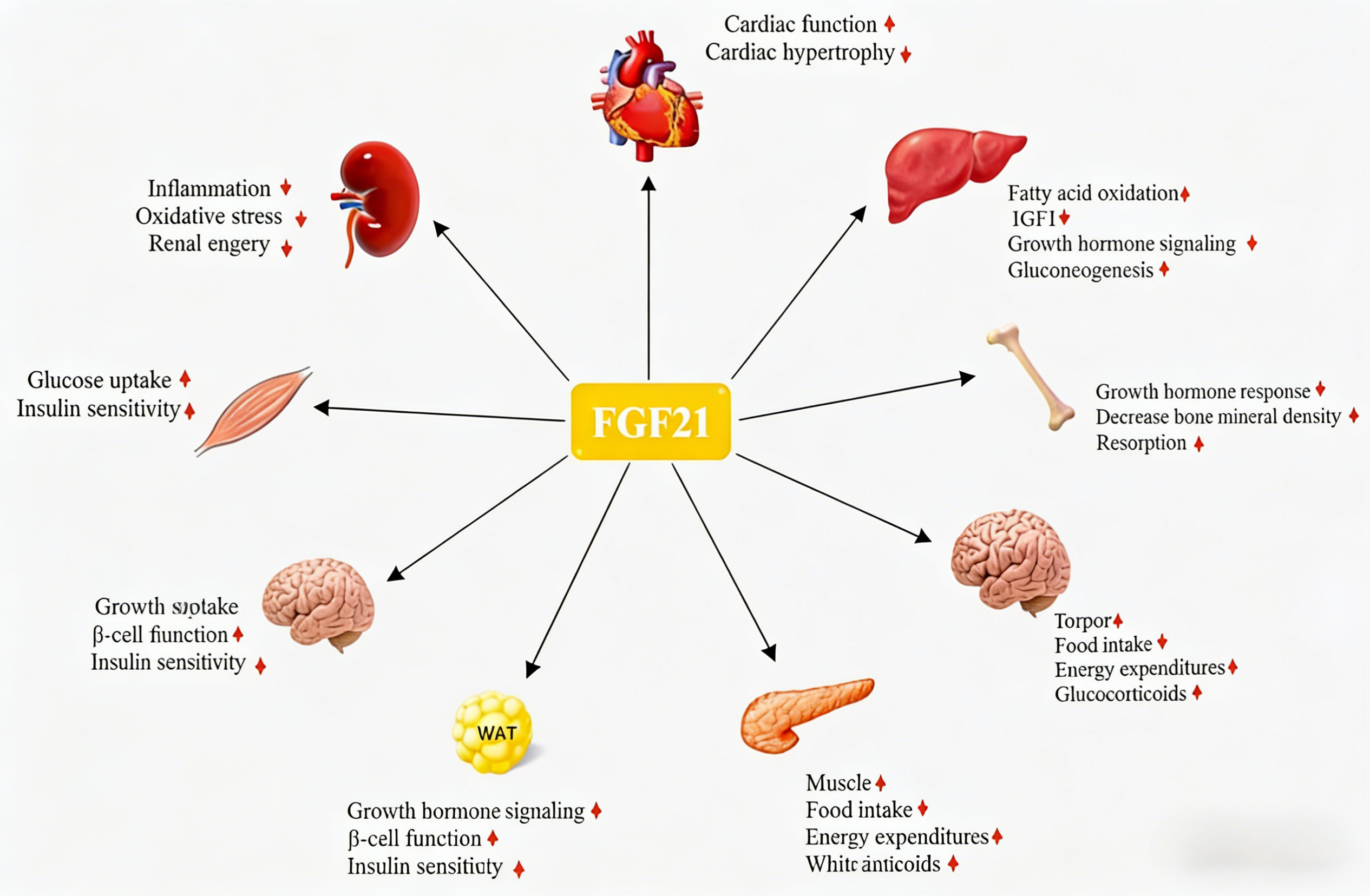
III. Signal Transduction Mechanisms
The biological effects of FGF-21 depend on its formation of a ternary complex with fibroblast growth factor receptors and the co-receptor β-Klotho. β-Klotho, as an auxiliary factor, determines the tissue specificity of FGF-21 action. In target organs expressing β-Klotho, such as adipose tissue, hypothalamus, and liver, FGF-21 activates multiple downstream signaling pathways upon receptor binding. Among these, the fibroblast growth factor receptor substrate/mitogen-activated protein kinase pathway primarily regulates cell proliferation and differentiation, while the phosphatidylinositol-3-kinase/protein kinase B pathway mediates changes in metabolic gene expression. Through the coordinated action of these signaling networks, FGF-21 regulates transcription factor activity and influences cellular metabolic reprogramming. Notably, signal preferences vary across tissues, providing potential windows for targeted interventions.
IV. Metabolic Regulatory Functions
In glucose metabolism, FGF-21 promotes the expression of glucose transporters in adipocytes, enhancing glucose uptake and utilization in peripheral tissues. Simultaneously, it inhibits the activity of key gluconeogenic enzymes in the liver, reducing endogenous glucose production. In lipid metabolism, FGF-21 activates lipolysis in adipose tissue, promotes fatty acid oxidation, and reduces ectopic lipid deposition in the liver and skeletal muscle. Additionally, this protein enhances insulin sensitivity and improves insulin resistance. At the energy metabolism level, FGF-21 activates thermogenic functions in brown adipose tissue and induces the browning of white adipose tissue, thereby increasing energy expenditure.
Notably, FGF-21 exhibits dual effects in energy metabolism regulation. Under acute administration, it promotes energy expenditure and reduces body weight, whereas in long-term high-fat diet-induced obesity models, elevated circulating FGF-21 levels often coincide with diminished biological effects—a "resistance state" suggesting negative feedback regulation in its signaling. This resistance may be associated with receptor downregulation, downstream pathway desensitization, and impaired β-Klotho function.
V. Pathophysiological Associations
Preclinical studies indicate that FGF-21 signaling abnormalities are closely linked to the development of various metabolic diseases. In conditions such as obesity, type 2 diabetes, and non-alcoholic fatty liver disease, serum FGF-21 levels are often compensatorily elevated, but target tissue responsiveness declines, manifesting as functional deficiency. This phenomenon suggests that exogenous FGF-21 supplementation alone may be insufficient to fully reverse metabolic disorders, requiring combined interventions to improve receptor sensitivity. Furthermore, the protein's roles in the cardiovascular, skeletal, and nervous systems have garnered widespread attention. Research suggests its potential involvement in vascular endothelial function regulation, bone metabolism balance, and neuroprotection. In cardiovascular research, FGF-21 is considered to have potential anti-atherosclerotic effects; in bone metabolism, its dual regulatory effects on bone formation and resorption remain controversial and require further investigation.
VI. Translational Research and Future Perspectives
Given FGF-21's central regulatory role in multiple metabolic pathways, research targeting this protein and its analogs has become a key direction for metabolic disease interventions. Current strategies, including structural modifications, half-life extension, and receptor selectivity optimization, have led to the development of various long-acting FGF-21 analogs. These approaches focus on N- and C-terminal modifications, fusion protein construction, and PEGylation to enhance in vivo stability and pharmacokinetic properties. However, potential adverse effects—such as increased heart rate, reduced bone mass, and gastrointestinal reactions—must be addressed during clinical translation. Additionally, as FGF-21 acts on multiple tissues and organs, the long-term safety of its application requires systematic evaluation.
VII. Which Manufacturers Provide FGF-21 Protein?
Nanjing UA-Biotech Co., Ltd. (UA-Bio) has independently developed "FGF-21 Protein, Human", a high-quality recombinant protein reagent specifically designed for metabolic regulation, glucose and lipid metabolism disorders, and drug development research. This protein, human fibroblast growth factor 21 (FGF-21), efficiently activates the FGFR1c/β-klotho complex signaling pathway, participating in energy homeostasis regulation and insulin sensitization. It provides a stable and reliable standardized tool for diabetes research, obesity mechanism exploration, and metabolic disease treatment.
| Core Product Advantages |
|---|
| High Purity and Intact Bioactivity: The product employs an internationally leading recombinant expression system and highly standardized purification processes, validated through multi-dimensional quality control to ensure >95% purity, correct native conformation, and full biological functionality. The protein effectively binds to the FGFR1c and β-klotho complex receptors, accurately mimicking FGF-21-mediated glucose regulation, lipid metabolism modulation, and energy balance signaling under physiological conditions. |
| Exceptional Batch Consistency and Stability: From gene construction and protein expression to purification and quality control, the product undergoes rigorous management. Combined with a comprehensive release testing system, each batch exhibits stable biological activity, consistent purity, and excellent long-term stability, providing reliable quality assurance for continuous metabolic regulation research. |
| Ideal Tool for Multi-Scenario Applications: This protein performs excellently in various application systems, including adipocyte culture, hepatocyte metabolism studies, insulin signaling pathway analysis, animal model administration, and drug activity evaluation. It is widely suitable for glucose and lipid metabolism regulation, insulin sensitization mechanism research, energy metabolism analysis, and metabolic disease drug screening. |
| Low Endotoxin and High Batch Consistency: The product undergoes multi-step chromatographic purification and endotoxin removal processes, resulting in extremely low endotoxin levels (<0.1 EU/μg), meeting stringent requirements for cell culture and animal experiments. A rigorous quality control system ensures high consistency in protein activity and purity across batches. |
| Comprehensive Solutions and Professional Support: We provide fully validated standard experimental protocols, typical biological activity data, and detailed product analysis certificates to help establish stable and reproducible experimental workflows. Nanjing UA-Bio's technical team offers professional consultation and support for research design, experimental optimization, and data analysis. |
Nanjing UA-Biotech Co., Ltd. is committed to providing cutting-edge, high-quality core reagents and tools for immunology, cell therapy, and innovative drug development. For detailed technical parameters, validation data, or application inquiries regarding "FGF-21 Protein, Human" (Catalog No.: UA040075), please feel free to contact us.
This article is reviewed and published by the technical expert team of UA
Disclaimer: This article partially utilizes artificial intelligence assistance in its creation. If any content involves copyright or intellectual property issues, please let us know and we promise to verify and remove it as soon as possible.
Purchase recombinant protein, choose Nanjing UA-Bio
UA protein focuses on providing various protein reagents, raw materials, and services required for drug research and development, cell therapy, gene therapy, and basic scientific research, including drug target proteins, immune checkpoint proteins, cytokines, tool enzymes, customized protein expression, and full-length transmembrane protein development. Youai is committed to providing customers with high-quality products and professional services, and building a High-tech Biological Enterprise with International Competitiveness.







 Business license (three certificates in one)