

Modeling always fails? Maybe you didn't choose the right "key" — Highly active recombinant proteins unlock new heights in disease modeling


Experimental autoimmune encephalomyelitis (EAE) is the most widely used animal model for studying multiple sclerosis (MS). MS is a chronic inflammatory demyelinating disease of the central nervous system, characterized by neurological dysfunction, axonal damage, and immune cell infiltration. The EAE model can simulate the clinical course, pathological features, and immunological mechanisms of MS.
- Recent Advances
- Product Information
1. EAE Autoimmune Encephalomyelitis Model (Multiple Sclerosis Research)
Model Background
Experimental autoimmune encephalomyelitis (EAE) is the most widely used animal model for studying multiple sclerosis (MS). MS is a chronic inflammatory demyelinating disease of the central nervous system, characterized by neurological dysfunction, axonal damage, and immune cell infiltration. The EAE model can simulate the clinical course, pathological features, and immunological mechanisms of MS.
Modeling Mechanism
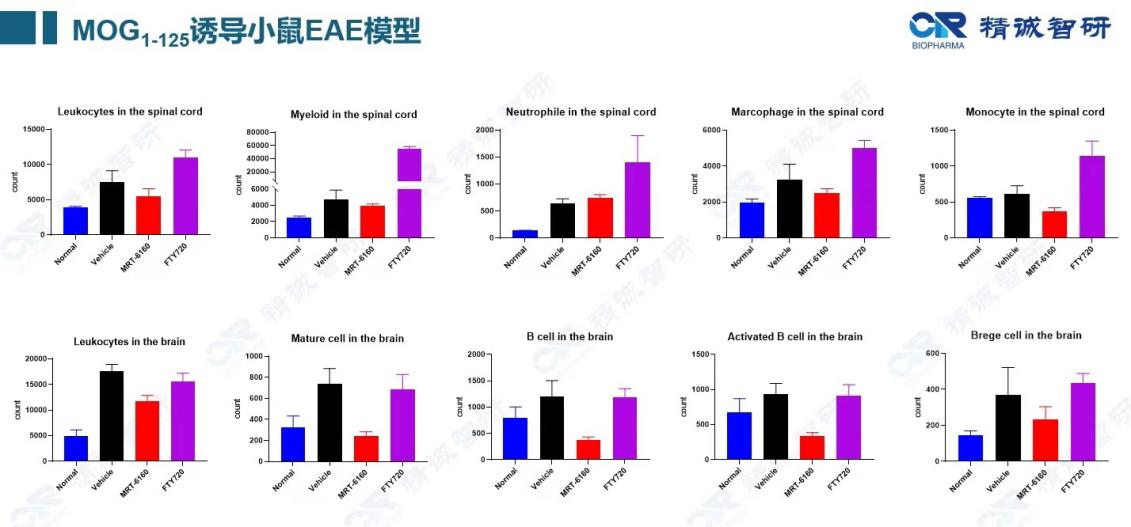
The EAE model is induced by immunizing animals (commonly C57BL/6 mice) with myelin protein antigens such as MOG (myelin oligodendrocyte glycoprotein) combined with complete Freund's adjuvant (CFA) and pertussis toxin (PTX). MOG(1-125) is a transmembrane glycoprotein of myelin, and its extracellular segment contains major pathogenic T-cell and B-cell epitopes. The use of highly active recombinant MOG protein can stably activate autoreactive T cells, triggering central nervous system inflammatory infiltration, demyelination, and progressive limb paralysis.
Application Value
- Evaluate the efficacy of anti-inflammatory and immunomodulatory drugs
- Study the pathogenesis of MS (e.g., the roles of T cells, B cells, and microglia)
- Validate the function of genetically modified animals in autoimmune diseases
Customer Data Sharing:

| Product No. | Product Name |
|---|---|
| UA010471 | MOG(1-125) Protein, Human |
| UA010433 | MOG His Tag Protein, Mouse |
2. Parkinson's Disease Model (Neurodegenerative Disease Research)
Model Background
Parkinson's disease (PD) is the second most common neurodegenerative disease after Alzheimer's disease, characterized by the progressive loss of dopaminergic neurons in the substantia nigra of the midbrain and the formation of Lewy bodies. The main component of Lewy bodies is the abnormal aggregation of α-synuclein. Constructing PD animal models is a key tool for studying its pathogenesis and screening therapeutic drugs.
Modeling Mechanism
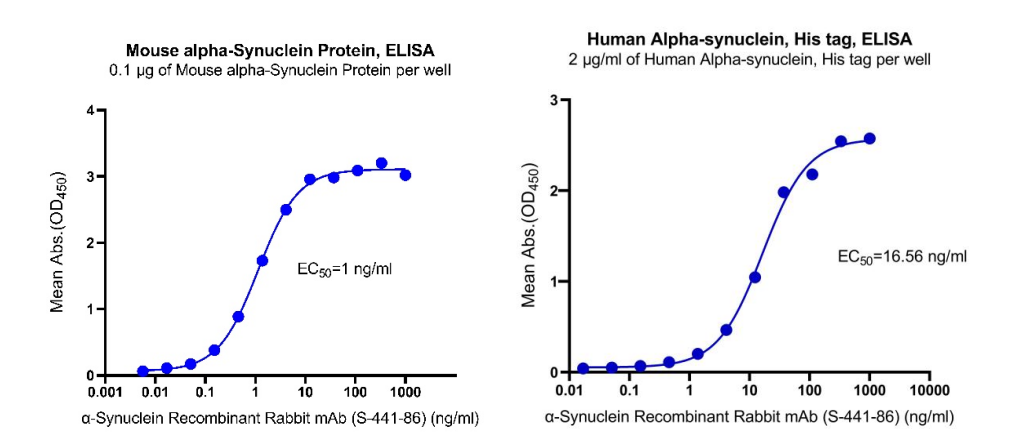
Recombinant α-synuclein protein can be directly injected into the substantia nigra or striatum of mice or rats via stereotactic injection, inducing protein aggregation, neuronal toxicity, and dopaminergic neuron death. Additionally, combining α-synuclein transgenic animals can simulate the chronic progression of PD. Highly active α-synuclein protein can more accurately reproduce pathological protein aggregation, synaptic dysfunction, and motor impairments.
Application Value
- Evaluate neuroprotective drugs and gene therapy strategies
- Study the mechanisms of α-synuclein aggregation and propagation
- Construct acute and chronic PD models
Partial Activity Data:
| Product No. | Product Name |
|---|---|
| UA100034 | α-Synuclein Protein, Mouse |
| UA100033 | α-Synuclein His Tag Protein, Mouse |
| UA011215 | α-synuclein His tag Protein, Human |
---
3. Psoriasis Model (Autoimmune Skin Disease Research)
Model Background
Psoriasis is a chronic inflammatory skin disease characterized by erythema and scales, with a global incidence of approximately 2-3%. Its pathological features include hyperproliferation and abnormal differentiation of epidermal keratinocytes, as well as dermal immune cell infiltration. The IL-23/IL-17 axis plays a central role in the pathogenesis of psoriasis.
Modeling Mechanism
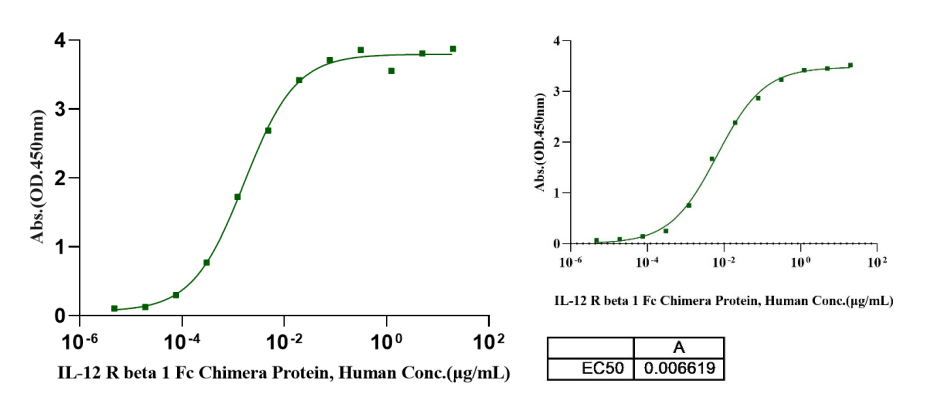
IL-23 is a key cytokine driving psoriasis-like inflammation. Intradermal injection of recombinant IL-23 protein (often combined with other pro-inflammatory factors) or the use of IL-23 transgenic/injection models can induce typical psoriasis-like skin lesions in mice, including increased epidermal thickness, keratinocyte proliferation, and neutrophil infiltration. The quality of recombinant IL-23 protein directly affects the severity and consistency of the model lesions.
Application Value
- Evaluate anti-IL-23/IL-17 pathway biologics
- Study the interaction between keratinocytes and immune cells
- Construct acute inflammation models for drug efficacy screening
Partial Activity Data:
| Product No. | Product Name |
|---|---|
| UA040502 | IL-23 Protein, Human |
| UA040482 | IL-23 Protein, Mouse |
---
4. Skin Inflammation Model (Atopic Dermatitis Research)
Model Background
Atopic dermatitis (AD) is a chronic inflammatory skin disease characterized by intense itching, skin barrier dysfunction, and Th2-type inflammation. Various cytokines such as IL-33, IL-31, and TSLP play key roles in its pathogenesis, making them important targets for drug development.
Modeling Mechanism
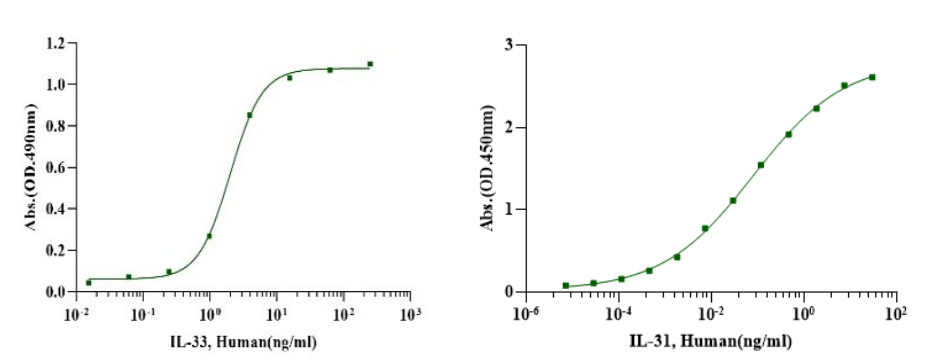
- IL-33: As an alarmin, it can activate type 2 innate lymphoid cells (ILC2) and mast cells, inducing Th2-type inflammation. Intradermal injection of recombinant IL-33 can rapidly induce skin inflammation and itching.
- IL-31: Known as the "itch cytokine," it directly acts on sensory neurons to trigger itching and promotes inflammatory infiltration. The recombinant IL-31 model is widely used to evaluate anti-itch drugs.
- TSLP: An epithelial-derived cytokine highly expressed in AD lesions, it can activate dendritic cells to induce Th2-type immune responses. Recombinant TSLP protein can be used to construct models characterized by skin barrier disruption and allergic inflammation.
Application Value
- Screen anti-itch and anti-inflammatory drugs
- Study the mechanisms of epithelial-immune-neural interactions
- Construct controllable inflammation models driven by single factors
Partial Activity Data:
| Product No. | Product Name |
|---|---|
| UA040179 | IL-33 Protein, Mouse |
| UA040036 | IL-33 Protein, Human |
| UA040227 | IL-31 Protein, Human |
| UA040346 | IL-31 Protein, Mouse |
| UA011336 | TSLP His Tag Protein, Human |
Conclusion
The success of animal modeling highly depends on the quality of core reagents. Highly active, high-purity, low-endotoxin recombinant proteins not only improve the stability and reproducibility of models but also provide reliable tools for accurately simulating human diseases. Whether for autoimmune diseases, neurodegenerative diseases, or inflammatory skin diseases, selecting appropriate high-quality recombinant proteins is a crucial guarantee for advancing research.
```
This article is reviewed and published by the technical expert team of UA
Disclaimer: This article partially utilizes artificial intelligence assistance in its creation. If any content involves copyright or intellectual property issues, please let us know and we promise to verify and remove it as soon as possible.
Purchase recombinant protein, choose 
UA protein focuses on providing various protein reagents, raw materials, and services required for drug research and development, cell therapy, gene therapy, and basic scientific research, including drug target proteins, immune checkpoint proteins, cytokines, tool enzymes, customized protein expression, and full-length transmembrane protein development. Nanjing Univ is committed to providing customers with high-quality products and professional services, and building a High-tech Biological Enterprise with International Competitiveness.







 Business license (three certificates in one)