


1. Overview of ACSS2
Acyl-CoA synthetase short-chain family member 2 (Acetyl-CoA Synthetase 2, ACSS2) is a key member of the ACSS family that catalyzes the conversion of acetate to acetyl-CoA. As the only known enzyme in mammals capable of converting free acetate to acetyl-CoA, ACSS2 plays a dual role in energy metabolism and epigenetic regulation.
The ACSS2 gene produces two isoforms (1606 bp and 2106 bp) through selective transcription initiation sites, primarily expressed in the nucleus and cytoplasm, with high expression in the liver, kidneys, and heart, and moderate expression in the brain and testes. Unlike ACSS1, which is mainly localized in the mitochondrial matrix and involved in acetate oxidation, ACSS2 is more focused on lipid synthesis and protein acetylation regulation.

2. Molecular Mechanisms and Metabolic Functions of ACSS2
2.1 Key Node in Acetyl-CoA Generation
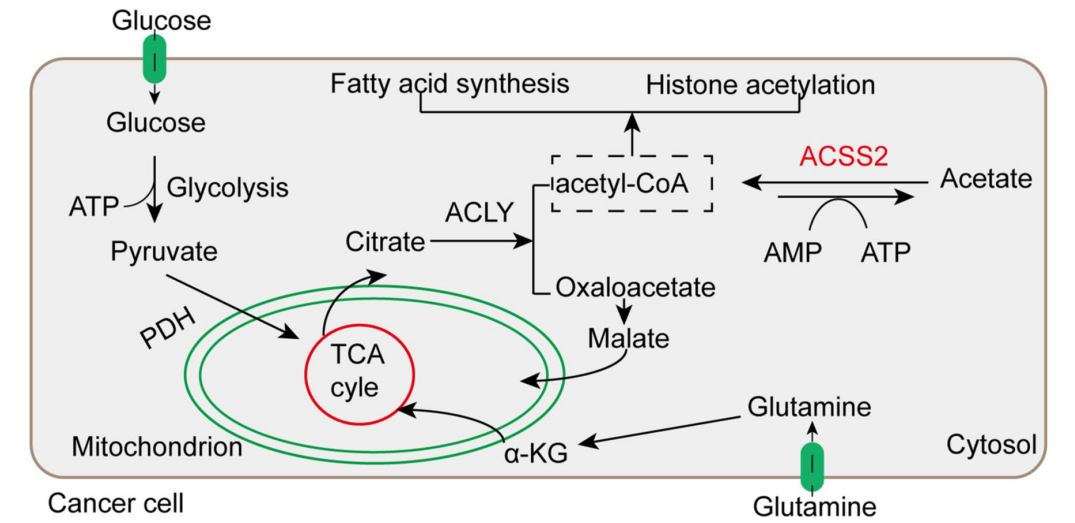
Acetyl-CoA is a central intermediate in cellular metabolism, serving as both a substrate for the tricarboxylic acid cycle (TCA cycle) and the starting material for fatty acid synthesis, cholesterol synthesis, and histone acetylation. Under normal physiological conditions, cells primarily generate acetyl-CoA through glucose breakdown, producing pyruvate, which is then converted to acetyl-CoA in mitochondria. However, under metabolic stress conditions (e.g., hypoxia, nutrient deprivation), the ACSS2-mediated acetate metabolic pathway becomes a critical alternative mechanism for cell survival.
The reaction catalyzed by ACSS2 is reversible:
2.2 Dual Functions: Lipid Synthesis and Stress Response
ACSS2 exhibits unique dual functional properties:
Under normal conditions, ACSS2 primarily acts as a cytoplasmic lipogenic enzyme, promoting lipid synthesis and storage. Its expression is regulated by sterol regulatory element-binding proteins (SREBPs). When cholesterol or fatty acid levels decrease, SREBPs are activated and translocate to the nucleus, promoting the expression of ACSS2 and other lipid synthesis-related genes.
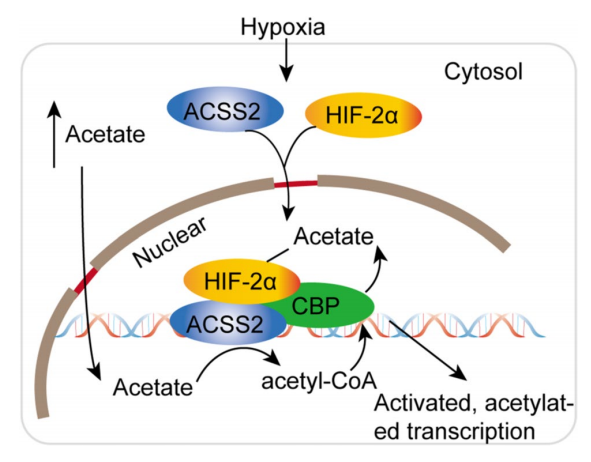
Under stress conditions (nutrient deprivation, hypoxia, injury), ACSS2 shifts to a regulatory role, inducing fatty acid oxidation and autophagy to maintain energy homeostasis. This functional switch allows cells to flexibly adjust metabolic strategies based on nutrient status and stress conditions.
3. ACSS2 and Tumor Metabolism
3.1 Metabolic Adaptation in the Tumor Microenvironment
Tumor cells often reside in hypoxic and nutrient-deprived microenvironments, making ACSS2 a critical enzyme for their survival and proliferation. Studies show that under hypoxic conditions, tumor cells significantly increase their dependence on acetate, upregulate ACSS2 expression, and utilize acetate as a carbon source for fatty acid synthesis.
Tumor cells rely on ACSS2 to synthesize fatty acids from acetate (original image media/image3.png)
ACSS2 is highly expressed in various tumors, including breast cancer, prostate cancer, and pancreatic cancer, with its expression levels correlating with tumor progression and prognosis. Under metabolic stress conditions, ACSS2 knockout significantly inhibits tumor cell growth, demonstrating that acetate is an important alternative nutrient source for tumor cells.
3.2 Immunomodulatory Functions
A 2023 study published in Nature Cancer revealed a new immunomodulatory function of ACSS2 in tumors. The study found that inhibiting ACSS2 not only blocks acetate uptake by tumor cells but also transforms tumor cells from acetate consumers to acetate producers. The released acetate can be utilized by tumor-infiltrating lymphocytes (TILs), enhancing T cell effector function and proliferative capacity.
This "metabolic immunomodulation" model provides a new approach to cancer therapy: targeting ACSS2 can both inhibit tumor metabolism and enhance antitumor immune responses, potentially producing synergistic effects when combined with chemotherapy or immune checkpoint inhibitors.
4. ACSS2 and Metabolic Diseases
4.1 Non-Alcoholic Fatty Liver Disease (NAFLD)
The critical role of ACSS2 in hepatic lipid metabolism makes it a potential therapeutic target for NAFLD. Under high-fat diet conditions, gut microbiota metabolize excess fructose into short-chain fatty acids such as acetate, which enters the liver via the portal vein. ACSS2 then converts acetate to acetyl-CoA, promoting fatty acid synthesis and fatty liver formation.
ACSS2 knockout mice on a high-fat diet exhibit reduced adipose tissue deposition and decreased expression of transcription factors related to cholesterol and unsaturated fatty acid synthesis, suggesting that inhibiting ACSS2 may improve NAFLD.
4.2 Diabetes and Diabetic Nephropathy
ACSS2 contributes to the development of diabetes and its complications through multiple mechanisms:
- Insulin resistance: ACSS2 overexpression promotes lipid synthesis and fat deposition, releasing pro-inflammatory cytokines that lead to insulin resistance.
- Renal fibrosis: Lipid accumulation increases reactive oxygen species (ROS) and NLRP3 inflammasome-mediated renal fibrosis.
- mTOR pathway activation: ACSS2-mediated histone acetylation activates the mTOR pathway, inhibiting autophagy and contributing to diabetic nephropathy.
5. Research Progress on ACSS2 Inhibitors
| Drug/Project Name | Development Stage | Indication |
|---|---|---|
| MTB-9655 | Phase I clinical trial completed → advancing to Phase I/II | Advanced solid tumors (colorectal cancer, breast cancer, lung cancer, etc.) |
| Brain-penetrant ACSS2 small-molecule inhibitors (including AD-5584, AD-8007, etc.) | Preclinical studies completed (technology licensing phase) | Breast cancer brain metastasis, brain tumors |
| Pep16 (peptide inhibitor) | Computer-designed / in vitro validation | Antitumor |
| CRD-1400 | Preclinical studies | Cancer (e.g., glioblastoma, melanoma, breast cancer, etc.) |
| Asiatic acid | Preclinical studies | Diabetic nephropathy (renal fibrosis) |
| VY-3-135 | Preclinical / tool compound | Tumors (metabolism-dependent tumors) |
| ACSS2-IN-2 | Preclinical / tool compound | Tumors (research use) |
| ACSS2 inhibitor patent (WO20250186433) | Patent application phase | Cancer, alcoholism, CMV infection |
6. Summary and Outlook
As a key node connecting metabolism and epigenetics, ACSS2 plays a vital role in both physiological and pathological conditions. Its unique dual functions—lipid synthesis in the cytoplasm and histone acetylation regulation in the nucleus—make it an ideal target for metabolic diseases and cancer therapy.
Current research trends include:
1. Precision medicine: Patient stratification based on ACSS2 expression levels to develop targeted treatment strategies.
2. Combination therapy: Synergistic application of ACSS2 inhibitors with chemotherapy, immunotherapy, or radiotherapy.
3. Metabolic-immunity coupling: In-depth exploration of ACSS2's immunomodulatory functions in the tumor microenvironment.
4. Structural biology: Resolution of the human ACSS2 crystal structure to guide the design of next-generation inhibitors.
With deepening understanding of ACSS2's biological functions and the development of specific inhibitors, therapeutic strategies targeting this molecule are expected to provide new treatment options for patients with metabolic diseases and cancer.