




A Study on the Dual Role of IFN-γ Protein in CAR-T Therapy


CAR-T therapy has demonstrated promising efficacy in patients with hematologic malignancies, but it is often accompanied by clinical toxicities such as cytokine release syndrome, which not only affects patient health but also increases the medical burden.
- Recent Advances
- Product Information
I. Research Background and Scientific Questions
CAR-T therapy has demonstrated promising efficacy in patients with hematological malignancies, but it is often accompanied by clinical toxicities such as cytokine release syndrome (CRS), which not only affects patient health but also increases the medical burden. Currently, clinically used cytokine antagonists primarily target downstream inflammatory factors, making it difficult to fully alleviate these side effects. IFN-γ protein, as one of the biomarkers of CRS, is considered a critical activator of innate immune cells. Based on the strong clinical correlation between IFN-γ and CRS, researchers have identified this signaling pathway as a potential intervention target. This strategy directly targets CAR-T cells themselves rather than downstream macrophage functions, offering the potential to control clinical toxicity before it occurs.
II. Impact of IFN-γ Blockade on CAR-T Antitumor Function
For a long time, IFN-γ protein has been closely associated with T cell effector functions and regarded as an important indicator for evaluating CAR-T functionality. However, this study found that in hematological tumor models, blocking or knocking out IFN-γ does not affect the antitumor activity of CAR-T cells. In vitro experiments, after antibody blockade of IFN-γ, CAR-T cells exposed to CD19-positive tumor cell lines showed no difference in Granzyme B expression, and tumor cell lysis efficiency remained unaffected. In vivo studies demonstrated that mice treated with IFN-γ-blocked or IFN-γ-knockout CAR-T cells exhibited reduced serum IFN-γ levels but similar tumor clearance effects, CAR-T cell engraftment levels, and overall survival rates compared to the control group. In more aggressive leukemia models, the persistence and efficacy of CAR-T cells were not compromised, and mice receiving IFN-γ blockade showed improved survival. Similar results were validated in BCMA-targeted CAR-T cells, indicating the target-agnostic nature of this phenomenon.
III. Effect of IFN-γ Knockout on CAR-T Cell Phenotype
IFN-γ-knockout CAR-T cells constructed using CRISPR/Cas9 technology exhibited similar cell subset composition to control products, with comparable CD4 and CD8 ratios. Most cells displayed a naive phenotype, and no significant differences were observed in memory subsets or chemokine receptor expression. In co-culture systems with macrophages, IFN-γ-knockout CAR-T cells demonstrated comparable proliferation capacity but lower expression levels of inhibitory molecules such as LAG-3, PD-1, and TIM-3, particularly in the CD4-positive subset. For CAR-T cells based on the 28ζ structure, IFN-γ knockout enhanced their expansion capacity while reducing inhibitory molecule expression. These results suggest that IFN-γ protein may, to some extent, limit CAR-T cell expansion and promote upregulation of inhibitory molecules.
IV. Mechanism of IFN-γ in Macrophage Activation
Macrophages, as innate immune cells, can amplify IFN-γ signals and contribute to CRS development. Studies have shown that serum levels of IFN-γ, IL-6, and IL-10 are significantly elevated in CAR-T-treated patients. Adding macrophages to CAR-T and tumor cell co-culture systems or exposing them to the supernatant of such systems can activate macrophages and induce the release of multiple CRS-related cytokines. When IFN-γ-knockout CAR-T cells or IFN-γ-blocking antibodies were applied, macrophage activation was attenuated, activation marker expression decreased, downstream IFN-γ receptor signaling weakened, and PD-L1 expression declined. An in vitro hybrid model further confirmed that macrophages exposed to serum from IFN-γ-knockout CAR-T-treated mice produced fewer cytokines and exhibited weaker activation.
V. Comparison of Targeting IFN-γ with Existing Intervention Strategies
Researchers compared targeting IFN-γ with current clinical intervention strategies. In vitro models treated with IFN-γ antibodies, IL-6 receptor antibodies, or IL-1 receptor antagonists showed that IFN-γ antibody treatment was more effective in reducing cytokine levels. This result was validated across multiple macrophage subsets and undifferentiated monocytes. Transcriptional profiling of macrophages revealed that IFN-γ antibody treatment upregulated costimulatory gene expression and downregulated genes encoding PD-L2 and TIM-3, molecular features potentially associated with improved CAR-T efficacy.
VI. Differences Between Solid and Hematological Tumors and Future Research Directions
Notably, in solid tumor models, IFN-γ deficiency led to moderate treatment resistance, and IFN-γ antibody blockade reduced CAR-T cytotoxicity against glioblastoma. This difference suggests that, compared to hematological malignancies, IFN-γ protein may play a more critical role in CAR-T efficacy against solid tumors. These findings challenge the traditional view that IFN-γ is indispensable for T cell therapies, demonstrating that CAR-T efficacy and toxicity can be decoupled under certain conditions. For clinical translation, direct knockout of IFN-γ in CAR-T cells may be more feasible than using neutralizing antibodies, which could affect other immune cell functions. Further investigation into the mechanisms underlying differences between solid and hematological tumors will enhance understanding of the complex role of IFN-γ in CAR-T therapy.
VII. Which Companies Provide IFN-γ Protein?
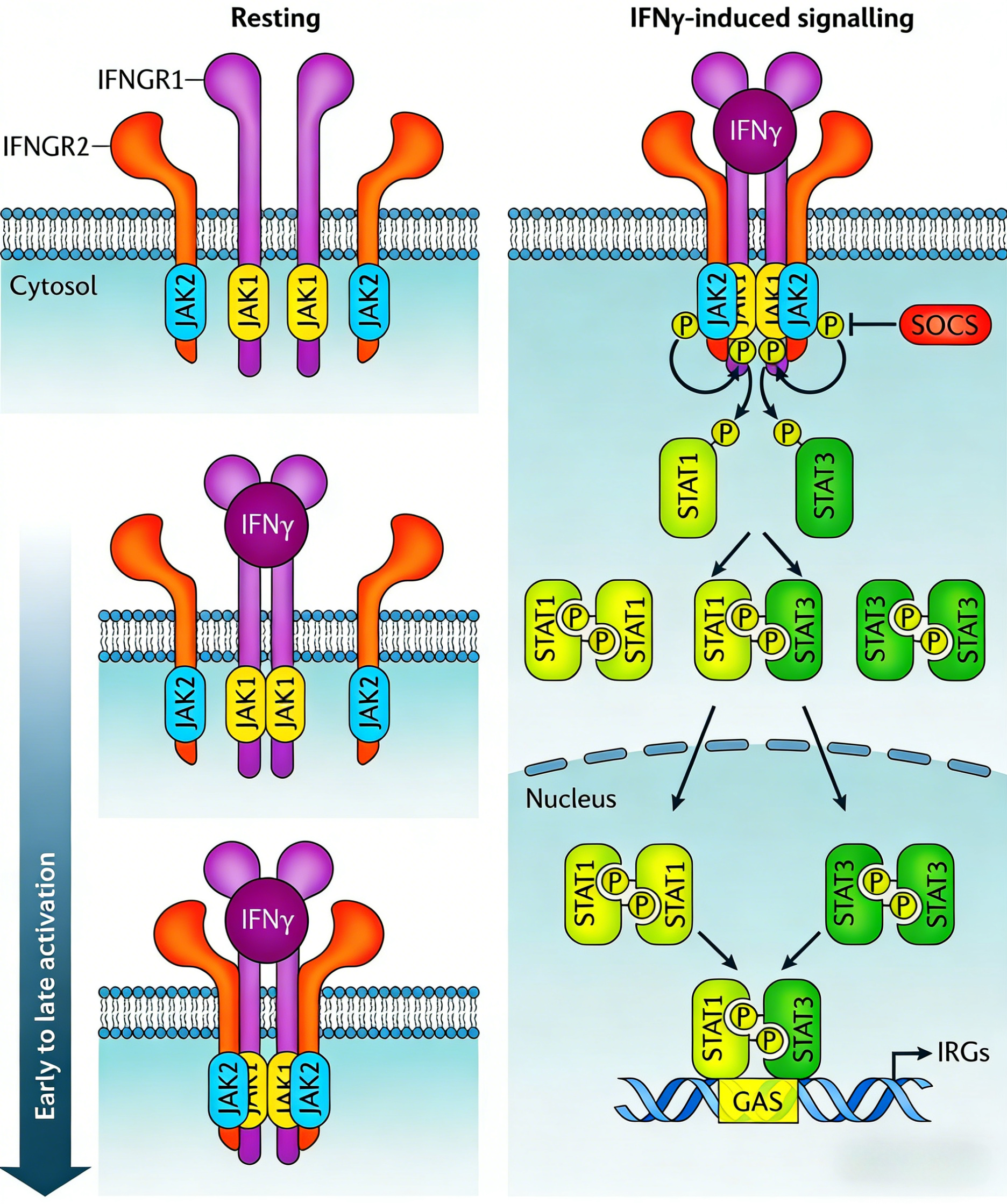
Nanjing UA-Bio Technology Co., Ltd. (UA-Bio) has independently developed "IFN-γ Protein, Mouse," a high-quality recombinant protein reagent specifically designed for mouse Th1 immune responses, macrophage activation, and preclinical efficacy studies. This mouse-derived interferon-gamma (IFN-γ) belongs to the type II interferon family and efficiently activates the JAK-STAT signaling pathway, inducing immune cell activation, enhancing antigen presentation, and inhibiting viral replication. It provides a stable and reliable standardized tool for research in anti-infection immunity, tumor immunotherapy, and autoimmune diseases in mouse models.
| Core Product Advantages |
|---|
| High Purity and Full Biological Activity: The product employs internationally leading recombinant expression systems and highly standardized purification processes, validated through multi-dimensional quality control to ensure >95% purity, correct native homodimeric conformation, and complete biological functionality. The protein efficiently binds to mouse IFN-γ receptor complexes, faithfully simulating IFN-γ-mediated macrophage activation, Th1 cell differentiation, and enhanced antigen presentation signals under physiological conditions. |
| Exceptional Batch-to-Batch Consistency and Stability: Strict management from gene construction, protein expression to purification quality control, combined with a comprehensive release testing system, ensures consistent biological activity, purity, and long-term stability across batches. This provides solid and reliable quality assurance for long-term and continuous mouse immunology research. |
| Ideal Tool for Multi-Scenario Applications: The protein performs excellently in various application systems, including mouse macrophage activation experiments, Th1 cell differentiation induction, tumor cell proliferation inhibition studies, signaling pathway analysis, and preclinical efficacy evaluation. It is widely applicable to immune regulation mechanism exploration, antitumor drug screening, autoimmune disease model research, and biosimilar activity assessment. |
| Low Endotoxin and High Batch Consistency: The product undergoes multi-step chromatography purification and endotoxin removal processes, resulting in extremely low endotoxin levels (<0.1 EU/μg), meeting stringent requirements for cell culture and animal experiments. Rigorous quality control ensures high consistency in protein activity and purity across batches. |
| Comprehensive Solutions and Professional Support: We provide thoroughly validated standard experimental protocols, typical biological activity data, and detailed product analysis certificates to help establish stable and reproducible experimental workflows. Nanjing UA-Bio's professional technical team offers full-process, expert technical consultation and support for research design, experimental optimization, and data analysis. |
Nanjing UA-Bio Technology Co., Ltd. remains committed to providing cutting-edge, high-quality core reagents and tools for immunology, cell therapy, and innovative drug development. For detailed technical parameters, validation data, or specific application inquiries regarding "IFN-γ Protein, Mouse" (Catalog No.: UA040065), please feel free to contact us.
This article is reviewed and published by the technical expert team of UA
Disclaimer: This article partially utilizes artificial intelligence assistance in its creation. If any content involves copyright or intellectual property issues, please let us know and we promise to verify and remove it as soon as possible.
Purchase recombinant protein, choose Nanjing UA-Bio
UA protein focuses on providing various protein reagents, raw materials, and services required for drug research and development, cell therapy, gene therapy, and basic scientific research, including drug target proteins, immune checkpoint proteins, cytokines, tool enzymes, customized protein expression, and full-length transmembrane protein development. Youai is committed to providing customers with high-quality products and professional services, and building a High-tech Biological Enterprise with International Competitiveness.







 Business license (three certificates in one)