




Site-specific PEGylation modification of IL-2 protein and its immunosuppressive effects study


The IL-2 protein is a key cytokine for the survival and function of regulatory T cells. This protein selectively binds to the trimeric IL-2 receptor on the surface of regulatory T cells, preferentially activating them and making it an important candidate molecule for the treatment of autoimmune diseases.
- Recent Advances
- Product Information
I. The Potential and Challenges of IL-2 Protein in Autoimmune Disease Treatment
IL-2 protein is a key cytokine for the survival and function of regulatory T cells. By selectively binding to the trimeric IL-2 receptor on the surface of regulatory T cells, this protein preferentially activates them, making it an important candidate molecule for treating autoimmune diseases. However, natural IL-2 protein faces limitations in clinical applications, such as a narrow therapeutic window and short half-life, which restrict its widespread use in autoimmune disease treatment. To address these issues, researchers have explored strategies to improve the pharmacokinetic properties of IL-2 protein through chemical modification, with PEGylation attracting attention due to its ability to extend protein half-life and reduce immunogenicity.
II. Design and Construction of Site-Specific PEGylated IL-2 Protein
Researchers employed copper-free click chemistry to incorporate azide-containing amino acids at specific sites of the IL-2 protein, enabling orthogonal conjugation of the cytokine with PEG moieties. Using this method, they successfully constructed a dual-site modified IL-2 protein with 20 kDa PEG conjugated at Tyr31 and Thr51. This site-specific modification strategy avoids the potential loss of activity associated with traditional random PEGylation, ensuring the biological function of the modified protein is preserved. The design optimizes the receptor-binding properties of the PEGylated IL-2 protein by precisely controlling the conjugation sites and number of PEG molecules.
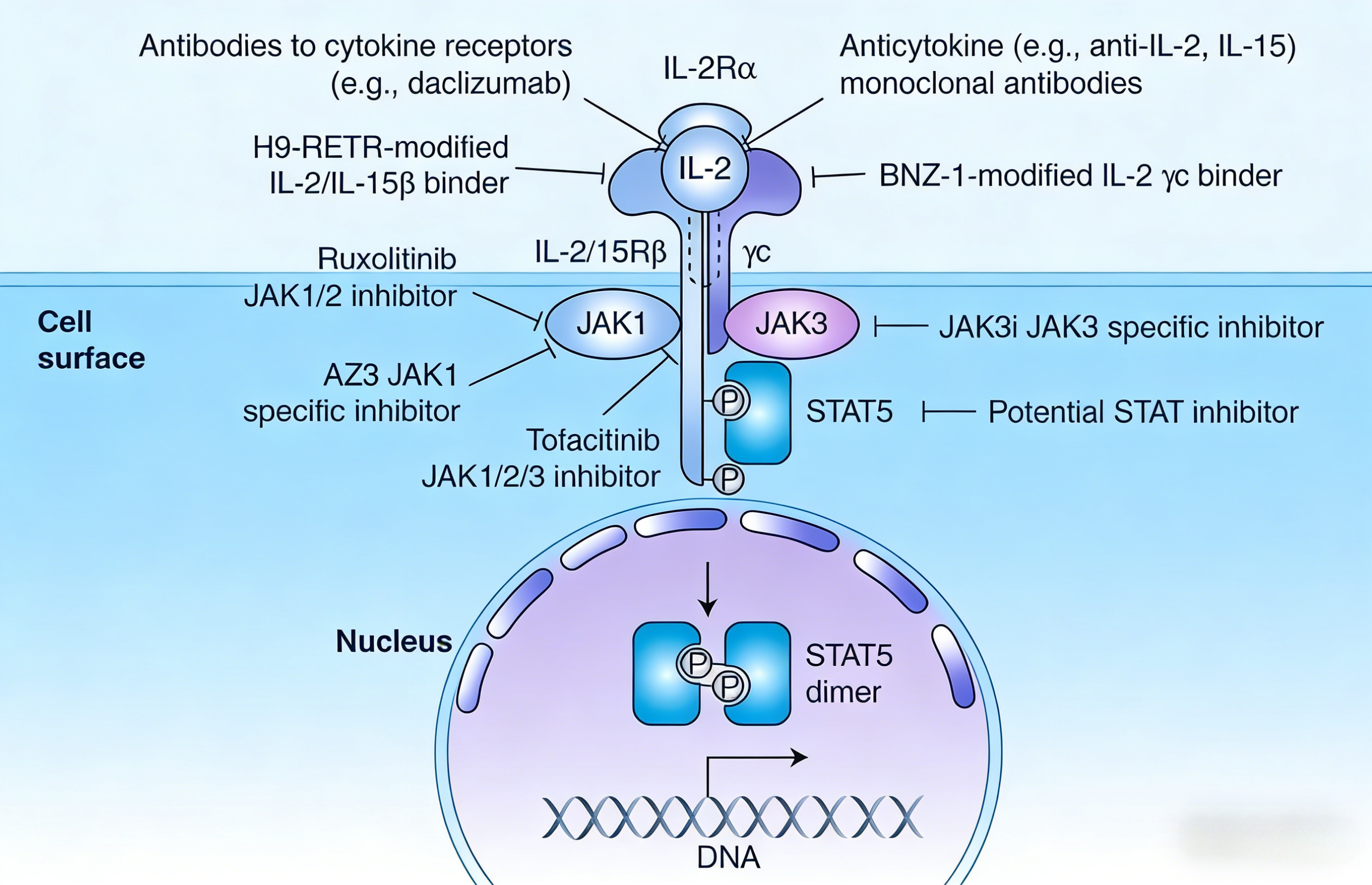
III. Impact of PEGylation on IL-2 Protein Receptor Selectivity
Site-specific PEGylation significantly altered the receptor-binding preferences of the IL-2 protein. The modified IL-2 protein preferentially binds to the α subunit of the IL-2 receptor rather than the β subunit. This shift in receptor-binding preference redirects its biological effects: the PEGylated IL-2 protein can persistently activate regulatory T cells while exhibiting lower activation of CD8-positive T cells. This enhanced selectivity allows the PEGylated IL-2 protein to more precisely target regulatory T cells, reducing nonspecific activation of effector T cells and thereby widening the therapeutic window.
IV. Sustained Activation of Regulatory T Cells by PEGylated IL-2 Protein
Following subcutaneous injection of varying doses of PEGylated IL-2 protein, the molecule selectively binds to the trimeric IL-2 receptor, inducing sustained activation and expansion of regulatory T cells. This sustained activation is reflected in both increased numbers and enhanced functionality of regulatory T cells. Compared to natural IL-2 protein, PEGylation extends the molecule's in vivo half-life, enabling prolonged action on regulatory T cells and producing more durable immunosuppressive effects. At the same time, its low activation of CD8-positive T cells reduces the risk of nonspecific immune activation, resulting in more precise immune modulation.
V. Therapeutic Effects of PEGylated IL-2 Protein in Autoimmune Disease Models
In various animal models of autoimmune diseases, PEGylated IL-2 protein demonstrated promising therapeutic effects. In a lupus mouse model, the dual-site PEGylated IL-2 protein significantly improved disease symptoms, manifested as reduced proteinuria and decreased levels of serum anti-dsDNA and anti-nuclear antibodies. In a collagen-induced arthritis mouse model, the molecule similarly showed enhanced therapeutic efficacy, with marked reductions in joint inflammation and bone destruction. In a graft-versus-host disease mouse model, PEGylated IL-2 protein treatment significantly prolonged survival. Importantly, PEGylated IL-2 protein treatment did not impair the host's immune defense against viral infections, indicating that its immunosuppressive effects are relatively selective, primarily targeting pathological autoimmune responses without interfering with normal anti-infection immunity.
VI. Research Significance and Application Prospects
This study is the first to successfully modulate the receptor selectivity of IL-2 protein through a site-specific PEGylation strategy, making it more inclined to activate regulatory T cells rather than effector T cells. This modification strategy not only extends the half-life of IL-2 protein but, more importantly, enhances the selectivity of its immunosuppressive function. The dual-site PEGylated IL-2 protein demonstrates enhanced therapeutic effects in multiple autoimmune disease models through sustained activation of regulatory T cells, without compromising the body's normal antiviral immune defenses. This site-specific cytokine PEGylation design strategy provides a new approach to improving the therapeutic performance of cytokine-based drugs and holds broad application prospects in the field of autoimmune disease treatment. Future research will further explore the potential of this strategy in modifying other cytokines and optimize the dosing and administration regimens of PEGylated IL-2 protein for different autoimmune diseases.
VII. Which Companies Provide IL-2 Protein?
Nanjing UA-Bio Technology Co., Ltd. (UA-Bio) has independently developed "IL-2 Protein, Human", a high-quality recombinant protein reagent specifically designed for T cell expansion, immune regulation, and cell therapy research. This protein is human interleukin-2 (IL-2), a key cytokine for T cell activation and proliferation, capable of efficiently activating the IL-2 receptor signaling pathway to promote T cell proliferation, regulatory T cell (Treg) function, and immune response balance. It provides a stable and reliable standardized tool for research in tumor immunology, autoimmune diseases, and cell therapy development.
| Core Product Advantages |
|---|
| High Purity and Full Biological Activity: The product employs internationally leading recombinant expression systems and highly standardized purification processes, validated through multi-dimensional quality control to ensure >95% purity, correct native conformation, and full biological functionality. The protein efficiently binds to the human IL-2 receptor complex (IL-2Rα/β/γ), faithfully mimicking the physiological effects of IL-2-mediated T cell proliferation, activation signals, and immune homeostasis regulation. |
| Exceptional Batch-to-Batch Consistency and Stability: Rigorous management from gene construction, protein expression to purification and quality control, combined with a comprehensive release testing system, ensures each batch of product exhibits stable biological activity, consistent purity, and excellent long-term stability. This provides solid and reliable quality assurance for long-term, continuous immunological research. |
| Ideal Tool for Multiple Applications: The protein performs excellently in various application systems, including in vitro T cell expansion, regulatory T cell (Treg) induction, cytotoxic T lymphocyte (CTL) culture, CAR-T cell preparation, signaling pathway analysis, and drug activity evaluation. It is widely applicable to immune cell therapy research, tumor immunology mechanism exploration, autoimmune disease model construction, and biosimilar drug activity evaluation. |
| Comprehensive Solutions and Professional Support: We provide thoroughly validated standard experimental protocols, representative biological activity data, and detailed product analysis certificates to help you quickly establish stable and reproducible experimental workflows. Nanjing UA-Bio's professional technical team offers full-process, expert technical consultation and support for your research design, experimental optimization, and data analysis. |
Nanjing UA-Bio Technology Co., Ltd. is committed to providing cutting-edge, high-quality core reagents and tools for immunology, cell therapy, and innovative drug development. For detailed technical parameters, validation data, or specific application inquiries regarding "IL-2 Protein, Human" (Catalog No.: UA100004), please feel free to contact us.
This article is reviewed and published by the technical expert team of UA
Disclaimer: This article partially utilizes artificial intelligence assistance in its creation. If any content involves copyright or intellectual property issues, please let us know and we promise to verify and remove it as soon as possible.
Purchase recombinant protein, choose Nanjing UA-Bio
UA protein focuses on providing various protein reagents, raw materials, and services required for drug research and development, cell therapy, gene therapy, and basic scientific research, including drug target proteins, immune checkpoint proteins, cytokines, tool enzymes, customized protein expression, and full-length transmembrane protein development. Youai is committed to providing customers with high-quality products and professional services, and building a High-tech Biological Enterprise with International Competitiveness.







 Business license (three certificates in one)