




Biological Functions and Clinical Research Advances of IL-13 Protein


IL-13 protein is a pleiotropic cytokine secreted by various cells, including CD4-positive T cells, CD8-positive T cells, mast cells, basophils, eosinophils, and natural killer cells, with type 2 helper T cells being its primary source.
- Recent Advances
- Product Information
I. Molecular Characteristics and Cellular Sources of IL-13 Protein
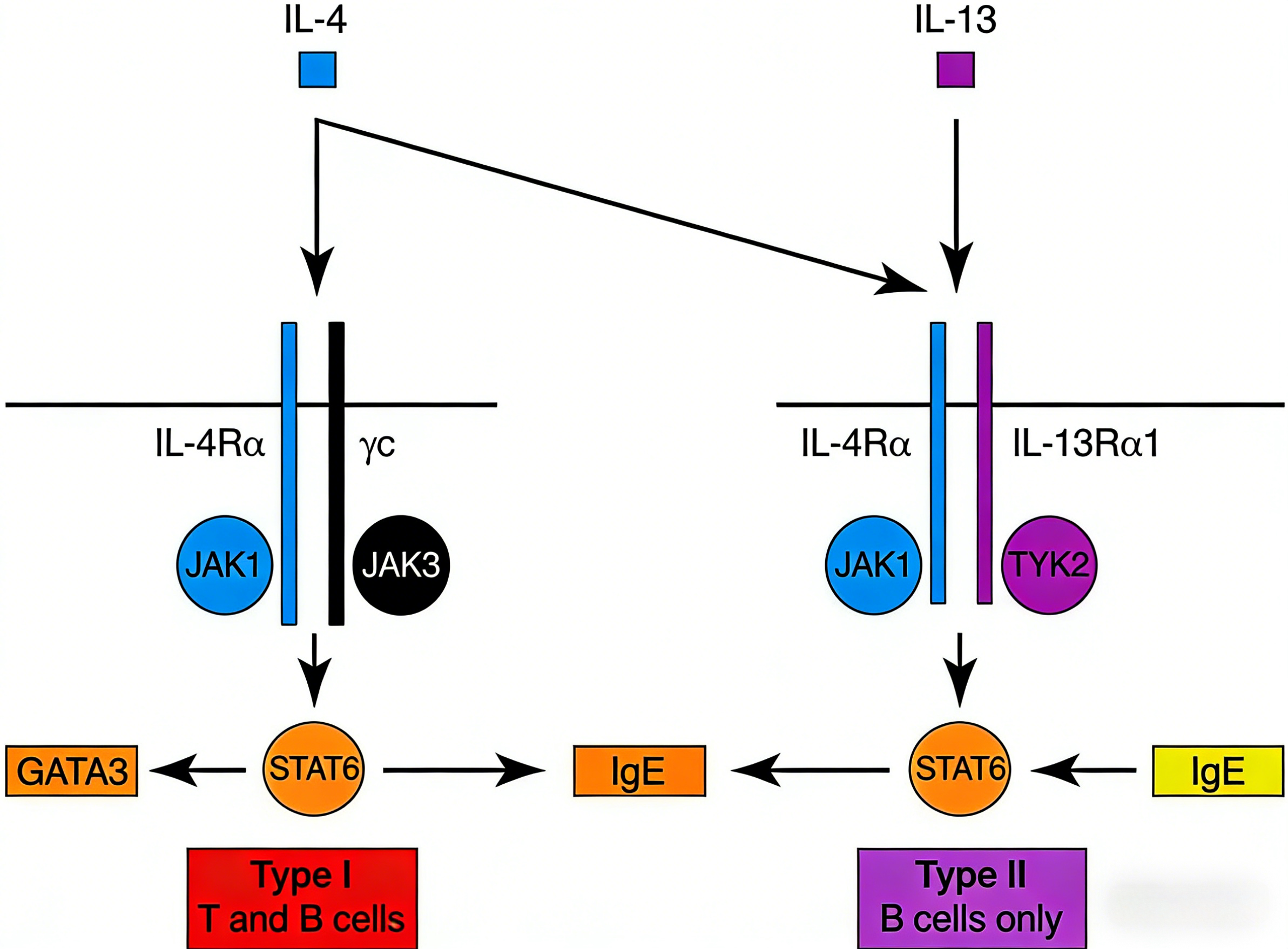
IL-13 protein is a pleiotropic cytokine secreted by various cells, including CD4-positive T cells, CD8-positive T cells, mast cells, basophils, eosinophils, and natural killer cells, with type 2 helper T cells being its primary source. IL-13 protein shares many similarities with IL-4 protein in terms of gene location and DNA sequence, and their functions also overlap. IL-13 protein is a key cytokine that plays a crucial role in allergic diseases alongside IL-4, particularly as a central player in the pathogenesis of asthma.
II. Regulatory Effects of IL-13 Protein on Monocyte-Macrophages
IL-13 protein significantly regulates monocyte morphology and surface molecule expression. It promotes morphological changes in monocyte-macrophages, accelerates their fusion, and leads to the formation of foreign body-type multinucleated macrophages. IL-13 protein enhances the expression of CD23, major histocompatibility complex II, and mannose receptors on human monocytes, which are involved in low-affinity IgE binding, antigen presentation, and phagocytosis, respectively. Simultaneously, IL-13 protein suppresses the gene transcription and protein synthesis of pro-inflammatory cytokines, including IL-1, IL-6, and IL-8, in lipopolysaccharide-activated monocyte-macrophages, demonstrating anti-inflammatory properties.
III. Regulatory Effects of IL-13 Protein on B Lymphocytes
IL-13 protein plays a crucial regulatory role in B lymphocytes. It can induce B cells to express CD23, CD72, IgM, and major histocompatibility complex II molecules. IL-13 protein induces IgE heavy chain gene expression in highly purified mature B cells co-cultured with CD4-positive T cells, leading to IgE and CD4 synthesis, but has no significant effect on IgG, IgM, or IgA production. This function makes IL-13 protein a key regulator of IgE production in allergic diseases, working synergistically with IL-4 protein in inducing IgE class switching.
IV. Regulation of Vascular Endothelial Cells and Mast Cells by IL-13 Protein
IL-13 protein selectively induces the expression of vascular cell adhesion molecule 1 in cultured human umbilical vein endothelial cells without affecting E-selectin or intercellular adhesion molecule 1 expression, thereby enhancing eosinophil adhesion to endothelial cells. This function facilitates eosinophil recruitment to inflammatory sites. Regarding mast cell regulation, IL-13 protein induces early proto-oncogene expression and enhances intercellular adhesion molecule 1 expression in mast cells. Additionally, IL-13 protein promotes interferon-γ production in natural killer cells and exhibits synergistic effects with IL-2. Gene transduction studies confirm that IL-13 protein has specific and nonspecific antitumor activity, although its exact mechanisms remain unclear.
V. Central Role of IL-13 Protein in Asthma Pathogenesis
Allergic asthma is characterized by an inflammatory process typically accompanied by a type 2 helper T cell immune response. Type 2 helper T cells produce a series of cytokines such as IL-4, IL-5, IL-9, and IL-13, with IL-13 protein considered the most central factor, involved in nearly all asthma-related processes. Extensive research demonstrates that IL-13 protein plays a pivotal role in asthma pathogenesis. Mouse models show that IL-13 protein induces asthma symptoms through lymphocyte-independent pathways, a capability not shared by IL-4, making IL-13 protein a more effective therapeutic target for asthma. Furthermore, IL-13 protein binds to IL-13 receptor α2, inducing transforming growth factor-β production and leading to pulmonary fibrosis in asthma patients. Consistent with mouse models, asthma patients exhibit high levels of IL-13 protein expression, highlighting its critical role in human asthma.
VI. Therapeutic Strategies Targeting IL-13 Protein
Given the central role of IL-13 protein in asthma pathogenesis, its signaling pathway represents a promising therapeutic target with significant clinical value. Blocking the biological activity of overexpressed IL-13 protein in asthma using antagonists is an important strategy for asthma management. Soluble IL-4 receptor was the first soluble cytokine receptor used for asthma treatment, targeting IL-4. Similarly, recombinant soluble IL-13 receptor, including soluble IL-13 receptor α1 and α2, specifically inhibits IL-13. Anti-IL-13 monoclonal antibodies have shown preliminary safety and efficacy in clinical studies for treating severe persistent asthma patients. Vaccines inducing sustained IL-13-neutralizing antibodies hold greater potential for chronic diseases like asthma.
VII. Research Significance and Future Perspectives
As a core effector molecule in type 2 helper T cell immune responses, IL-13 protein plays multiple roles in regulating monocyte-macrophages, B lymphocytes, vascular endothelial cells, and mast cells. Its central position in asthma pathogenesis makes it an important therapeutic target. In-depth research on the biological functions of IL-13 protein will help elucidate the mechanisms underlying allergic diseases. Future studies will further explore the functional synergies and differences between IL-13 and IL-4 proteins, as well as the application potential of various IL-13 signaling pathway-targeted interventions in asthma treatment. As understanding of the IL-13 protein network deepens, its clinical value in allergic diseases will continue to expand.
VIII. Which Manufacturers Provide IL-13 Protein?
Nanjing UA-Biotech Co., Ltd. (UA-Bio) has independently developed "IL-13 Protein, Mouse", a high-quality recombinant protein reagent specifically designed for mouse Th2 immune responses, allergic disease models, and tissue fibrosis research. This mouse-derived interleukin-13 (IL-13) protein efficiently activates IL-13 receptor signaling pathways, induces Th2 cell differentiation, promotes B cell class switching and IgE production, and participates in airway hyperresponsiveness, mucus secretion, and tissue fibrosis processes. It provides a stable and reliable standardized tool for constructing mouse asthma models, exploring allergic disease mechanisms, and evaluating anti-fibrotic drugs.
| Core Product Advantages |
|---|
| High Purity and Complete Biological Activity: The product utilizes internationally leading recombinant expression systems and highly standardized purification processes, validated through multi-dimensional quality control to ensure >95% purity, correct native conformation, and full biological functionality. The protein efficiently binds to mouse IL-13 receptor complexes (IL-13Rα1/IL-4Rα or IL-13Rα2), accurately simulating IL-13-mediated Th2 cell differentiation, B cell class switching, mucus secretion, and tissue fibrosis signaling under physiological conditions. |
| Excellent Batch-to-Batch Consistency and Stability: Strict management from gene construction, protein expression to purification and quality control, combined with a comprehensive release testing system, ensures each batch of product maintains stable biological activity, consistent purity, and superior long-term stability. This provides reliable quality assurance for long-term and continuous mouse allergy and fibrosis research. |
| Ideal Tool for Multiple Applications: The protein performs excellently in various application systems, including mouse Th2 cell differentiation induction, B cell activation and class switching studies, airway mucus secretion model construction, lung fibrosis model induction, macrophage M2 polarization research, and signaling pathway analysis. It is widely applicable for constructing mouse asthma models, exploring allergic disease mechanisms, screening anti-fibrotic drugs, and preclinical efficacy evaluations. |
| Complete Solutions and Professional Support: We provide thoroughly validated standard experimental protocols, typical biological activity data, and detailed product analysis certificates to help quickly establish stable and reproducible experimental workflows. Nanjing UA-Bio's professional technical team offers comprehensive technical consultation and support for research design, experimental optimization, and data analysis. |
Nanjing UA-Biotech Co., Ltd. is committed to providing cutting-edge, high-quality core reagents and tools for immunology, cell therapy, and innovative drug development. For detailed technical parameters, validation data, or specific application inquiries regarding "IL-13 Protein, Mouse" (Catalog No.: UA040158), please feel free to contact us.
This article is reviewed and published by the technical expert team of UA
Disclaimer: This article partially utilizes artificial intelligence assistance in its creation. If any content involves copyright or intellectual property issues, please let us know and we promise to verify and remove it as soon as possible.
Purchase recombinant protein, choose Nanjing UA-Bio
UA protein focuses on providing various protein reagents, raw materials, and services required for drug research and development, cell therapy, gene therapy, and basic scientific research, including drug target proteins, immune checkpoint proteins, cytokines, tool enzymes, customized protein expression, and full-length transmembrane protein development. Youai is committed to providing customers with high-quality products and professional services, and building a High-tech Biological Enterprise with International Competitiveness.







 Business license (three certificates in one)