




Klotho Protein: The Molecular Secret of Longevity Genes


The Klotho protein, encoded by the KL gene, is a transmembrane protein originally identified in mice. Its nomenclature derives from Clotho, the Fate goddess in Greek mythology who spins the thread of life. Emerging research has revealed that Klotho serves as a pleiotropic protein critically involved in lifespan regulation and associated with multiple age-related pathologies, making it a subject of intense investigation in geroscience.
- Recent Advances
- Product Information
- Reference
Introduction
The Klotho protein is a transmembrane protein encoded by the KL gene, which was first discovered in mice. Its naming is inspired by the Greek mythological goddess "Clotho" who is in charge of fate. In recent years, studies have found that the Klotho protein is closely related to lifespan and various diseases, thus attracting widespread attention.
I. Classification of Klotho Proteins
The α-Klotho and β-Klotho genes encode type I single-chain transmembrane proteins, and the encoded proteins share 41% identity in amino acids. The extracellular parts of the α-Klotho and β-Klotho proteins contain a β-glucosidase-like structure (KL1, KL2) composed of two tandem repeat sequences, while the intracellular parts are very short and have no biological functions.
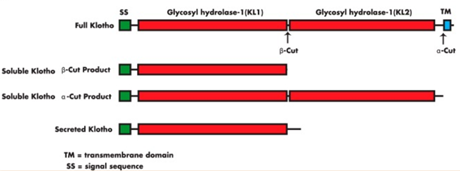
Schematic Diagram of Klotho Protein Structure
α-Klotho and β-Klotho are important components of the endocrine fibroblast growth factor (FGF) receptor complex, as they are essential for the high-affinity binding of FGF19, FGF21, and FGF23 to their homologous FGF receptors (FGFRs). Generally speaking, these proteins form a unique endocrine system that controls various metabolic processes in mammals.
II. α-Klotho
α-Klotho is a member of the Klotho protein family, mainly expressed in tissues such as renal tubular cells, brain, bone, and islets. Its unique secreted form performs physiological functions outside the cell. Research has found that α-Klotho is closely related to multiple biological processes such as anti-aging, anti-oxidation, and anti-inflammation. In addition, α-Klotho is also associated with aspects such as bone health, brain function, and insulin sensitivity.
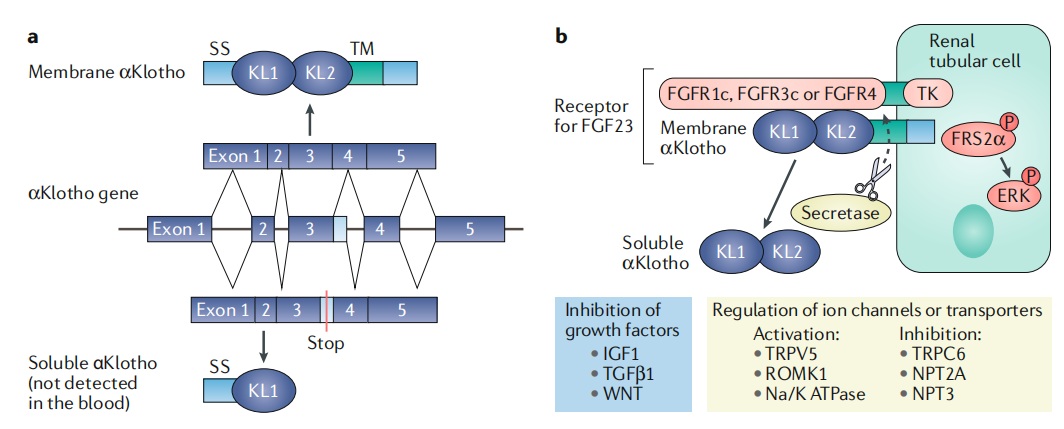
Membrane α-Klotho and Soluble α-Klotho
a| The α-Klotho gene and its splicing variants. The α-Klotho gene contains 5 exons. The alternative splicing donor site is located at the carboxyl terminus of the third exon, generating mRNAs encoding membrane α-Klotho and the presumably secreted α-Klotho. The extracellular domain of membrane α-Klotho contains two domains, named KL1 and KL2, which have sequence homology with family 1 glycosidases. The splicing variant encoding the secreted isoform contains a stop codon upstream of exons 4 and 5, which encodes the transmembrane and cytoplasmic domains. However, this truncated protein subtype has not been detected in the blood so far.
b| Membrane α-Klotho serves as an obligate co-receptor for fibroblast growth factor 23 (FGF23), activating the classical FGF signaling pathway. This signaling pathway is transduced through the tyrosine kinase (TK) domain of the FGF receptor (FGFR), leading to the phosphorylation of FGFR substrate 2α (FRS2α) as well as ERK1 and ERK2. In addition, membrane-bound α-Klotho can also be cleaved by membrane-anchored secretases, releasing the extracellular domain of membrane α-Klotho into the extracellular space through ectodomain shedding. This soluble α-Klotho protein can regulate a variety of ion channels and transporters and inhibit growth factors, including insulin-like growth factor 1 (IGF1), transforming growth factor β1 (TGFβ1), and WNT. The ion channels and transporters activated by soluble α-Klotho include transient receptor potential cation channel subfamily V member 5 (TRPV5), renal outer medullary potassium channel 1 (ROMK1), and Na/K ATPase, while transient receptor potential canonical channel 6 (TRPC6), sodium-dependent phosphate transporter 2A (NPT2A), and NPT3 are inhibited. SS, signal sequence; TM, transmembrane.
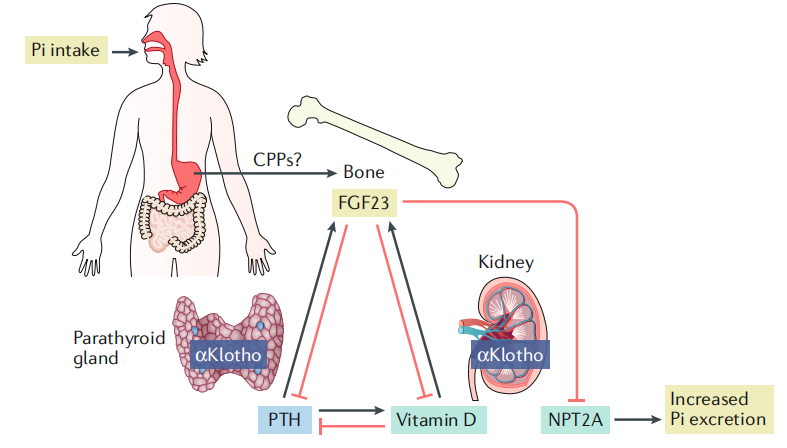
The FGF23-αKlotho Endocrine Axis
In response to the intake of inorganic phosphate (Pi), osteocytes secrete fibroblast growth factor 23 (FGF23). The mechanism by which osteocytes detect Pi remains unclear, but it may involve the sensing of serum calciprotein particles (CPP), which are nanoparticles containing solid-phase calcium phosphate and the serum protein fetuin A. Elevated FGF23 levels can lead to increased urinary phosphate excretion by downregulating the levels of sodium-dependent phosphate cotransporter type 2a (NPT2A) in the proximal convoluted tubule, and reduce the entry of calcium into the circulation by decreasing the serum levels of parathyroid hormone (PTH) and active vitamin D (not shown). By increasing urinary phosphate excretion and inhibiting the entry of calcium into the blood in response to phosphate intake, the FGF23-αKlotho endocrine axis can maintain phosphate homeostasis and may prevent the formation of excessive CPP, which can cause tissue damage.
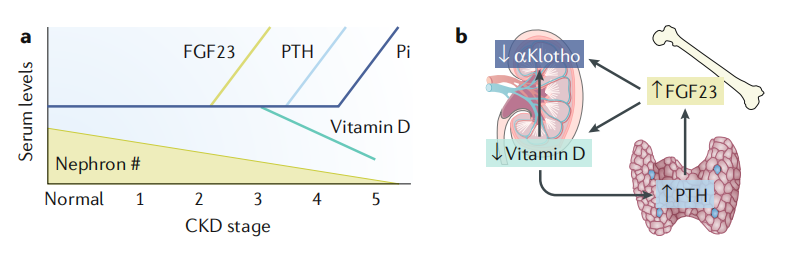
The Pathophysiology of CKD Progression
a| Changes in the levels of serum biomarkers during the progression of chronic kidney disease (CKD). Regardless of the underlying cause, the progression of CKD is characterized by a gradual decrease in the number of functional nephrons. To maintain phosphate balance, patients with CKD compensate for the reduction in the number of nephrons through an increase in fibroblast growth factor 23 (FGF23) levels, thereby increasing phosphate excretion per nephron. Following the increase in FGF23, active vitamin D decreases and parathyroid hormone (PTH) increases. All these changes are caused by excessive phosphate intake relative to the number of remaining nephrons and are characteristic of CKD-mineral and bone disease. The level of serum inorganic phosphate (Pi) increases last (resulting in hyperphosphatemia), indicating that phosphate homeostasis is disrupted due to insufficient functional nephrons to excrete the ingested phosphate.
b| The expression of α-Klotho deteriorates in a spiral manner. Elevated FGF23 levels in patients with renal insufficiency reduce the levels of active vitamin D, which in turn increases PTH levels and further elevates FGF23 levels.
III. β-Klotho
β-Klotho is another member of the Klotho protein family, mainly expressed in tissues such as the liver, spleen, lungs, and adrenal glands. It forms complexes with various hormone receptors to regulate the physiological effects of hormones in the body. In particular, β-Klotho binds to FGF (fibroblast growth factor) receptors and is involved in processes such as metabolic regulation, lipid metabolism, and blood glucose balance.
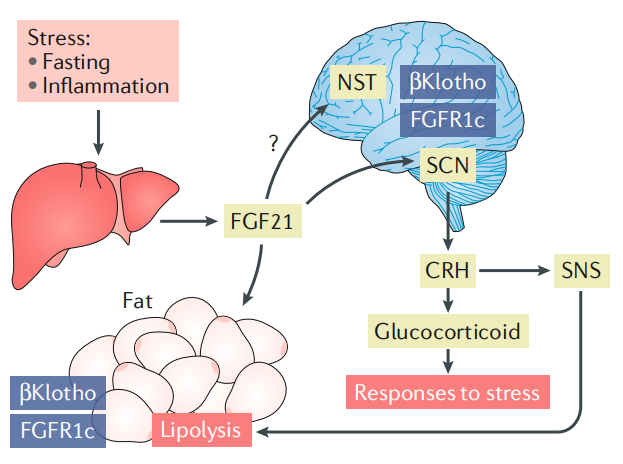
The FGF21-βKlotho Endocrine Axis
Fibroblast growth factor 21 (FGF21) is secreted by the liver in response to various types of stress, including fasting and inflammation. FGF21 acts on white adipose tissue, where β-Klotho and FGF receptor 1c (FGFR1c) are co-expressed, inducing lipolysis. In addition, FGF21 crosses the blood-brain barrier and acts on the suprachiasmatic nucleus (SCN), and may also act on the nucleus of the solitary tract (NTS), where β-Klotho and FGFR1c are also co-expressed. FGF21 induces the expression of corticotropin-releasing hormone (CRH), leading to an increase in serum glucocorticoid levels. CRH also activates the sympathetic nervous system (SNS), which contributes to lipolysis. Therefore, FGF21 induces a stress response by activating the hypothalamic-pituitary-adrenal axis and the SNS.
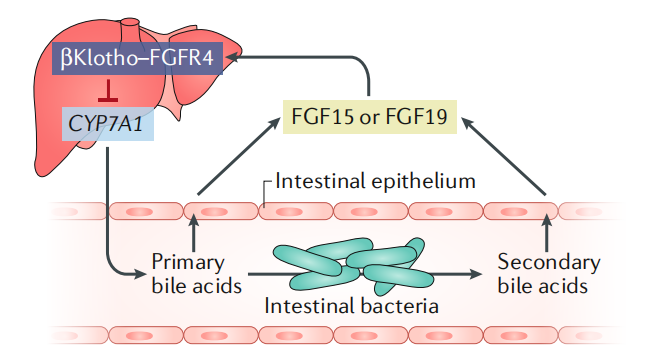
The FGF15/FGF19-βKlotho Endocrine Axis
Fibroblast growth factor 19 (FGF19); in rodents, FGF15 is secreted by intestinal epithelial cells in response to primary bile acids (i.e., bile acids released from the liver) and secondary bile acids (i.e., metabolites of primary bile acids produced by intestinal bacteria). FGF19 binds to the β-Klotho-FGF receptor 4 (FGFR4) complex present on hepatocytes, inhibiting the expression of CYP7A1, which encodes cholesterol 7α-hydroxylase, the rate-limiting enzyme in bile acid synthesis. Therefore, the FGF19-βKlotho endocrine axis may affect the composition of the microbiome, and vice versa.
IV. Diseases and the FGF-Klotho Endocrine System
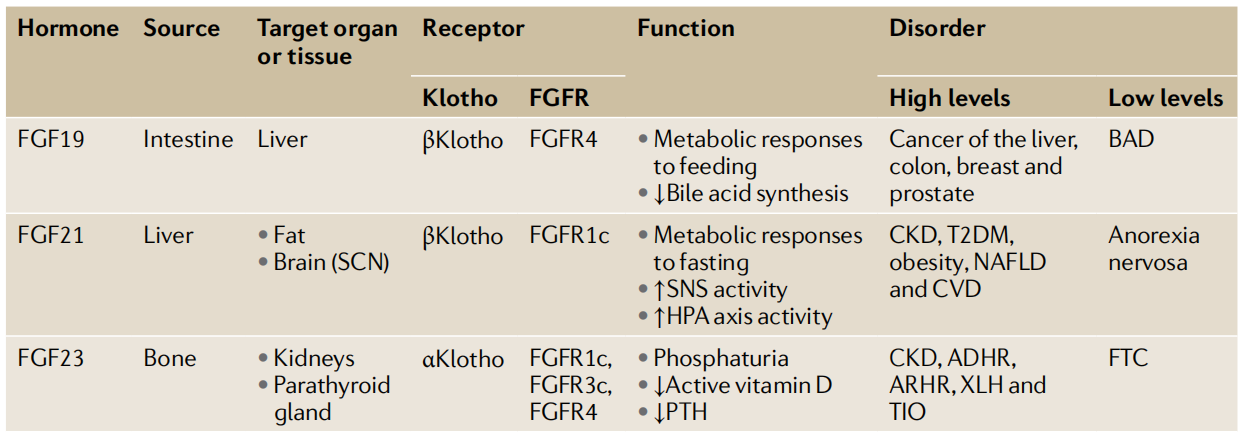
ADHR, autosomal dominant hypophosphatemic rickets; ARHR, autosomal recessive hypophosphatemic rickets; BAD, bile acid diarrhea; CKD, chronic kidney disease; CVD, cardiovascular disease; FGF, fibroblast growth factor; FGFR, FGF receptor; FTC, familial tumoral calcinosis; HPA, hypothalamic-pituitary-adrenal; NAFLD, non-alcoholic fatty liver disease; PTH, parathyroid hormone; SCN, suprachiasmatic nucleus; SNS, sympathetic nervous system; T2DM, type 2 diabetes mellitus; TIO, tumor-induced osteomalacia; XLH, X-linked hypophosphatemia.
This FGF-Klotho system may contribute to the pathophysiology of various human diseases, including CKD, arteriosclerosis, cardiac hypertrophy, diabetes, obesity, and various types of cancer. In addition to CKD, it has been reported that FGF21 levels are elevated in patients with type 2 diabetes, obesity, non-alcoholic fatty liver disease, and cardiovascular disease.
Moreover, the overexpression of α-Klotho or FGF21 prolongs the lifespan of mice, and specific polymorphisms of α-Klotho are associated with an extended lifespan in humans. This fact raises the possibility that α-Klotho and FGF21 may counteract the aging process. Therefore, intervening in the FGF-Klotho endocrine system represents a new approach for treating aging and aging-related diseases. The drug design of endocrine FGF agonists and antagonists based on structure may promote the development of this field.
Prospect
In-depth research on the Klotho protein provides new ideas for finding anti-aging treatments and methods to promote healthy aging. In the future, we can look forward to more research achievements on the Klotho protein in disease treatment and lifespan promotion.
Product Information
α Klotho, Human
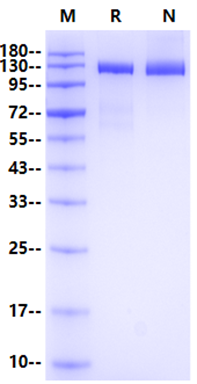
>95% by SDS-PAGE
β Klotho , Human
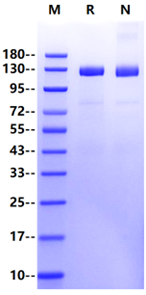
>95% by SDS-PAGE
Click on the product catalog numbers below to access detailed information on our official website.
This article is reviewed and published by the technical expert team of UA
Disclaimer: This article partially utilizes artificial intelligence assistance in its creation. If any content involves copyright or intellectual property issues, please let us know and we promise to verify and remove it as soon as possible.
Purchase recombinant protein, choose Nanjing UA-Bio
UA protein focuses on providing various protein reagents, raw materials, and services required for drug research and development, cell therapy, gene therapy, and basic scientific research, including drug target proteins, immune checkpoint proteins, cytokines, tool enzymes, customized protein expression, and full-length transmembrane protein development. Youai is committed to providing customers with high-quality products and professional services, and building a High-tech Biological Enterprise with International Competitiveness.

1. Kuro-o M, et al. (1997) Mutation of the mouse klotho gene leads to a syndrome resembling ageing. Nature, 390(6655), 45-51.
2. Kurosu H, et al. (2005) Suppression of aging in mice by the hormone Klotho. Science, 309(5742), 1829-1833.
3. Yamamoto M, et al. (2010) Klotho is associated with VEGF receptor-2 and the transient receptor potential canonical-1 Ca2+ channel to maintain endothelial integrity. Proc Natl Acad Sci U S A, 107(45), 19308-19313.
4. Makoto , et al.(2012)The Klotho proteins in health and disease.Review. 21(4):362-8.






 Business license (three certificates in one)