





CD40 is a member of the tumor necrosis factor receptor superfamily, a 48 kDa type I transmembrane protein widely expressed on immune cells, particularly B cells, dendritic cells, and monocytes, playing a crucial role in bridging innate and adaptive immunity. CD40L is the cognate ligand of CD40, a 39 kDa type II transmembrane protein primarily expressed by hematopoietic system cells such as platelets, granulocytes, activated T cells, activated B cells, and activated natural killer cells. CD40/CD40L interaction requires appropriate receptor clustering and trimerization, as TNF-SF ligands naturally exist as trivalent functional units, and receptor assembly into functional trimeric signaling complexes occurs through binding of native ligand units. The TR-FRET CD40/CD40L Kit enables quantitative detection of CD40-CD40L binding activity, providing a technical tool for studying the molecular mechanisms of this signaling pathway.
Ligand-receptor engagement induces formation of spatially defined trimeric signaling complexes that promote recruitment of TNF receptor-associated factors and NF-κB activator-1. The specific composition of signaling complexes primarily depends on cell type, triggering diverse pathways. TRAF6 binding predominantly activates the JAK/STAT3 pathway, TRAF1/2 induces MKK/p38/ERK1/2 signaling, while Act1 has multifunctional roles in activating NF-κB pathway, JNK and PI3K signaling, and synergizes with TRAF3 to amplify MKK/p38/ERK1/2 signals. Context-dependently, CD40 engagement can activate both canonical and non-canonical NF-κB pathways. CD40 signaling serves as a critical trigger for monocyte maturation processes, primarily driving differentiation into M1-type macrophages and dendritic cells. TR-FRET technology can be applied to study conformational changes following CD40-CD40L binding and evaluate dynamic alterations in receptor-ligand interactions under different conditions.
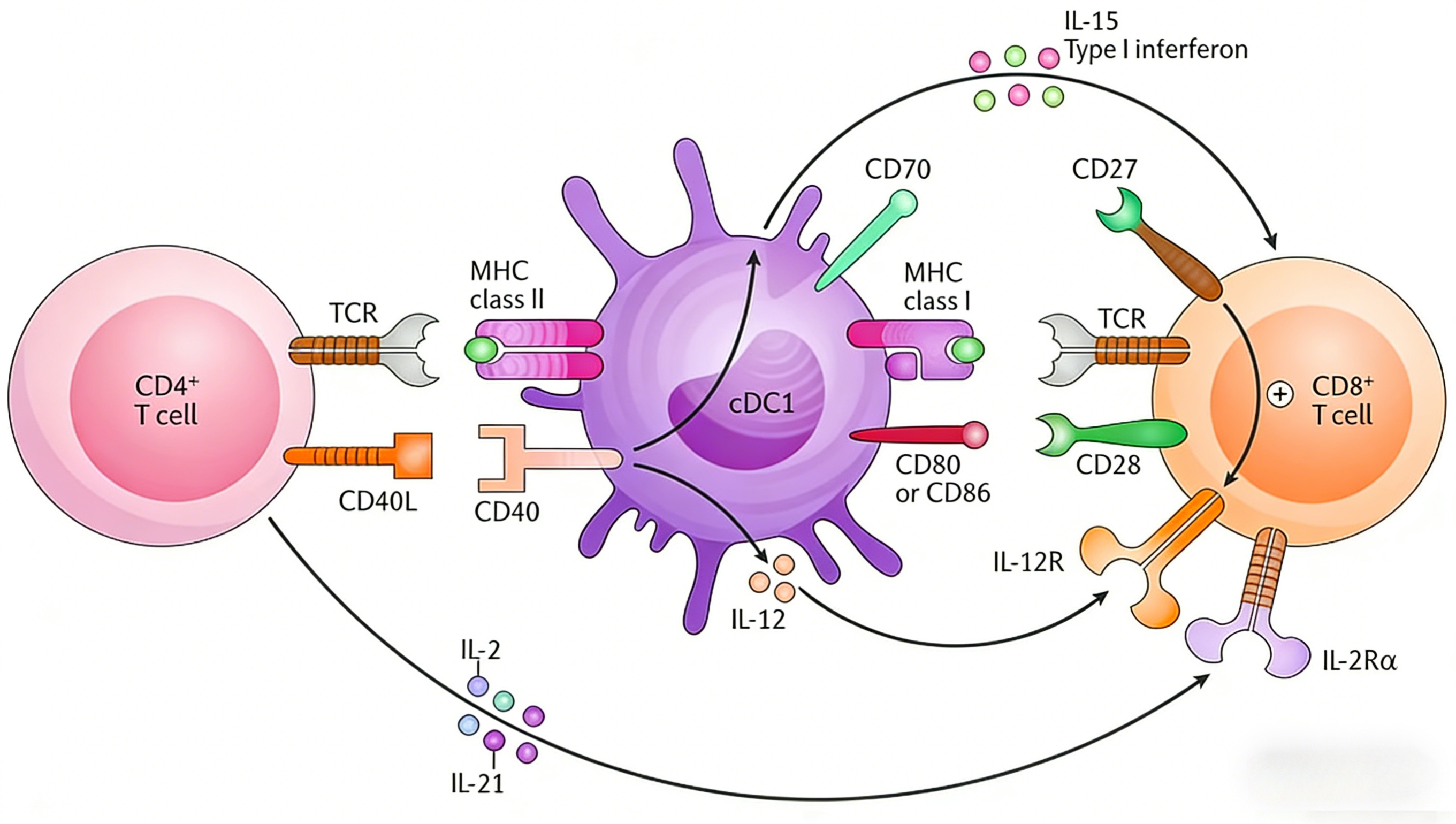
CD40 on dendritic cell surfaces participates in promoting cytokine and chemokine production, inducing costimulatory molecule expression, and facilitating antigen cross-presentation. By upregulating surface proteins like CD54 and CD86, CD40 enhances dendritic cell-T cell interactions, thereby activating T cells. The primary function of CD40L is to amplify T cell antigen presentation through dendritic cell activation. Following CD40 activation, dendritic cells can promote antitumor T cell activation and reprogram macrophages to disrupt tumor stroma. CD40 activation is pivotal for converting cold tumors into hot tumors, rendering them sensitive to checkpoint inhibition. On dendritic cells, CD40 activation leads to upregulation of MHC molecules, increased expression of costimulatory molecules like CD86, and upregulation of other TNF superfamily ligands. The TR-FRET CD40/CD40L Kit can be used to screen molecules capable of blocking or enhancing CD40-CD40L binding and evaluate their immunomodulatory activity.
Research strategies for inducing CD40 signaling can be broadly categorized into antibody-based or CD40L-based approaches. CD40 antibodies have three main applications in cancer therapy. For direct antitumor effects, CD40 has emerged as a therapeutic target in B-cell lymphomas, where CD40 monoclonal antibodies demonstrate certain inhibitory effects against advanced Hodgkin's lymphoma and non-Hodgkin's lymphoma, exhibiting potent antiproliferative and proapoptotic activity against malignant cells in B-cell lymphomas. Regarding T cell immunity induction, chemotherapy enhances the T cell-stimulating capacity of CD40 agonists, as chemotherapy-induced tumor cell death releases antigens that are phagocytosed by antigen-presenting cells, while CD40 agonists activate these cells to present tumor antigens and stimulate tumor-specific T cells. For innate immune surveillance activation, CD40 agonists stimulate tumor-infiltrating myeloid cells to reduce tumor-associated fibrosis, rendering tumors more sensitive to chemotherapy.
In CAR-T cell therapy, CD40L can be displayed on CAR-T cell surfaces. Through P2A-linked CD40L, CAR-T cells express CD40L. The critical function of CD40 interaction with CD40L expressed on CD4-positive T helper cells is to activate and license dendritic cells for priming CD8-positive effector T cells. This is achieved through upregulation of cell surface costimulatory molecules and MHC molecules, coupled with dendritic cell cytokine production leading to effective T cell activation. Without CD40 signaling, unlicensed dendritic cell activation of cytotoxic T lymphocytes results in T cell anergy or deletion and regulatory T cell generation. An alternative strategy involves engineering CAR-T cells to secrete anti-CD40 antibodies autonomously, thereby enhancing CAR-T antitumor activity. After coculture with tumor cells, CD40L-CAR-T cells can upregulate tumor cell surface expression of costimulatory molecules, adhesion molecules, HLA molecules, and death receptors, augmenting the immunogenicity of autologous leukemia cells. TR-FRET technology can be applied to assess CD40L expression levels and functional activity on CAR-T cell surfaces.
The CD40/CD40L pathway plays a central role in connecting innate and adaptive immunity and represents a crucial target for tumor immunotherapy. The TR-FRET-based CD40/CD40L Kit provides a sensitive, efficient detection tool for studying this signaling pathway, applicable for molecular mechanism research and drug screening. Future research will focus on developing CD40 agonist antibodies with higher selectivity and improved pharmacokinetic properties, optimizing CD40L expression strategies in CAR-T cells, and exploring combination therapies of CD40-targeted treatments with immune checkpoint inhibitors, offering more therapeutic options for cancer patients.
Nanjing UA-Bio Technology Co., Ltd. (UA-Bio) has independently developed the "UniOne® TR-FRET Human CD40/CD40L Binding Kit" (Catalog No.: UA086020), a high-performance analysis platform specifically designed for investigating CD40-CD40 ligand (CD40L) interactions. This kit employs time-resolved fluorescence resonance energy transfer (TR-FRET) technology to accurately and efficiently evaluate binding activity between human CD40 and CD40L, providing stable, reliable standardized solutions for tumor immunotherapy, autoimmune disease mechanism research, and antibody drug development.
| Core Product Advantages | Detailed Parameters / Functional Specifications |
|---|---|
| High Purity & Intact Bioactivity | Core components feature rigorously quality-controlled high-purity human CD40 protein (receptor) and CD40L protein (ligand, maintaining native trimeric conformation) with preserved spatial configuration and full binding functionality, authentically simulating physiological CD40/CD40L high-affinity interactions to ensure data accuracy, reproducibility, and functional relevance. |
| Exceptional Batch Consistency & Stability | Utilizing internationally leading protein expression platforms and highly standardized production processes coupled with stringent release QC systems, ensuring outstanding long-term stability and excellent batch-to-batch consistency, providing solid reliability for continuous drug screening and mechanistic research. |
| Ready-to-Use Flexible Platform | This homogeneous TR-FRET-based kit adopts a simple "add-incubate-read" workflow without washing steps. Its optimized formulation supports multi-well plate (96/384-well) automation platforms, flexibly applicable for anti-CD40/CD40L antibody/antagonist screening, receptor blocker evaluation, competitive binding assays, affinity analysis, and biosimilar activity assessment. |
| Comprehensive Solution & Professional Support | We provide fully validated standard protocols, typical dose-response curves, and detailed interpretation guides to facilitate rapid establishment of stable, reproducible workflows. Nanjing UA-Bio's technical team offers end-to-end professional consultation for experimental design, optimization, and data analysis. |
Nanjing UA-Bio Technology Co., Ltd. remains committed to providing cutting-edge, high-quality core reagents and tools for immunology, cell therapy, and innovative drug development. For detailed technical parameters, validation data, or specific application inquiries regarding the "UniOne® TR-FRET Human CD40/CD40L Binding Kit" (Catalog No.: UA086020), please feel free to contact us.








