





BRD4, short for Bromodomain-containing protein 4, belongs to the BET protein family. The BET family comprises four proteins: BRD2, BRD3, BRD4, and BRDT, which share a conserved modular structure featuring two N-terminal tandem bromodomain effector modules and an additional C-terminal domain. BRD4 interacts with RNA polymerase II and positive transcription elongation factors to regulate the transcription of oncogenes such as MYC, BCL2, and BCL6. Studies show that BRD4 occupies super-enhancer genomic loci, maintaining cancer cells in a relatively immature stem cell-like state and driving oncogenesis. The Bromodomain Assay Kit enables quantitative measurement of BRD4's binding activity with acetylated histones, providing a technical tool for studying its biological functions.
Dysregulated BRD4 expression is associated with various cancers, including hematological malignancies, breast cancer, and colon cancer. Aberrant fusion of BRD3/BRD4 with nuclear proteins in the testis leads to NUT midline carcinoma. BRD4 participates in cell cycle regulation by activating promoters of cyclin A, D11, and E genes. Targeted inhibition of BRD4 induces tumor cell apoptosis and suppresses proliferation, demonstrating its therapeutic potential. Consequently, BRD4 has emerged as a highly promising anti-cancer target in recent years. The Bromodomain Assay Kit can screen compounds that disrupt BRD4-histone binding and evaluate inhibitor potency.
Apabetalone, a derivative of plant-derived polyphenol resveratrol, exhibits preferential inhibition of BRD4 BD2 (Kd = 135 nM) over BD1 (Kd = 1142 nM). This selectivity arises from π-π stacking interactions between the compound's phenyl ring and histidine 433 in BD2, whereas BD1 contains a cysteine residue at the corresponding position. Apabetalone effectively reduces blood lipids in diabetic patients and is under clinical investigation for prediabetes, atherosclerosis, and acute coronary syndrome. The Bromodomain Assay Kit facilitates evaluation of such selective inhibitors' binding preferences across bromodomains.
CPI-0610, an isoxazole-based BRD4 inhibitor (IC50 = 120 nM), demonstrates 41% tumor growth inhibition in acute leukemia models at 30 mg/kg daily oral dosing. It shows promising efficacy in lymphoma patients and is undergoing clinical trials. These inhibitors competitively bind BRD4's bromodomain, blocking its interaction with acetylated histones to suppress oncogene transcription. The Bromodomain Assay Kit enables direct measurement of compound-mediated BRD4-histone binding inhibition.
I-BET762, a benzodiazepine-based BRD inhibitor, exhibits excellent permeability, high solubility, favorable tissue distribution, and oral bioavailability across rodents, canines, and primates. With demonstrated efficacy in various tumor and inflammation models, it has advanced to clinical trials. Its pharmacokinetic advantages underscore further development potential. The Bromodomain Assay Kit provides quantitative binding affinity data for structure-activity relationship studies.
Mivebresib, a pyridone-based BRD4 inhibitor, displays optimal drug metabolism and pharmacokinetics with prolonged half-life and systemic exposure. It demonstrates robust anti-tumor activity across models and is in clinical trials for solid and hematological malignancies. This inhibitor class represents cutting-edge BRD4-targeted drug development, with optimized pharmacokinetics supporting clinical translation. The Bromodomain Assay Kit enables rapid assessment of target engagement during optimization.
Although multiple BRD4-targeted drugs have entered clinical trials, reported inhibitor scaffolds remain limited, necessitating improved drug-like properties. Current inhibitors primarily act via competitive bromodomain binding, requiring further optimization of selectivity and pharmacokinetics. Substantial opportunities exist for novel BRD4-targeted anti-cancer agents. The Bromodomain Assay Kit serves as a vital tool for investigating BRD4-inhibitor interactions during drug discovery.
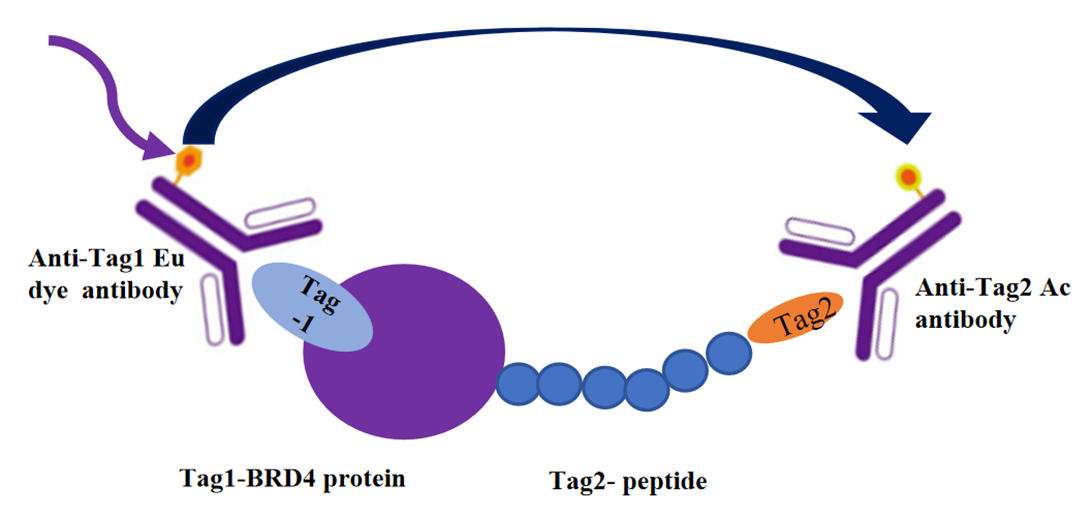
Nanjing UA-Bio Technology Co., Ltd. has developed the "UniOne® TR-FRET Human Epigeneous Bromodomain Binding Kit" (Catalog #: UA086018), a high-performance analytical platform specifically designed for studying bromodomain-acetylated histone interactions. Utilizing time-resolved fluorescence resonance energy transfer (TR-FRET) technology, this kit enables precise evaluation of human bromodomain protein binding with acetylated substrates, providing standardized solutions for epigenetics research, cancer drug screening, and inhibitor development.
| Core Advantages | Specifications / Functional Description |
|---|---|
| High Purity & Biological Activity | Kit components include rigorously validated human bromodomain proteins (e.g., BRD4) and acetylated histone peptides with correct conformations and intact binding functionality, accurately mimicking physiological interactions for reliable data. |
| Exceptional Lot Consistency | Standardized production and stringent QC ensure outstanding stability and inter-batch consistency, supporting long-term epigenetic research. |
| Ready-to-Use Flexible Platform | Homogeneous TR-FRET format enables "mix-read" operation without washing steps. Optimized for 96/384-well automation, adaptable for BET inhibitor screening, competitive binding assays, and drug activity evaluation. |
| Comprehensive Support | Includes validated protocols, standard curves, and data interpretation guides. Nanjing UA-Bio's technical team provides expert consultation throughout research workflows. |
Nanjing UA-Bio specializes in delivering cutting-edge reagents for immunology, cell therapy, and drug discovery. For detailed specifications or application support regarding the "UniOne® TR-FRET Human Epigeneous Bromodomain Binding Kit" (Catalog #: UA086018), please contact us.








