





Apoptosis is a tightly regulated programmed cell death process that enables cells to maintain tissue homeostasis and prevent tumorigenesis. The intrinsic mitochondrial pathway is activated by various stimuli, with BCL-2 family proteins playing a pivotal role. The anti-apoptotic protein family includes BCL-2, BCL-xL, MCL1, BCL-w, and BCL2A1, which exert their anti-apoptotic activity through BH1, BH2, and BH3 domains. Pro-apoptotic proteins include BAX, BAK, and BOK, as well as BH3-only proteins such as BIM, BID, BAD, NOXA, PUMA, and BMF. Upon death signals, BH3-only proteins are activated, promoting BAX and BAK activation, leading to mitochondrial outer membrane permeabilization and cytochrome c release, ultimately triggering the caspase cascade. Anti-apoptotic proteins prevent BAX and BAK dimerization by binding to their BH3 domains. Cancer cells evade apoptosis by upregulating BCL-2 family members, making them potential therapeutic targets.
BCL-xL is one of the most critical anti-apoptotic proteins in the BCL-2 family, produced by the Bcl-x gene through alternative splicing, sharing approximately 65% similarity with BCL-2. It localizes to the mitochondrial outer membrane, forming complexes with BAX and BAK to prevent cytochrome c release. The anti-apoptotic activity of BCL-xL is about 10 times stronger than that of BCL-2. In myeloid malignancies, BCL-xL overexpression correlates with disease progression, increasing from essential thrombocythemia and polycythemia vera to myelofibrosis. AML subtypes with erythroid or megakaryocytic differentiation rely on BCL-xL for survival, and inhibiting BCL-xL selectively induces apoptosis in these AML blasts. Mutations such as JAK2 V617F lead to constitutive activation of JAK/STAT5, upregulating BCL-xL and protecting cells from apoptosis.
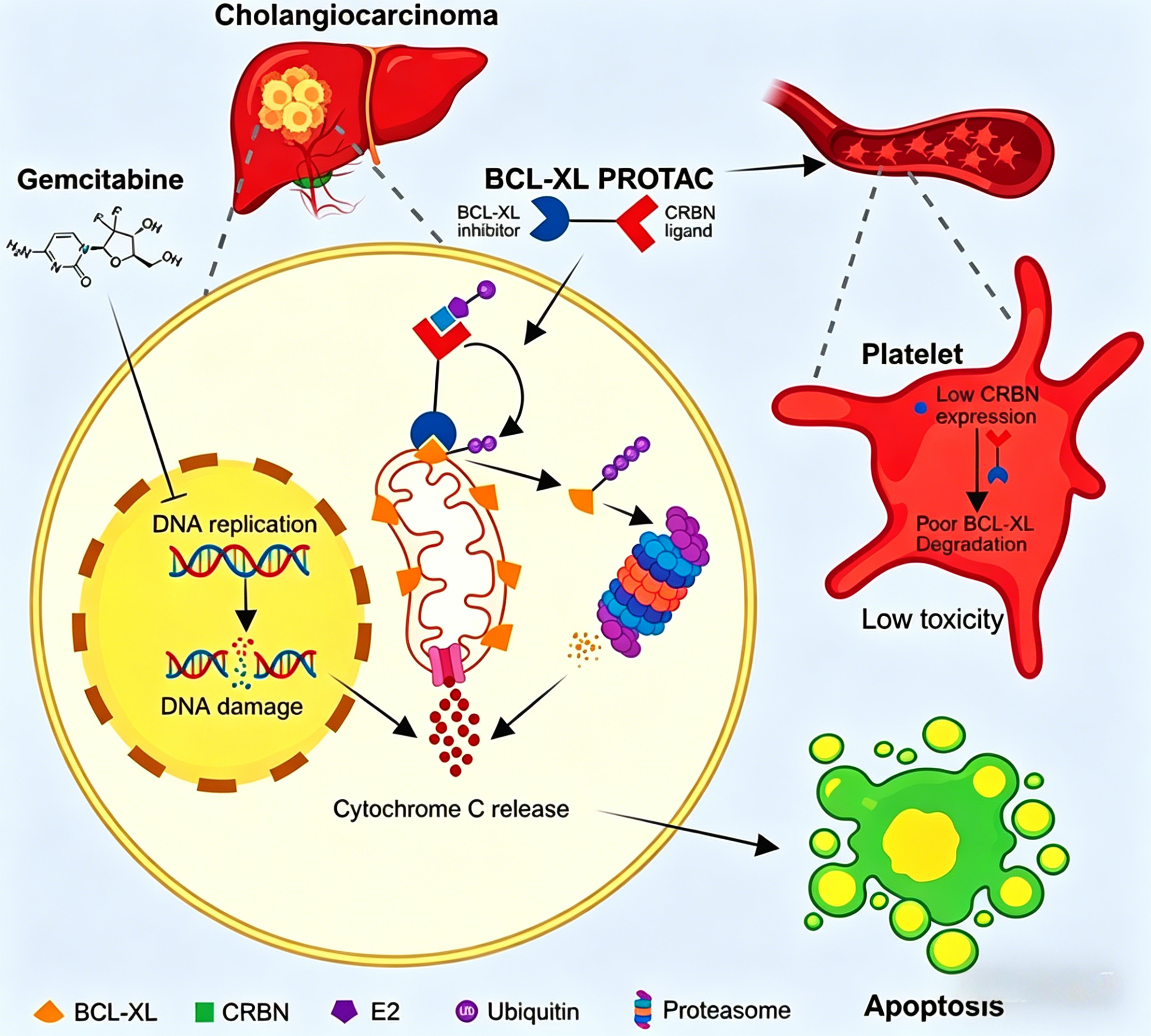
Restoring apoptosis is a central goal in anticancer therapy. The first milestone was the discovery of ABT-263, a dual inhibitor of BCL-2/BCL-xL. Building on this, the highly selective BCL-2 inhibitor venetoclax demonstrated potent pro-apoptotic activity and clinical efficacy in various leukemia subtypes. However, designing inhibitors targeting BCL-xL faces challenges due to the shallow and hydrophobic BH3 binding groove, making it difficult to identify molecules with optimal binding affinity and selectivity. Additionally, BCL-xL plays a critical role in platelet survival, and its inhibition leads to thrombocytopenia, limiting the clinical application of BCL-xL inhibitors. The TR-FRET BCL-xL/CRBN PROTAC Kit enables quantitative detection of PROTAC molecules' dual binding activity to BCL-xL and CRBN, providing a technical tool for degrader screening.
PROTAC is an innovative therapeutic strategy that leverages the cell's natural protein degradation machinery to selectively eliminate disease-related proteins. PROTAC molecules are bifunctional small molecules, with one end binding to the target protein and the other recruiting an E3 ubiquitin ligase, forming a ternary complex to induce ubiquitination and proteasomal degradation of the target protein. Targeting BCL-xL with PROTAC may be a promising future strategy, potentially overcoming the inherent limitations of small-molecule inhibitors. Compared to traditional inhibitors, PROTAC technology offers advantages such as targeting traditionally "undruggable" proteins, catalytic mechanism of action, and sustained inhibitory effects. CRBN-based BCL-xL PROTAC molecules, by simultaneously binding BCL-xL and CRBN, induce BCL-xL degradation and can circumvent resistance caused by target protein mutations.
CRBN is the substrate recognition receptor of the Cullin 4 RING E3 ubiquitin ligase, forming the CRL4CRBN complex with DDB1. DDB1 serves as an adaptor protein, linking CRBN to the Cullin 4 scaffold. CRBN is one of the most commonly used E3 ligases in PROTAC design, with ligands exhibiting favorable cell permeability and pharmacokinetic properties. Studies show that CRBN, by binding molecular glue degraders, alters its substrate specificity, enabling recruitment and degradation of non-native substrates. The formation of the DDB1-CRBN complex is crucial for the activity and substrate recognition of CRL4CRBN E3 ligase. The TR-FRET BCL-xL/CRBN PROTAC Kit can assess the dual binding activity of degraders to BCL-xL and CRBN, validating their mechanism of action.
TR-FRET technology combines the principles of time-resolved fluorescence and fluorescence resonance energy transfer. Time-resolved fluorescence utilizes the long-lived fluorescence properties of lanthanide chelates to effectively eliminate short-lived background fluorescence interference. Fluorescence resonance energy transfer occurs when donor and acceptor fluorophores are sufficiently close, generating a specific signal through non-radiative energy transfer. In the BCL-xL/CRBN PROTAC Kit, donor-labeled BCL-xL protein and acceptor-labeled CRBN protein are co-incubated; when PROTAC molecules simultaneously bind both, the donor and acceptor are brought into proximity, enabling energy transfer. Adding competitive compounds reduces signal intensity, reflecting the compound's blocking effect on PROTAC-mediated binding. This assay is homogeneous, wash-free, highly sensitive, and high-throughput, suitable for large-scale compound screening.
Nanjing UA-Bio Technology Co., Ltd. (UA-Bio) has independently developed the "UniOne® TR-FRET Human BCL-XL/CRBN PROTAC Binding Kit" (Catalog No.: UA086017), a high-performance analysis platform specifically designed for studying PROTAC molecules targeting BCL-XL protein-induced interactions between BCL-XL and CRBN (Cereblon) E3 ubiquitin ligase. BCL-XL is a key member of the anti-apoptotic protein family, overexpressed in various tumors and involved in resistance mechanisms. This kit employs time-resolved fluorescence resonance energy transfer (TR-FRET) technology to accurately and efficiently evaluate the formation of ternary complexes between human BCL-XL protein and CRBN-DDB1 complex mediated by PROTAC molecules, providing a stable and reliable standardized solution for PROTAC technology development, anticancer drug screening, and apoptosis resistance strategy research.
| Core Product Advantages | Detailed Parameters / Functional Description |
|---|---|
| High Purity and Intact Biological Activity | The kit's core components include high-purity, biologically active human BCL-XL protein and CRBN-DDB1 complex, validated through multi-dimensional quality control. Both maintain correct native conformations and intact protein-protein interaction functions, accurately simulating PROTAC-mediated ternary complex formation between BCL-XL and CRBN, ensuring data accuracy, reproducibility, and functional relevance. |
| Exceptional Batch Consistency and Stability | Leveraging an internationally leading protein expression platform and highly standardized production processes, combined with stringent quality control, the product exhibits outstanding long-term stability and excellent batch-to-batch consistency, providing reliable quality assurance for long-term PROTAC drug screening and mechanistic research. |
| Ready-to-Use Flexible Platform | Based on homogeneous TR-FRET technology, the kit features a simple "add-incubate-read" workflow without washing steps. Its optimized formulation is compatible with multi-well plates (96/384-well) and automation platforms, suitable for high-throughput screening of BCL-XL-targeting PROTAC molecules, ternary complex formation evaluation, degrader affinity measurement, and competitive binding assays. |
| Comprehensive Solution and Professional Support | We provide fully validated standard protocols, typical dose-response curves, and detailed interpretation guides to facilitate rapid establishment of stable, reproducible workflows. Nanjing UA-Bio's technical team offers end-to-end professional consultation and support for research design, optimization, and data analysis. |
Nanjing UA-Bio Technology Co., Ltd. is committed to providing cutting-edge, high-quality core reagents and tools for immunology, cell therapy, and innovative drug development. For detailed technical parameters, validation data, or application inquiries regarding the "UniOne® TR-FRET Human BCL-XL/CRBN PROTAC Binding Kit" (Catalog No.: UA086017), please feel free to contact us.








