




Breakthrough in Anti-Aging Research: Targeted Clearance of Senescent Cells Elevates Klotho Protein Levels


The α-Klotho protein serves as a crucial geroprotective factor, playing a pivotal role in counteracting oxidative stress, hypoxia, and cytotoxic damage. Scientific evidence demonstrates that this protein effectively mitigates deleterious alterations associated with aging and various pathological conditions.
- Recent Advances
- Product Information
- Reference
I. Emerging Research Progress in Senolytic Therapies
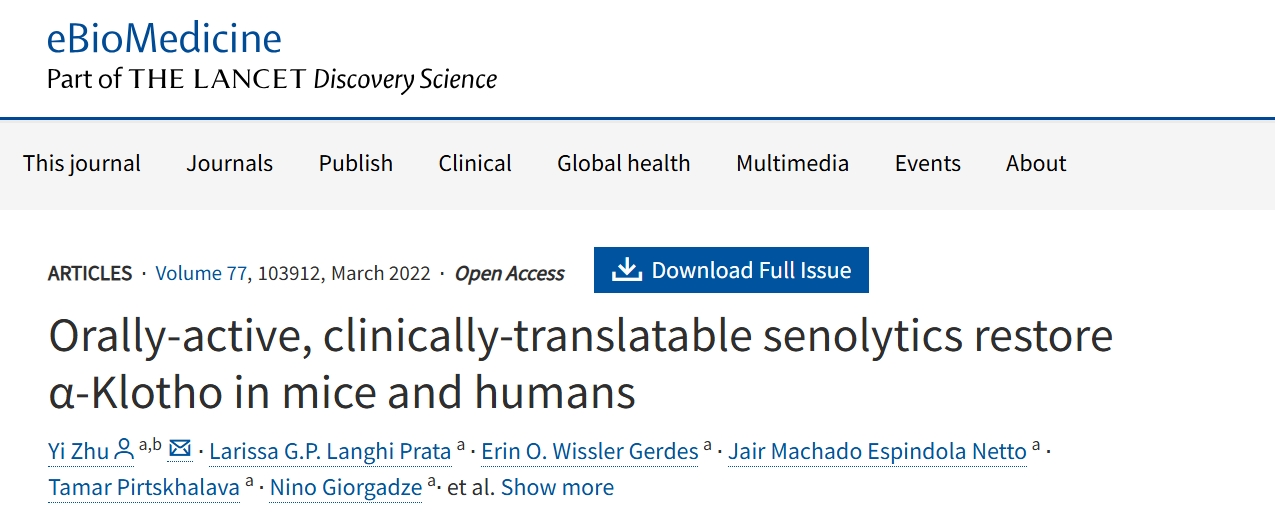
A groundbreaking study recently published in eBioMedicine, a subsidiary journal of The Lancet Discovery Science, has garnered significant scientific attention. The research team led by Mayo Clinic has demonstrated that the anti-aging drug combination of dasatinib and quercetin (D+Q regimen) can substantially elevate endogenous α-Klotho protein levels. This discovery provides novel scientific rationale for anti-aging interventions while establishing an innovative pathway for developing orally active anti-aging pharmaceuticals. Given the escalating global aging population, such research carries profound implications for developing therapies to delay or potentially reverse aging processes.
II. Anti-Aging Mechanisms and Clinical Significance of α-Klotho Protein
The α-Klotho protein serves as a critical geroprotective factor, playing pivotal roles in counteracting oxidative stress, hypoxia, and cytotoxic damage. Substantial evidence indicates its efficacy in mitigating deleterious changes associated with aging and various pathological conditions. However, α-Klotho expression progressively declines with advancing age, concomitant with the accumulation of senescent cells (termed "zombie" cells). This phenomenon is particularly pronounced in patients with Alzheimer's disease, diabetes mellitus, and renal pathologies. Animal studies have confirmed that genetic augmentation of α-Klotho expression can extend murine lifespan by 30%, establishing it as a prime target in anti-aging research. Nevertheless, direct protein supplementation remains challenging due to requirements for intravenous administration and inherent molecular instability.
III. Investigation of the Inverse Correlation Between Senescent Cells and α-Klotho
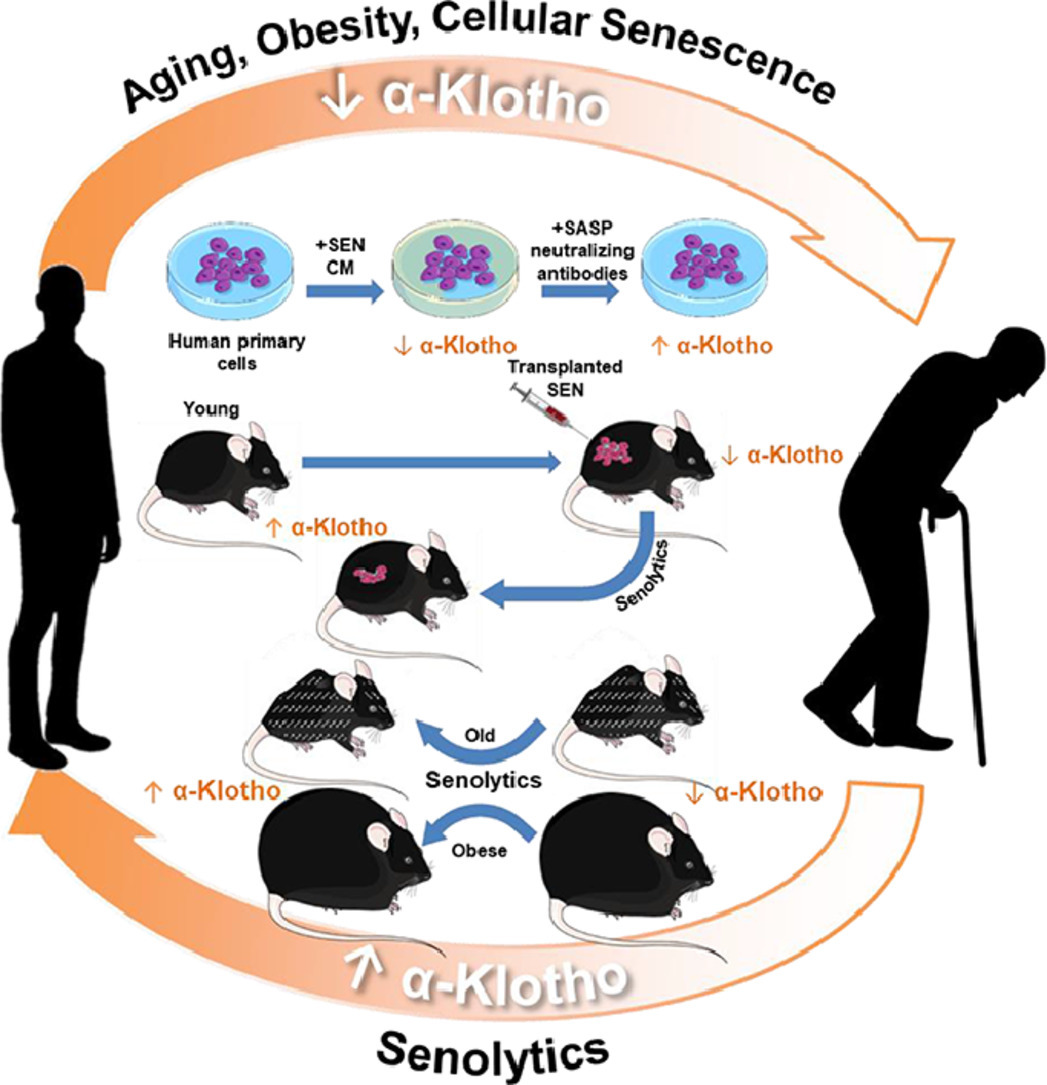
The research team adopted an innovative approach by exploring α-Klotho upregulation through senescent cell clearance. Experimental data confirmed that senescent cells significantly suppress α-Klotho expression in three human primary cell types: umbilical vein endothelial cells, renal cells, and brain cells. Neutralization of senescence-associated secretory phenotype (SASP) factors, particularly activin A and interleukin (IL)-1α, partially prevented this suppression. Further validation through animal models revealed that transplantation of senescent cells into young mice reduced renal and cerebral α-Klotho protein levels, whereas genetic or pharmacological elimination of senescent cells markedly elevated α-Klotho in these tissues. These findings establish a causal relationship between senescent cell accumulation and α-Klotho depletion.
IV. Preliminary Clinical Outcomes of D+Q Regimen in Human Studies
Clinical observations in idiopathic pulmonary fibrosis (IPF) patients have demonstrated promising therapeutic potential. IPF represents a prototypical senescence-associated disorder characterized by progressive respiratory dysfunction and physical decline. The research team observed significantly increased urinary α-Klotho levels following D+Q treatment, showing an inverse correlation with SASP factors. These results not only confirm that senescent cell clearance enhances α-Klotho expression but also suggest urinary α-Klotho as a potential biomarker for assessing anti-aging therapeutic efficacy. Previous studies have documented D+Q-mediated improvements in IPF patients' physical function, including walking capacity and chair-rising test performance.
V. Research Implications and Future Directions
This study provides crucial insights for developing novel anti-aging strategies. Primarily, it establishes the feasibility of indirectly elevating α-Klotho through senescent cell clearance, circumventing technical hurdles associated with direct protein supplementation. Secondly, it validates the clinical translational potential of oral D+Q regimen, laying groundwork for more accessible anti-aging medications. Future investigations should focus on optimizing drug combinations, expanding clinical trial cohorts, and validating α-Klotho as a reliable therapeutic response marker. Furthermore, elucidating the precise molecular mechanisms by which senescent cells modulate α-Klotho expression will facilitate development of more targeted interventions. As research progresses, senolytic therapies may offer novel solutions for multiple age-related disorders.
VI. Conclusion and Perspectives
Although the D+Q regimen shows considerable promise, anti-aging medicine still faces numerous challenges. First, long-term safety and tolerability profiles require comprehensive evaluation. Second, interindividual variability in treatment responses necessitates development of personalized therapeutic approaches. Additionally, translating laboratory findings into widely applicable clinical modalities remains a critical undertaking. Looking ahead, combined strategies targeting both senescent cell clearance and α-Klotho upregulation may yield synergistic effects, opening new avenues for anti-aging interventions. With deepening understanding of aging biology, comprehensive therapeutic strategies addressing multiple senescence mechanisms will likely emerge as a prevailing trend, providing powerful tools to confront health challenges posed by global population aging.
This article is reviewed and published by the technical expert team of UA
Disclaimer: This article partially utilizes artificial intelligence assistance in its creation. If any content involves copyright or intellectual property issues, please let us know and we promise to verify and remove it as soon as possible.
Purchase recombinant protein, choose Nanjing UA-Bio
UA protein focuses on providing various protein reagents, raw materials, and services required for drug research and development, cell therapy, gene therapy, and basic scientific research, including drug target proteins, immune checkpoint proteins, cytokines, tool enzymes, customized protein expression, and full-length transmembrane protein development. Youai is committed to providing customers with high-quality products and professional services, and building a High-tech Biological Enterprise with International Competitiveness.

[1] Yi Zhu, et al., (2022). Orally-active, clinically-translatable senolytics restore α-Klotho in mice and humans. eBioMedicine.
[2] What Makes the Newly Approved Drug for Depression So Different?. Retrieved march 9, 2022.






 Business license (three certificates in one)