




The Klotho/FGF23 Axis: A New Mechanism and Therapeutic Prospects for the Cardiorenal Interaction in Chronic Kidney Disease


The Klotho/FGF23 axis, as a key system for regulating the balance of mineral metabolism, has received extensive attention in the research field of chronic kidney disease (CKD) in recent years. FGF23 is mainly produced by osteocytes and osteoblasts. Its molecular structure has a characteristic core region of the FGF family proteins and also contains a unique C-terminal tail structure. The Klotho protein exists in two forms: the transmembrane type and the secreted type. The former serves as an essential co-receptor for FGF23, while the latter has a variety of biological activities independent of FGF23.
- Recent Advances
- Product Information
I. Molecular Basis and Physiological Functions of the Klotho/FGF23 Axis
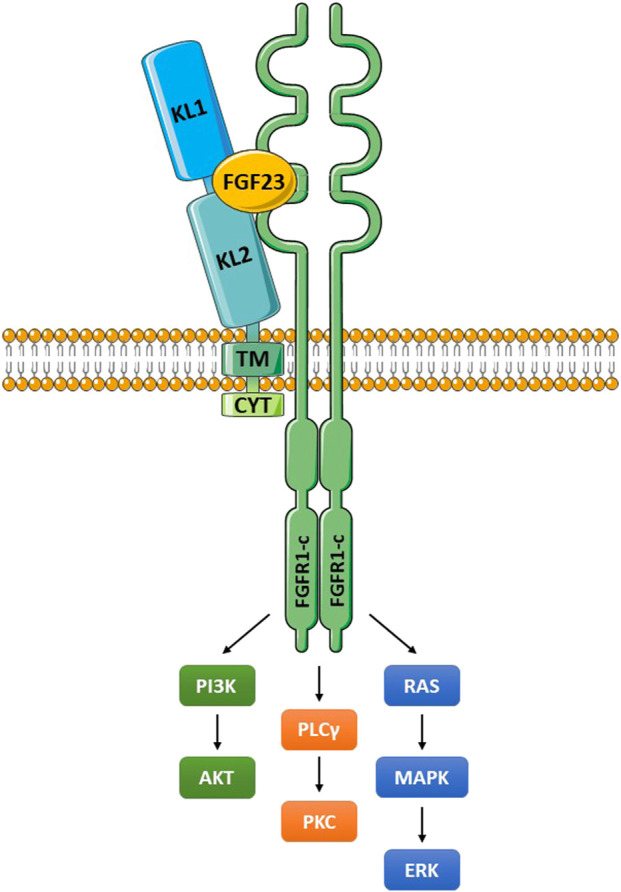
The Klotho/FGF23 axis has emerged as a critical regulatory system in mineral metabolism homeostasis, garnering increasing attention in chronic kidney disease (CKD) research. Fibroblast growth factor 23 (FGF23), predominantly secreted by osteocytes and osteoblasts, exhibits the characteristic core domain of FGF family proteins along with a unique C-terminal tail structure. Klotho exists in two distinct isoforms: a transmembrane form serving as an obligate co-receptor for FGF23, and a secreted form possessing diverse biological activities independent of FGF23 signaling. Under physiological conditions, FGF23 binds to Klotho-FGFR complexes, activating downstream signaling pathways that regulate renal phosphate reabsorption and 1,25-dihydroxyvitamin D synthesis. This sophisticated regulatory system is indispensable for maintaining systemic mineral homeostasis, with dysregulation at any level potentially precipitating severe metabolic disturbances.

II. Dynamic Alterations of the Klotho/FGF23 Axis During CKD Progression
The natural history of CKD is characterized by profound modifications in the Klotho/FGF23 axis. Early-stage CKD manifests reduced renal Klotho expression concomitant with compensatory elevation of circulating FGF23 levels, representing an adaptive response to declining renal function aimed at preserving mineral balance through enhanced phosphaturia. Progressive renal deterioration exacerbates Klotho deficiency, inducing tissue resistance to FGF23 and driving pathological escalation of FGF23 concentrations. Notably, these dynamic changes not only reflect the degree of renal impairment but also correlate strongly with cardiovascular complication risks in CKD patients. Clinical evidence demonstrates that both diminished Klotho expression and elevated FGF23 levels independently predict all-cause mortality and cardiovascular event rates in this population.
III. Mechanistic Insights into Cardio-Renal Interactions Mediated by the Klotho/FGF23 Axis
Dysregulation of the Klotho/FGF23 axis plays a pivotal role in CKD-associated cardio-renal syndrome pathogenesis. Klotho deficiency directly compromises its vasculoprotective and cardioprotective effects, promoting vascular calcification, myocardial fibrosis, and left ventricular hypertrophy. Conversely, excessive FGF23 exerts direct cardiotoxicity through both Klotho-dependent and independent pathways. The Klotho-dependent mechanism primarily involves FGF23 overactivation-induced disturbances in calcium-phosphate metabolism and secondary hyperparathyroidism, while the Klotho-independent pathway may involve direct FGF23 action on low-affinity receptors in cardiomyocytes, inducing hypertrophic and fibrotic responses. Furthermore, the Klotho/FGF23 axis participates in complex cardio-renal networks through modulation of inflammatory cascades, oxidative stress, and the renin-angiotensin system.
IV. Clinical Utility of the Klotho/FGF23 Axis as Biomarkers
Measurement of Klotho and FGF23 demonstrates considerable clinical value in CKD management. Reductions in soluble Klotho and elevations in FGF23 frequently precede alterations in conventional renal function markers, providing sensitive biomarkers for early CKD detection. These parameters also correlate strongly with disease progression rates and outcomes, facilitating risk stratification and personalized therapeutic decision-making. Particularly noteworthy, the Klotho/FGF23 ratio may offer superior cardiovascular risk prediction compared to individual markers. However, standardization and widespread implementation of Klotho assays remain major challenges requiring technical refinement and multicenter validation studies.
V. Emerging Therapeutic Strategies Targeting the Klotho/FGF23 Axis
Modulation of the Klotho/FGF23 axis represents a promising therapeutic approach for CKD and its cardiovascular complications. Klotho-targeted strategies focus on enhancing endogenous expression through epigenetic modulation, microRNA intervention, or hormonal stimulation, alongside development of stable recombinant Klotho for replacement therapy. For FGF23 modulation, partial inhibition (rather than complete neutralization) appears optimal, with current approaches including FGF23-neutralizing antibodies, soluble Klotho fragments, and FGF23 signaling inhibitors. Particularly intriguing is the potential synergistic effect of combined interventions targeting different axis components, such as concomitant Klotho supplementation and moderate FGF23 suppression, which may restore physiological signaling while avoiding adverse effects of excessive FGF23 inhibition.
VI. Current Challenges and Future Research Directions
Despite significant advances, critical knowledge gaps persist in Klotho/FGF23 axis research. Basic science investigations require deeper elucidation of tissue-specific mechanisms and interactions between Klotho and FGF23. Translational medicine faces challenges in safely applying laboratory discoveries to clinical practice, particularly regarding Klotho protein stability and delivery systems. Clinical research needs large-scale prospective studies to validate biomarker utility and optimize intervention timing and regimens. Additionally, developing personalized Klotho/FGF23 modulation strategies tailored to different CKD stages represents an important future direction.
VII. Conclusions and Perspectives
The Klotho/FGF23 axis serves as a crucial interface between renal and cardiovascular systems, with research advancements enhancing our understanding of cardio-renal interactions in CKD while providing novel diagnostic and therapeutic targets. As knowledge of this system expands, precision medicine strategies based on axis modulation may offer improved therapeutic options for CKD patients. Realizing this potential requires interdisciplinary collaboration to address fundamental and clinical challenges, facilitating translation of research findings into practical applications. Ultimately, investigation of the Klotho/FGF23 axis represents a frontier in nephrology and cardiovascular medicine with substantial academic and clinical implications.
This article is reviewed and published by the technical expert team of UA
Disclaimer: This article partially utilizes artificial intelligence assistance in its creation. If any content involves copyright or intellectual property issues, please let us know and we promise to verify and remove it as soon as possible.
Purchase recombinant protein, choose Nanjing UA-Bio
UA protein focuses on providing various protein reagents, raw materials, and services required for drug research and development, cell therapy, gene therapy, and basic scientific research, including drug target proteins, immune checkpoint proteins, cytokines, tool enzymes, customized protein expression, and full-length transmembrane protein development. Youai is committed to providing customers with high-quality products and professional services, and building a High-tech Biological Enterprise with International Competitiveness.







 Business license (three certificates in one)