





CD22 belongs to the sialic acid-binding immunoglobulin-type lectin family and is a type I transmembrane protein that specifically binds to sialic acid-containing glycans. Through its immunoreceptor tyrosine-based inhibitory motif (ITIM), it inhibits B cell receptor signaling and maintains humoral immune homeostasis. CD22 is primarily expressed intracellularly during early B cell development, including in pro-B and pre-B cells, and shifts to the cell membrane surface as B cells mature. CD22 expression is highest in mature B cells and is present in most B cell malignancies, including acute lymphoblastic leukemia, non-Hodgkin lymphoma, and hairy cell leukemia. Notably, CD22 is expressed on leukemia cells in over 90% of acute lymphoblastic leukemia patients. Alexa Fluor 647-labeled Siglec-2/CD22 Fc chimera protein can be used to quantitatively detect CD22 protein expression levels and binding activity, providing a technical tool for targeted therapy research in B cell malignancies.
Among the numerous surface molecules associated with B cells, CD22 stands out not only as a specific antigen target on tumor cells but also due to its endocytic internalization properties. This dual characteristic makes CD22 an ideal target for antibody-drug conjugates (ADCs) to deliver cytotoxic drugs. ADCs specifically recognize CD22 through antibodies, precisely delivering cytotoxic drugs to CD22-positive tumor cells. Upon binding to CD22, the drugs are internalized and exert their cytotoxic effects. This strategy enhances efficacy while reducing systemic toxicity. CD22 is highly expressed in most B cell malignancies but has limited expression in normal tissues, making it an ideal therapeutic target. Alexa Fluor 647-labeled Siglec-2/CD22 Fc chimera protein can be used to evaluate the binding capability of ADCs to CD22 antigens and validate their targeting specificity.
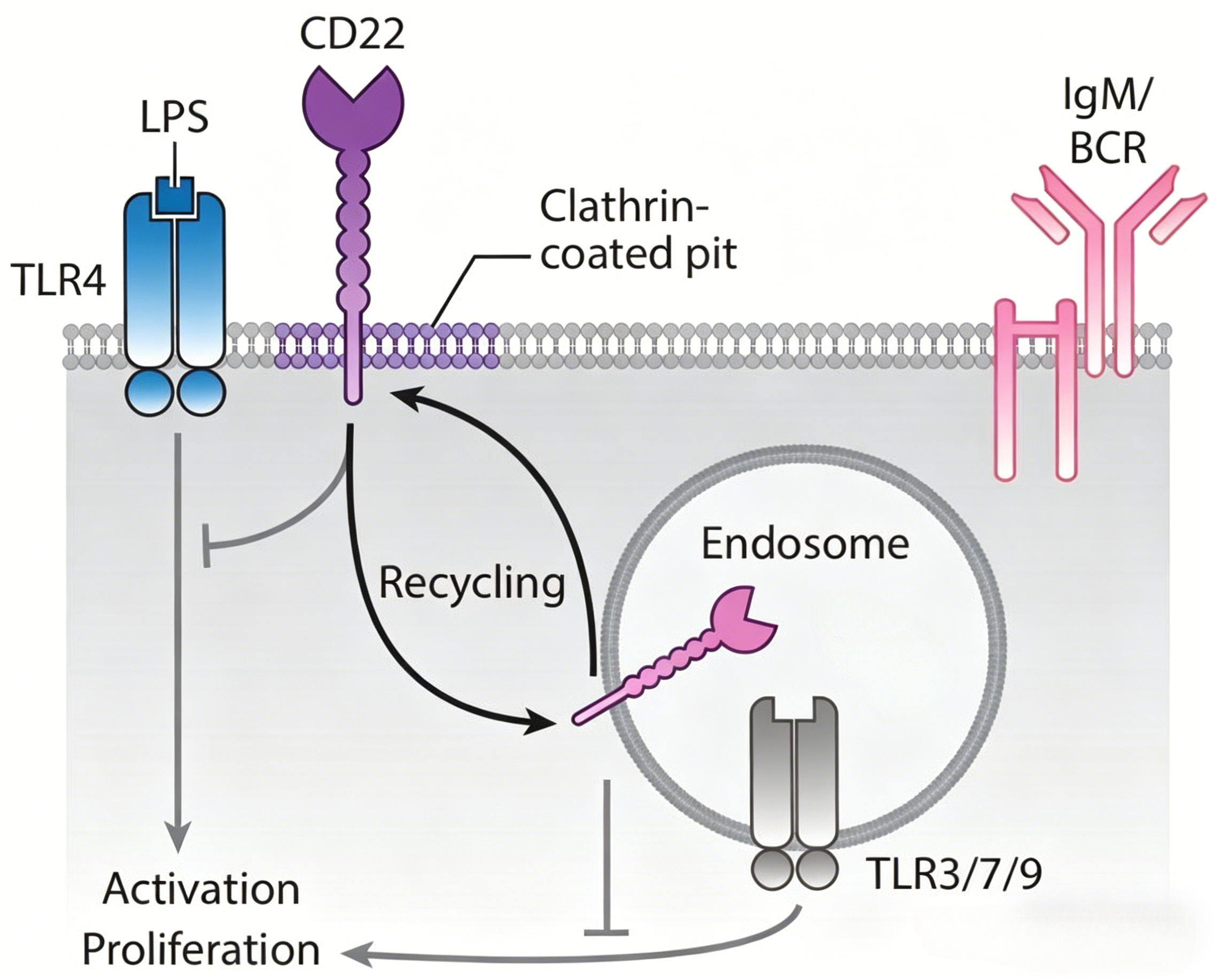
Despite the high expression of CD22 on malignant B cells, naked antibodies targeting CD22 alone have shown minimal activity in clinical trials. Two major technical hurdles exist in the early development of CD22 antibodies. On one hand, the heavy glycosylation of CD22 epitopes significantly impacts the binding affinity of antibody drugs, making it difficult to develop high-affinity antibodies. As a member of the sialic acid-binding immunoglobulin-type lectin family, the glycosylation modifications of CD22 can markedly affect antibody-antigen binding efficiency. On the other hand, the binding of antibody drugs to surface CD22 triggers rapid endocytic internalization, making it challenging to develop suitable assays for monitoring drug bioactivity changes during in vitro and in vivo studies. These challenges have limited the clinical development of naked anti-CD22 antibodies, prompting researchers to explore alternative strategies such as antibody-drug conjugates. Alexa Fluor 647-labeled Siglec-2/CD22 Fc chimera protein can be used to assess the binding affinity of antibodies to CD22, providing quantitative data support for antibody screening and optimization.
Antibody-drug conjugate (ADC) delivery systems fully leverage the endocytic internalization properties of CD22. By conjugating cytotoxic drugs to anti-CD22 antibodies, precise drug delivery can be achieved, enhancing antitumor efficacy while reducing systemic toxicity. Currently, anti-CD22 ADCs have demonstrated promising clinical outcomes in the treatment of B cell malignancies. Compared to traditional chemotherapy, ADCs offer higher selectivity and lower side effects. The rapid internalization of CD22 makes it an ideal target for ADC delivery, as drugs bound to CD22 are quickly internalized into tumor cells, releasing cytotoxic agents to exert their effects. Alexa Fluor 647-labeled Siglec-2/CD22 Fc chimera protein can be used to monitor the internalization process of ADCs and evaluate their bioactivity.
Beyond ADCs, CD22 is also a critical target for CAR-T cell therapy. CD22-targeted CAR-T cells express chimeric antigen receptors that specifically recognize CD22, enabling precise targeting and elimination of CD22-expressing B cell malignancy cells. Given the high expression of CD22 in most B cell malignancies and its limited expression in normal B cells, CD22 is an ideal target for CAR-T therapy. CD22-targeted CAR-T cell therapy has shown favorable safety and efficacy in patients with relapsed or refractory B cell malignancies. Dual-targeting CAR-T cell strategies targeting both CD19 and CD22 can effectively reduce the risk of relapse due to antigen escape. Alexa Fluor 647-labeled Siglec-2/CD22 Fc chimera protein can be used to assess the binding capability of CAR-T cells to CD22 antigens and validate their functional activity.
As a co-receptor of the B cell receptor (BCR), CD22 negatively regulates BCR signaling through its immunoreceptor tyrosine-based inhibitory motif (ITIM). When CD22 is cross-linked with the BCR, its intracellular ITIM is phosphorylated, recruiting SH2 domain-containing phosphatases such as SHP-1. These phosphatases dephosphorylate key molecules in the BCR signaling pathway, thereby inhibiting B cell activation. This negative regulatory mechanism is crucial for maintaining B cell homeostasis and preventing autoimmune responses. By cross-linking with the BCR, CD22 suppresses B cell responses to self-antigens, preventing the activation of autoreactive B cells and inhibiting the development of autoimmune diseases. Impaired CD22 expression or function plays a significant role in the pathogenesis of autoimmune diseases, including systemic lupus erythematosus and rheumatoid arthritis.
Nanjing UA-Bio Technology Co., Ltd. (UA-Bio) has independently developed the "Alexa Fluor 647-Labeled Siglec-2/CD22 Fc Chimera Protein, Human" (Product Code: UA011267), a high-performance far-red fluorescent-labeled probe designed for B cell biology research and multicolor flow cytometry analysis. Siglec-2 (also known as CD22) is a B cell-specific immunoglobulin-like lectin that plays a key regulatory role in B cell activation, proliferation, and signal transduction. It is an important therapeutic target for autoimmune diseases and B cell malignancies (e.g., acute lymphoblastic leukemia and non-Hodgkin lymphoma). Labeled with Alexa Fluor 647, this dye exhibits high fluorescence brightness, excellent photostability, and low background noise. With an excitation peak at ~650 nm and an emission peak at ~665 nm in the far-red region, it avoids interference from common fluorophores like FITC and PE, enabling multicolor analysis in flow cytometry and multichannel imaging in fluorescence microscopy.
| Core Product Advantages | Detailed Parameters / Functional Description |
|---|---|
| High Purity and Intact Bioactivity | The product is produced using internationally leading eukaryotic expression systems and highly standardized purification processes. Rigorous quality control ensures >95% purity and correct native conformation (retaining intact glycosylation and sialic acid-binding functionality). The Fc chimera format enhances protein stability and proper folding. The Alexa Fluor 647 labeling process is optimized to achieve high labeling efficiency while maintaining high-affinity binding to antibodies, accurately mimicking the antigenic properties of Siglec-2 on B cell surfaces under physiological conditions. |
| Ideal Tool for Diverse Applications | This protein excels in various applications, including CAR-T cell positivity rate detection by flow cytometry (supporting multicolor panel design), anti-CD22 antibody/antagonist screening, competitive binding assays, multiparameter analysis of B cell subsets, and flow cytometry. It is widely applicable to CD22-targeted CAR-T cell therapy development (e.g., for acute lymphoblastic leukemia), autoimmune disease research, and drug activity evaluation. |
| Exceptional Batch Consistency and Stability | Strict management from protein expression and labeling to purification and quality control, combined with comprehensive release testing, ensures consistent binding activity, uniform fluorescence intensity, and excellent long-term stability across batches. This provides reliable quality assurance for long-term and continuous Siglec-2-targeted research. |
| Comprehensive Solutions and Professional Support | We provide fully validated standard protocols, representative flow cytometry data, and detailed interpretation guides to help establish stable and reproducible Siglec-2-targeted molecular detection workflows. Nanjing UA-Bio's professional technical team offers end-to-end consulting and support for research design, experimental optimization, and data analysis. |
Nanjing UA-Bio Technology Co., Ltd. is committed to providing cutting-edge, high-quality core reagents and tools for immunology, cell therapy, and innovative drug development. For detailed technical parameters, validation data, or application-specific inquiries regarding the "Alexa Fluor 647-Labeled Siglec-2/CD22 Fc Chimera Protein, Human" (Product Code: UA011267), please feel free to contact us.








