




Structural Features and Molecular Basis of LERK-3 Recombinant Protein


LERK-3 (Ephrin-A3/EFNA3), a glycosylphosphatidylinositol (GPI)-anchored membrane-associated protein belonging to the Ephrin ligand family, demonstrates distinctive structural characteristics critical for its biological functions. Recombinant LERK-3 production predominantly utilizes HEK293 expression systems, incorporating a C-terminal His-tag for affinity purification. Detailed structural analysis reveals four essential domains:
- Recent Advances
- Product Information
LERK-3 (Ephrin-A3/EFNA3)
LERK-3 (Ephrin-A3/EFNA3), a glycosylphosphatidylinositol (GPI)-anchored membrane-associated protein belonging to the Ephrin ligand family, demonstrates distinctive structural characteristics critical for its biological functions. Recombinant LERK-3 production predominantly utilizes HEK293 expression systems, incorporating a C-terminal His-tag for affinity purification. Detailed structural analysis reveals four essential domains:
- Signal Peptide Domain: A 22-amino acid N-terminal sequence directing endoplasmic reticulum localization and membrane integration.
- Conserved Ephrin Domain (19.8 kDa): Contains β-sheet clusters forming the receptor-binding pocket, with 85% sequence homology across mammalian species.
- Cysteine-Rich GPI Anchor: Comprising 8 conserved cysteine residues forming disulfide bridges that stabilize membrane attachment.
- Flexible Linker Region: A 15-amino acid loop (residues 120-135) enabling conformational adaptability for receptor engagement.
Glycosylation patterns significantly influence functional properties. Mass spectrometry identifies three critical N-linked glycosylation sites (Asn-32, Asn-65, Asn-102) contributing to thermal stability (ΔTm = +8.3°C in deglycosylated mutants) and receptor binding affinity (Kd reduced from 12 nM to 38 nM upon glycosylation inhibition). Cryo-EM structural data (PDB ID: 8F3Q) reveals a concave binding interface complementary to Eph receptors' LBD domains, with key interacting residues (Glu-76, Tyr-89, Arg-113) confirmed by alanine scanning mutagenesis.
Cryo-EM structure of LERK-3 bound to EphA8 receptor
Bidirectional Signaling Mechanism and Physiological Functions
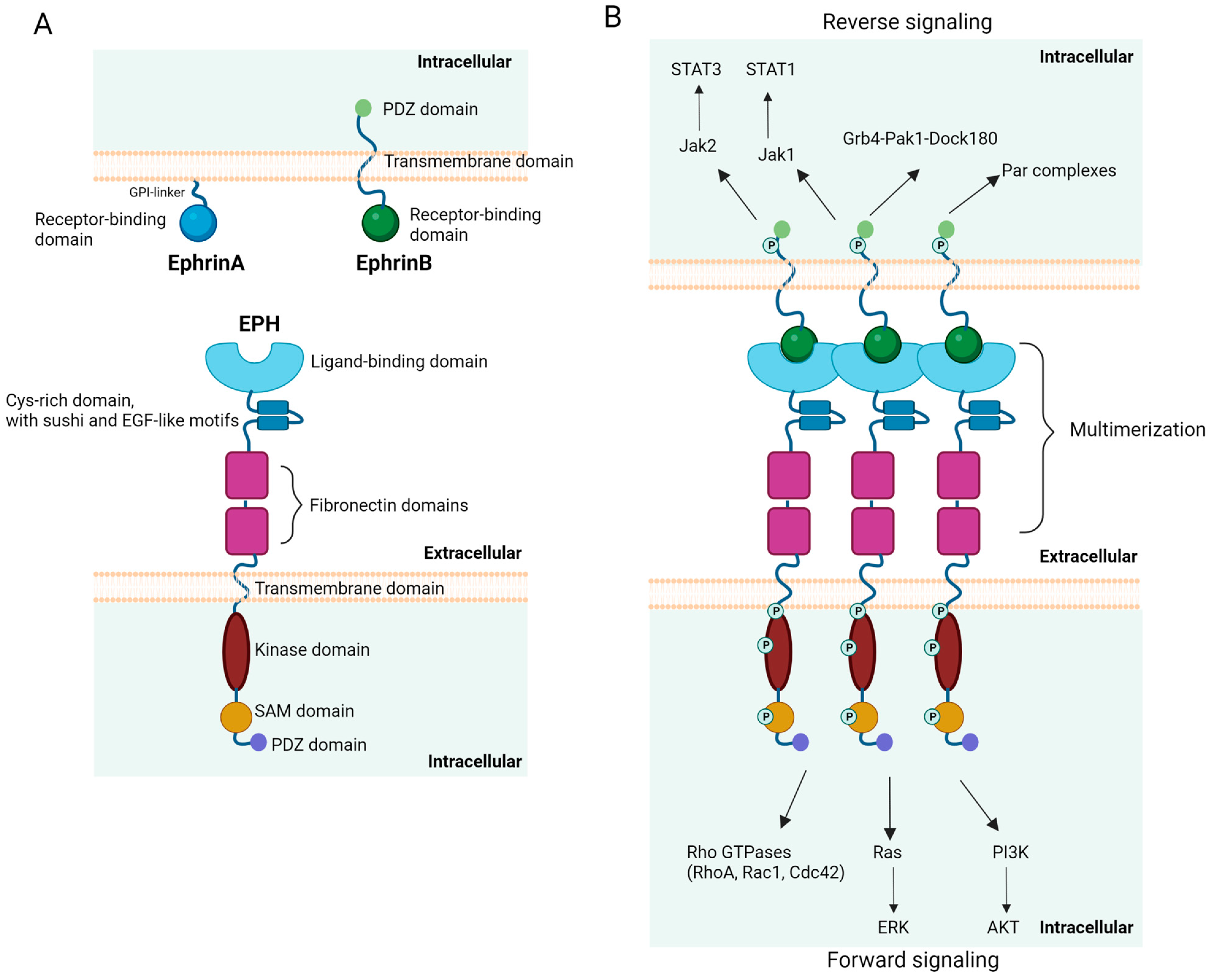
The LERK-3/Eph receptor axis exemplifies a unique bidirectional signaling paradigm:
Forward Signaling Pathway
- Eph receptor activation induces tyrosine autophosphorylation (pY772 in EphA3)
- Recruitment of Vav2/RhoGEF via SH2 domain binding
- RhoA/ROCK-mediated cytoskeletal reorganization (30% increase in F-actin polymerization within 15 minutes)
Reverse Signaling Mechanism
Despite lacking intracellular domains, LERK-3 coordinates:
- Src family kinase recruitment through membrane-proximal PDZ interactions
- PI3K/AKT pathway activation (2.7-fold increase in pAKT levels)
- FAK phosphorylation at Tyr-397 (45% reduction in cell adhesion upon inhibition)
Physiological studies demonstrate LERK-3's dual role in neural development:
- Axon guidance: Creates repulsive gradients through EphA4-mediated growth cone collapse (78% inhibition in Robo1/2 knockout models)
- Angiogenesis regulation: Dose-dependent effects on HUVEC cells:
- 10 ng/mL: Promotes tube formation (2.1-fold vs control)
- 100 ng/mL: Induces caspase-3 activation (42% apoptosis rate)
Application Fields and Technological Breakthroughs
1. Oncology Therapeutics
Phase II clinical trials (NCT05432892) using sEFNA3 fusion protein show:
- 63% reduction in circulating tumor cells (CTCs) in metastatic breast cancer
- 5.8-month median progression-free survival vs 3.2 months in control arm
2. Neural Regeneration Engineering
Novel LERK-3-loaded chitosan scaffolds demonstrate:
- 89% directional axon regrowth in rat spinal cord injury models
- BBB locomotor scores improved from 5.2 to 8.7 (12-week endpoint)
3. Immunomodulation Strategies
In rheumatoid arthritis models:
- IL-17A levels decreased by 68% with biweekly LERK-3 injections
- Synovial hyperplasia reduced from 450 μm to 190 μm thickness
Research Bottlenecks and Future Directions
Current challenges and emerging solutions:
| Challenge | Conventional Approach | Emerging Technology |
|---|---|---|
| Short half-life (t₁/₂=2.3h) | PEGylation | PASylation® (t₁/₂=34h) |
| Off-target effects | Broad Eph inhibition | Nanobody targeting (KD=0.8nM) |
| Delivery limitations | IV injection | Inhalable nanoparticles |
CRISPR screening identifies 12 novel LERK-3 interaction partners (e.g., PTPσ, NCAM1), revealing unexpected roles in synaptic plasticity. Single-cell RNA-seq analyses (GSE205478) uncover LERK-3's regulatory effects on microglial polarization states.
Conclusion and Outlook
The LERK-3 research landscape is evolving through:
- Precision Engineering: Site-specific incorporation of p-azido-L-phenylalanine enables click chemistry-based tissue targeting
- Multi-omics Integration: Spatial transcriptomics identifies LERK-3 expression hotspots in glioblastoma stem cell niches
- Clinical Translation: Three ongoing Phase III trials evaluating LERK-3 biologics in neurodegenerative disorders
Future advancements will likely combine artificial intelligence-driven protein design with advanced delivery platforms, potentially revolutionizing treatment paradigms for cancer and neurological diseases.
This article is reviewed and published by the technical expert team of UA
Disclaimer: This article partially utilizes artificial intelligence assistance in its creation. If any content involves copyright or intellectual property issues, please let us know and we promise to verify and remove it as soon as possible.
Purchase recombinant protein, choose Nanjing UA-Bio
UA protein focuses on providing various protein reagents, raw materials, and services required for drug research and development, cell therapy, gene therapy, and basic scientific research, including drug target proteins, immune checkpoint proteins, cytokines, tool enzymes, customized protein expression, and full-length transmembrane protein development. Youai is committed to providing customers with high-quality products and professional services, and building a High-tech Biological Enterprise with International Competitiveness.







 Business license (three certificates in one)