




Love the new! CyQuantiFluor™ Cell Viability Assay Kit


The CyQuantiFluor™ Cell Viability Assay Kit is a homogeneous detection kit based on DNA-specific fluorescent dyes. Its core principle is: DNA-binding dyes can penetrate the membranes of live cells and bind to nuclear DNA to produce strong fluorescence, with fluorescence intensity proportional to the number of viable cells; background-shielding dyes cannot enter live cells but can block fluorescence signals from DNA released by dead cells and extracellular DNA, ensuring detection specificity. This method does not rely on cellular metabolic state and directly quantifies the DNA content of live cells, offering advantages such as simple operation (one-step addition), high signal-to-noise ratio, and excellent stability. It is suitable for tumor cell proliferation assays and high-throughput compound screening.
- Recent Advances
- Product Information
What is the CyQuantiFluor™ Cell Viability Assay Kit?
The CyQuantiFluor™ Cell Viability Assay Kit is a homogeneous assay kit based on a DNA-specific fluorescent dye. Its core principle is that the DNA-binding dye can penetrate the membrane of live cells, bind to nuclear DNA, and produce strong fluorescence, with fluorescence intensity proportional to the number of live cells. The background shielding dye cannot enter live cells but can block fluorescence signals from DNA released by dead cells and extracellular DNA, ensuring detection specificity. This method does not rely on cellular metabolic state but directly quantifies the DNA content of live cells. It offers advantages such as simple operation (one-step addition), high signal-to-noise ratio, and excellent stability, making it suitable for tumor cell proliferation assays and high-throughput compound screening.
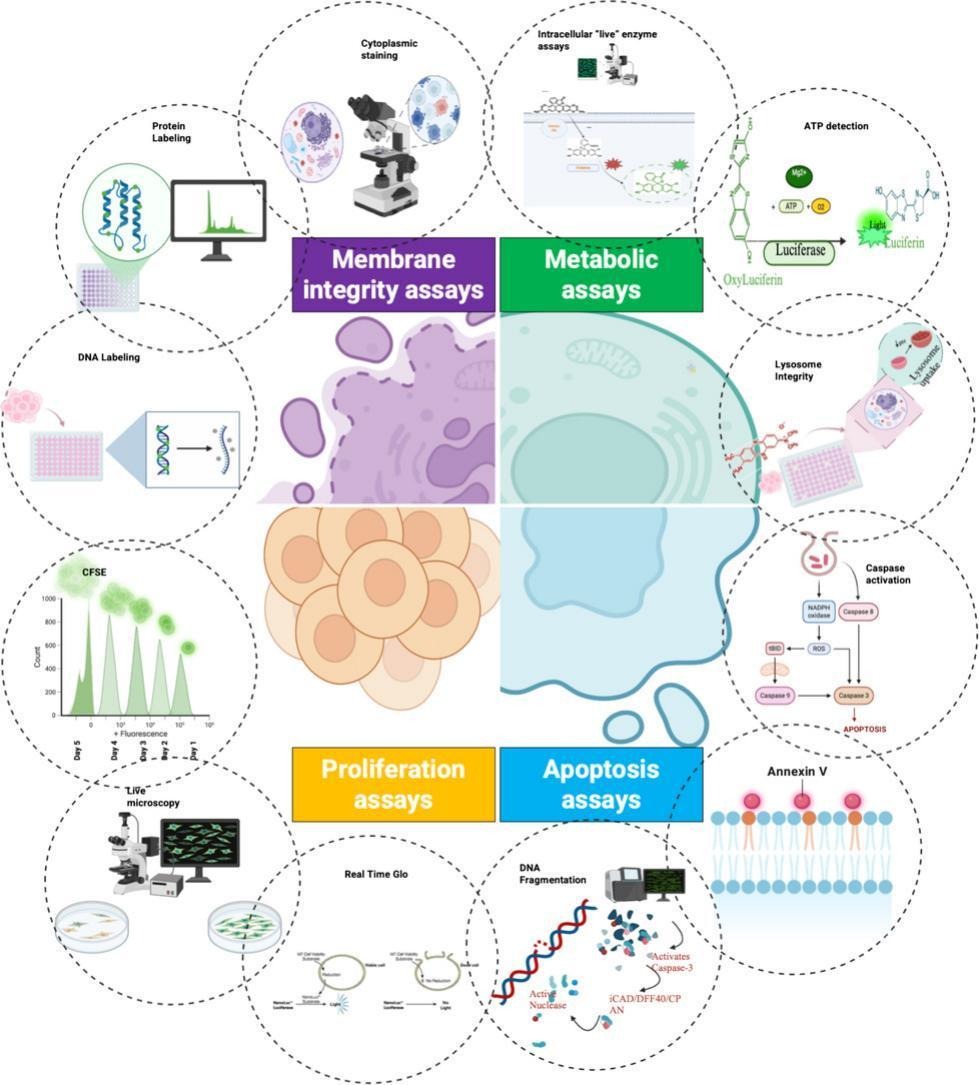
10.1016/j.biotechadv.2025.108764
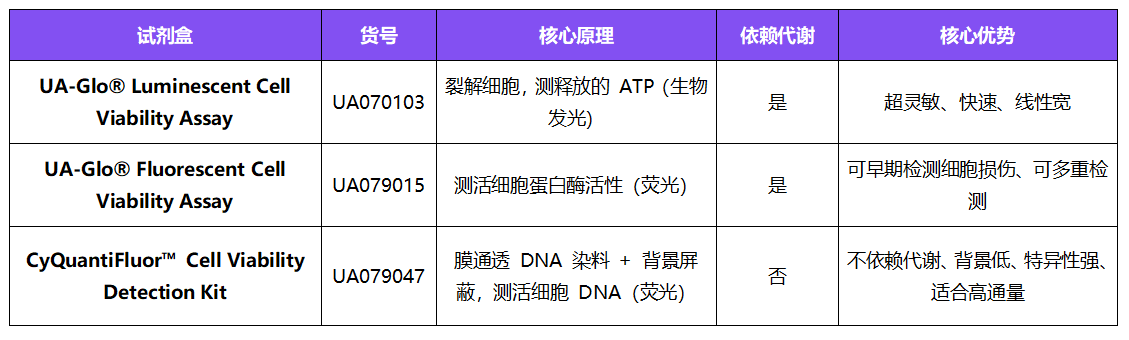
Comparison of Three Kits
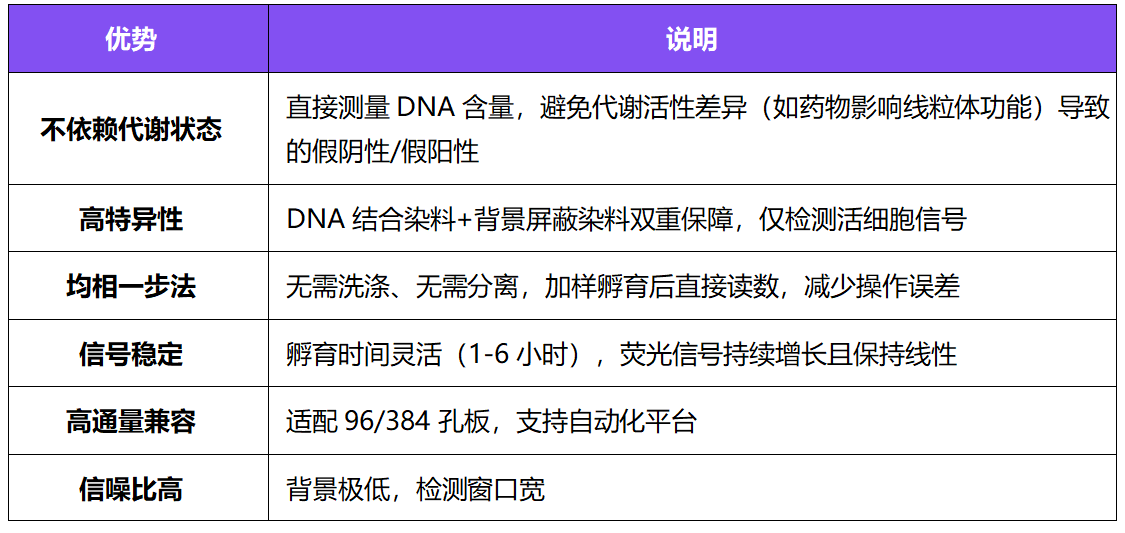
✅ Core Advantages
Application Scenarios
Tumor cell proliferation assay: Evaluate the impact of compounds on tumor cell growth
High-throughput screening: Screen for cytotoxic or proliferation-inhibiting candidate molecules in large-scale libraries
Dynamic monitoring of cell viability: Continuously detect changes in live cell counts at different time points
Drug safety evaluation: Assess the toxicity of candidate compounds on normal cells
This article is reviewed and published by the technical expert team of UA
Disclaimer: This article partially utilizes artificial intelligence assistance in its creation. If any content involves copyright or intellectual property issues, please let us know and we promise to verify and remove it as soon as possible.
Purchase recombinant protein, choose Nanjing UA-Bio
UA protein focuses on providing various protein reagents, raw materials, and services required for drug research and development, cell therapy, gene therapy, and basic scientific research, including drug target proteins, immune checkpoint proteins, cytokines, tool enzymes, customized protein expression, and full-length transmembrane protein development. Youai is committed to providing customers with high-quality products and professional services, and building a High-tech Biological Enterprise with International Competitiveness.







 Business license (three certificates in one)