




BCMA: A Novel and Feasible Target for Immunotherapy in Acute Myeloid Leukemia
Author: Senior Product Manager of UA Views:155 


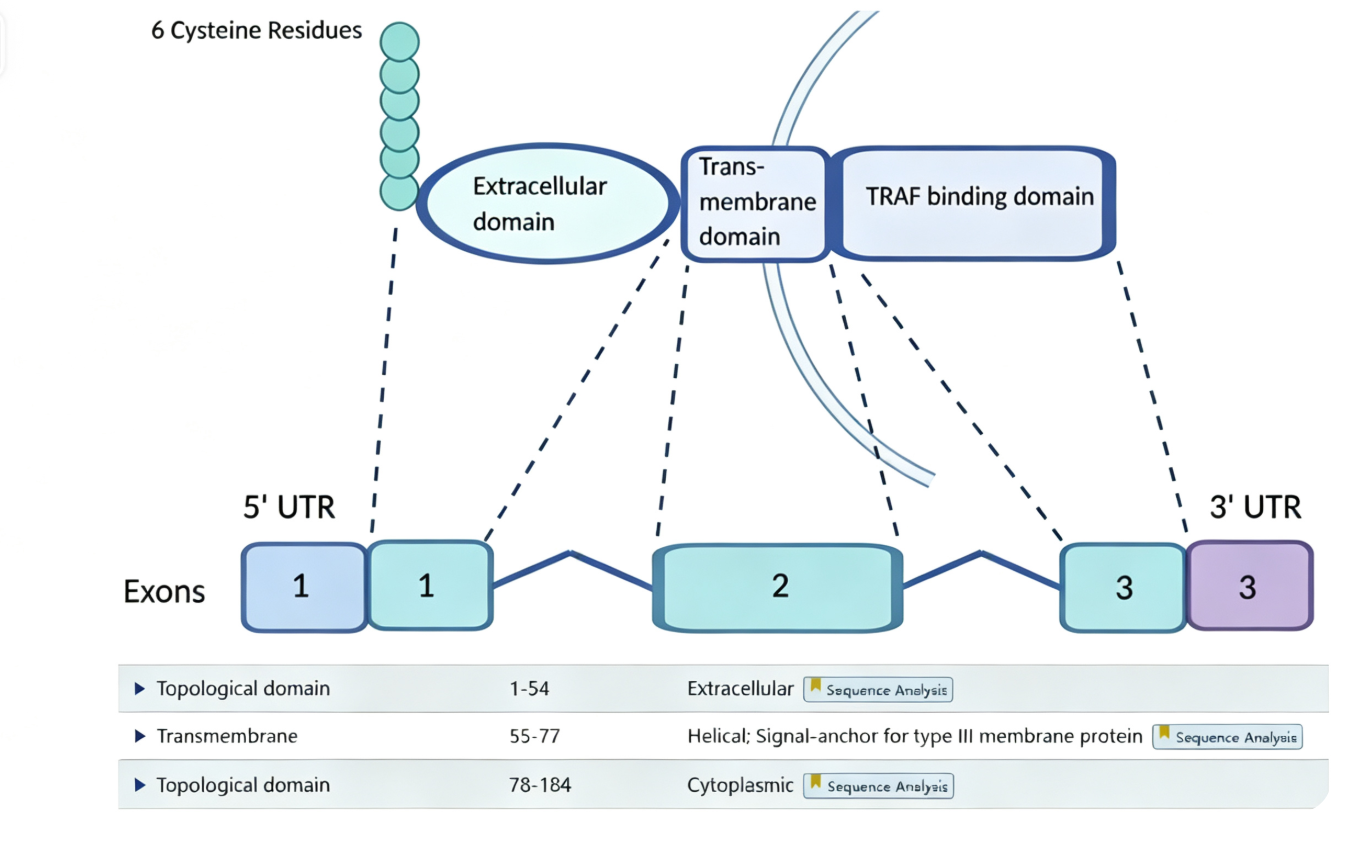
B-cell maturation antigen (BCMA, also known as TNFRSF17) is a member of the tumor necrosis factor receptor superfamily and plays a critical role in the survival and differentiation of plasma cells and mature B cells.
- Recent Advances
- Product Information
Recent Advances
BCMA: A Novel and Viable Target for Immunotherapy in Acute Myeloid Leukemia
Summary: B-cell maturation antigen (BCMA, also known as TNFRSF17) is a member of the tumor necrosis factor receptor superfamily and plays a critical role in the survival and differentiation of plasma cells and mature B cells. Due to its highly restricted expression profile, which is largely confined to the B-lymphocyte lineage and nearly absent in most normal tissues, BCMA has emerged as one of the most representative successful targets in the field of immunotherapy for multiple myeloma (MM). In recent years, accumulating evidence has demonstrated that BCMA expression is not strictly limited to B-cell malignancies; it also exhibits significant expression characteristics in acute myeloid leukemia (AML), opening up new possibilities for AML immunotherapy.
BCMA Exhibits Widespread and High-Level Expression in AML.
Researchers first systematically evaluated the distribution characteristics of BCMA across various cell populations using single-cell RNA sequencing. The results showed that BCMA expression was highest in plasmablasts, relatively lower in memory B cells, and completely absent in T cells and CD34+ hematopoietic progenitor cells. To further clarify the expression profile of BCMA in tumor tissues, the researchers analyzed RNA sequencing data from The Cancer Genome Atlas (TCGA), which covers 32 tumor types. They found that BCMA was not only expressed in B-cell lymphomas but also detectable in AML and some solid tumors. Building on this, the researchers delved into transcriptomic data from 599 AML cases in the TCGA and Genomic Data Commons datasets. The results indicated that a striking 98.8% of AML cases exhibited BCMA expression, a feature that spanned different age groups and genetic subtypes, while BCMA expression was extremely low in matched normal tissues. Notably, although BCMA expression was widespread in AML, its intensity showed significant correlations with multiple genes, with the strongest associations observed for BOB.1 (Pearson correlation coefficient r=0.88, p<0.0001) and PD-L2 (Pearson correlation coefficient r=0.80, p<0.0001). BOB.1, a B-cell-specific coactivator of the Oct-1 and Oct-2 transcription factors, is ectopically expressed in approximately 98% of primary AML tumor samples and has been identified as a poor prognostic factor in AML. Flow cytometry further confirmed at the protein level that AML cell lines and primary AML cells exhibited high levels of BCMA expression on their surfaces, with expression abundance comparable to CD33 and higher than Flt3 and CD123. Among 70 AML patient samples, 74.3% were classified as BCMA-positive, with 83% falling into the high-expression group (i.e., BCMA positivity exceeding 65% in AML cells). Collectively, this evidence establishes BCMA as a universally present and highly targetable tumor-associated antigen in AML.
BCMA Drives AML Cell Survival and Proliferation via the NF-κB Signaling Pathway.
The functional role of BCMA in AML pathobiology has not yet been fully elucidated, but existing data suggest a close association with clinical outcomes. Survival analysis revealed that AML patients with high BCMA expression had significantly worse overall prognosis compared to those with low expression, indicating that BCMA may serve not only as a potential immunotherapeutic target but also as a prognostic biomarker. From a signaling perspective, BCMA, along with TACI and BAFF-R, belongs to the receptor family for the B-cell survival factors BAFF and APRIL. Researchers found that although TACI and BAFF-R were also expressed at the transcriptional and protein levels in AML cells, BCMA exhibited the highest tumor-to-normal tissue expression ratio, suggesting superior targeting specificity in AML. Functional experiments demonstrated that APRIL stimulation significantly promoted AML cell proliferation, while BCMA blockade effectively inhibited this proliferative effect—a phenomenon highly consistent with previous findings in MM, indicating that APRIL's pro-proliferative signals are primarily transmitted through BCMA. Further studies using an NF-κB reporter gene system confirmed that BAFF/APRIL treatment induced transcriptional activation of the NF-κB pathway in AML cells. Targeted gene expression profiling revealed that upon BCMA signal activation, genes closely associated with AML survival and progression, such as BCL2, BCL2A1, CCL4, and the TRAF family, were significantly upregulated, displaying a typical NF-κB downstream transcriptional signature. Together, these results provide robust functional support for BCMA's role in mediating pro-survival and pro-proliferative signals via the NF-κB pathway in AML, reinforcing its rationale as a therapeutic target.
BCMA-Targeted Immunotherapy Demonstrates Significant Anti-Leukemic Activity In Vitro and In Vivo.
To systematically assess the translational potential of BCMA-targeted therapeutic strategies, researchers constructed luciferase-labeled AML target cell lines and conducted a series of in vitro cytotoxicity assays. The results showed that BCMA-targeted T-cell engagers (TCEs) could efficiently kill both AML cells and MM control cells. Notably, interleukin-18 (IL-18), a cytokine that enhances T-cell function, further improved the anti-tumor efficacy of TCEs. Additionally, the researchers expanded their evaluation to various engineered immune effector cells, including BCMA chimeric antigen receptor (CAR)-transduced T cells, NK cells, and macrophages. The results demonstrated that BCMA CAR expression significantly enhanced the cytotoxic capabilities of all three effector cell types against AML target cells, suggesting that BCMA-targeted strategies are not limited to T-cell-dependent therapies but can also be extended to innate immune cell-mediated treatment modalities. For in vivo validation, researchers established a human AML xenograft mouse model and administered low- or high-dose BCMA×CD3 TCEs combined with adoptive transfer of human CD8+ T cells. The results showed that this combination therapy significantly reduced leukemia burden in the treated animals, with the high-dose TCE group exhibiting the most durable anti-leukemic effects and significantly prolonging overall survival in the model mice. Collectively, these in vitro and in vivo data confirm that BCMA-targeted immunotherapy holds great promise for efficacy and clinical translation in AML.
Optimization Strategies and Safety Considerations for AML Immunotherapy Challenges.
The advancement of AML immunotherapy faces a series of unique obstacles, including disease-intrinsic immune suppression and therapy-induced T-cell exhaustion. However, studies have shown that T-cell dysfunction in AML is often reversible upon treatment response, providing a theoretical basis for applying T-cell-dependent immunotherapies during the window of low disease burden following induction or consolidation therapy. To address these challenges, researchers have proposed several potential strategies, including combining immunomodulators, supplementing with T-cell-enhancing cytokines (e.g., IL-18 and IL-7), developing antibody-drug conjugates (ADCs), and exploring off-the-shelf allogeneic therapies such as CAR-macrophages, CAR-NK cells, and next-generation CAR-T cells with reduced immunogenicity, which can effectively circumvent alloreactivity. In terms of safety, the primary toxicity profile of BCMA-targeted therapies includes depletion of normal B-cell subsets and plasma cells, often leading to persistent hypogammaglobulinemia and an increased risk of invasive infections. However, this can be effectively managed with intravenous immunoglobulin replacement therapy. Cytokine release syndrome (CRS) is a common adverse event associated with BCMA-targeted TCEs and CAR-T cell therapies and can be clinically controlled with tocilizumab or corticosteroids. Additionally, researchers noted that γ-secretase inhibitors (GSIs) can block BCMA protein shedding and have been shown in MM to enhance the efficacy of BCMA CAR-T cells. In AML, GSIs were observed to increase cell surface BCMA expression density. However, caution is warranted, as GSI use may simultaneously inhibit the Notch signaling pathway, which normally suppresses AML growth. This potential risk requires careful consideration in future clinical designs.
Research Significance and Translational Prospects.
In summary, this study systematically establishes the scientific foundation for BCMA as a novel immunotherapeutic target in AML from three perspectives: expression profiles, functional mechanisms, and therapeutic interventions. Given the extensive preclinical and clinical development experience with BCMA-targeted therapies in MM, including approved TCE and CAR-T products, these findings provide a strong theoretical and experimental basis for rapidly extending BCMA-targeted therapies to AML. This strategy has the potential to overcome the current bottleneck of limited immunotherapeutic targets in AML and offer new treatment options for AML patients, particularly those with subtypes that are difficult to treat with existing therapies. Further clinical translation of BCMA-targeted approaches will rely on reliable and standardized detection tools for patient screening, target expression monitoring, and pharmacodynamic evaluation. Notably, University's PE-Labeled BCMA/TNFRSF17 His Tag Protein, Human can be used for flow cytometry-based detection of BCMA expression levels and CAR-T cell binding activity assessment, providing convenient and reliable technical support for mechanistic research and clinical translation in this field.
This article is reviewed and published by the technical expert team of UA
Disclaimer: This article partially utilizes artificial intelligence assistance in its creation. If any content involves copyright or intellectual property issues, please let us know and we promise to verify and remove it as soon as possible.
Purchase recombinant protein, choose Nanjing UA-Bio
UA protein focuses on providing various protein reagents, raw materials, and services required for drug research and development, cell therapy, gene therapy, and basic scientific research, including drug target proteins, immune checkpoint proteins, cytokines, tool enzymes, customized protein expression, and full-length transmembrane protein development. Youai is committed to providing customers with high-quality products and professional services, and building a High-tech Biological Enterprise with International Competitiveness.
Target proteins | membrane proteins | cytokines | enzymes | viral antigens | protein customization
Nanjing UA Biotechnology Co., Ltd. Email:order@ua-bio.com Phone:+86-25-56221161

Product Information

Link:





©2021-2026 all rights reserved UA Biotechnology Co.,Ltd.
Privacy Policy 
网站备案号 浙ICP备2022019033号-2 浙公网安备33010202004867号
 Business license (three certificates in one)
 Tel:+86-25-56221161
E-mail:order@ua-bio.com
All products sold on this website shall not be used for clinical diagnosis or treatment of humans or animals, and shall only be used for non-medical purposes such as industrial or scientific research.
