




GUCY2C: A Core Molecular Target for Colorectal Cancer Targeted Therapy and Liquid Biopsy
Author: Senior Product Manager of UA Views:104 


This article systematically elaborates on the molecular structural characteristics of guanylate cyclase C (GUCY2C) as an intestine-specific transmembrane receptor, its dual role as a tumor suppressor and biomarker in the development and progression of colorectal cancer, its specific overexpression pattern in metastatic colorectal cancer, and its clinical translational progress as a target for immunotherapies such as CAR-T. Additionally, it introduces the application value of fluorescently labeled recombinant proteins in detection.
- Recent Advances
- Product Information
Recent Advances
GUCY2C: A Core Molecular Target for Colorectal Cancer Targeted Therapy and Liquid Biopsy
Summary: This article systematically elaborates on the molecular structural characteristics of guanylyl cyclase C (GUCY2C) as an intestine-specific transmembrane receptor, its dual role as a tumor suppressor and biomarker in colorectal cancer development, its specific overexpression pattern in metastatic colorectal cancer, and its clinical translation progress as a target for CAR-T and other immunotherapies. Additionally, it introduces the application value of fluorescently labeled recombinant proteins in detection.
1. Gene Localization and Molecular Structural Features of GUCY2C
Guanylyl cyclase C (GUCY2C), also known as GC-C, STa receptor (STaR), or heat-stable enterotoxin receptor, is a type I transmembrane protein encoded by the GUCY2C gene, belonging to the receptor guanylyl cyclase family. The gene is located on the long arm of human chromosome 12, region q12 (12q12), and its encoded product has a theoretical molecular weight of approximately 120 kDa.
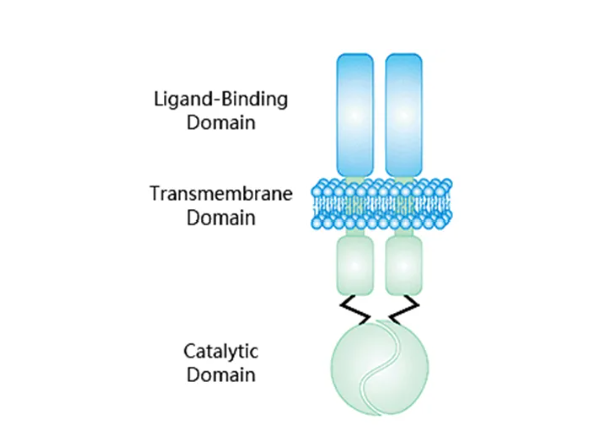
From a structural biology perspective, the protein structure of GUCY2C consists of five functionally distinct domains arranged in an orderly manner. The extracellular N-terminal receptor-binding domain accounts for about 40% of the full-length protein and is responsible for specifically recognizing and binding its endogenous ligands (guanylin and uroguanylin) as well as bacterial heat-stable enterotoxin. The hydrophobic transmembrane domain is a single-pass helical structure that transmits extracellular ligand-binding signals across the membrane to the intracellular region. The cytoplasmic kinase homology domain serves as a relay module for signal transduction, transmitting signals from the ligand-binding domain to the catalytic domain. The catalytic domain is the effector core of the protein, responsible for converting guanosine triphosphate (GTP) into cyclic guanosine monophosphate (cGMP). The carboxyl terminus is involved in protein stability regulation and interaction networks.
2. Physiological Functions of the GUCY2C-cGMP Signaling Axis and Its Tumor Suppression Mechanism
Upon activation, GUCY2C catalyzes the conversion of GTP to cGMP, which acts as a second messenger molecule to regulate downstream signaling pathways, playing multifaceted physiological roles in the intestine. This signaling axis is indispensable for maintaining intestinal water-electrolyte balance, regulating intestinal epithelial cell proliferation and differentiation, preserving intestinal barrier function, and exerting anti-inflammatory activity.
Notably, GUCY2C plays the role of a tumor suppressor in intestinal homeostasis regulation. In the early stages of colorectal cancer development, the expression of GUCY2C's endogenous ligands (guanylin and uroguanylin) is often lost, leading to the silencing of the GUCY2C-cGMP signaling axis, which in turn triggers genomic instability, metabolic reprogramming, and uncontrolled cell proliferation—a highly prevalent early step in colorectal carcinogenesis. The APC-β-catenin-TCF signaling pathway has been shown to transcriptionally silence the expression of GUCY2C ligand genes, thereby relieving GUCY2C's negative regulation of intestinal epithelial cell proliferation.
3. Expression Characteristics of GUCY2C in Colorectal Cancer and Its Clinicopathological Correlations
Under normal physiological conditions, GUCY2C expression exhibits strict intestinal epithelial specificity—primarily localized to the apical membrane surface of small intestinal, colonic, and rectal mucosal epithelial cells, facing the intestinal lumen, with almost no entry into the circulatory system. However, during colorectal cancer development, the expression profile of GUCY2C undergoes significant changes. Immunohistochemical studies show that the positive expression rate of GUCY2C in colorectal cancer tissues is as high as 93.4% (142/152), significantly higher than the 23.0% in adjacent tissues, and its expression level on tumor cell membranes increases with tumor stage progression.
Further analysis indicates that GUCY2C expression intensity is significantly correlated with tumor differentiation degree, lymph node metastasis, distant metastasis, and TNM stage (P<0.05). Higher expression intensity is associated with lower 3-year overall survival and disease-free survival rates post-surgery. In a prospective study of 257 pN0 (pathologically lymph node-negative) colorectal cancer patients, 87.5% of patients had detectable GUCY2C mRNA expression in lymph nodes, and GUCY2C-positive individuals had a significantly higher recurrence risk than negative ones (adjusted hazard ratio of 4.66), confirming that GUCY2C can serve as a molecular marker for detecting lymph node micrometastases.
4. GUCY2C as a Specific Biomarker and Therapeutic Target for Metastatic Colorectal Cancer
GUCY2C exhibits abnormally high expression in metastatic colorectal cancer cells while maintaining stable expression in primary colorectal cancer cells. In the peripheral blood of colorectal cancer patients, GUCY2C also shows strong positive expression, suggesting its potential as an early detection marker for postoperative recurrence and metastasis. This characteristic makes it a specific molecular biomarker for metastatic colorectal cancer.
More critically, GUCY2C is fully exposed on the surface of tumor cells, whereas in normal intestinal epithelial cells, its apical membrane localization makes it difficult to be recognized by circulating drugs or immune cells. This unique distribution difference—"hidden in normal tissues, exposed in cancer cells"—provides an ideal safety-efficacy window for systemic immunotherapy targeting GUCY2C. Consequently, GUCY2C has been widely developed as an ideal target for colorectal cancer immunotherapy, encompassing various strategies such as vaccines, CAR-T cells, and immunotoxins.
5. Conclusion
In summary, as a member of the intestine-specific guanylyl cyclase family, GUCY2C has emerged as one of the most promising molecular targets in colorectal cancer targeted therapy and liquid biopsy, owing to its high positive expression rate of over 90% in colorectal cancer, its specific overexpression in metastatic cancer cells, and the safety window provided by its apical membrane polarity distribution in normal tissues. From breakthrough clinical data in CAR-T cell therapy to the diversified development of bispecific antibodies and ADC drugs, the evolution of GUCY2C-targeted therapies has opened new pathways for precision treatment of colorectal cancer. The Alexa Fluor 647-Labeled GUCY2C His Tag Protein, Human provided by U-Trust offers reliable tool support for target validation, drug screening, and quality control of cell therapy products in this field.
This article is reviewed and published by the technical expert team of UA
Disclaimer: This article partially utilizes artificial intelligence assistance in its creation. If any content involves copyright or intellectual property issues, please let us know and we promise to verify and remove it as soon as possible.
Purchase recombinant protein, choose Nanjing UA-Bio
UA protein focuses on providing various protein reagents, raw materials, and services required for drug research and development, cell therapy, gene therapy, and basic scientific research, including drug target proteins, immune checkpoint proteins, cytokines, tool enzymes, customized protein expression, and full-length transmembrane protein development. Youai is committed to providing customers with high-quality products and professional services, and building a High-tech Biological Enterprise with International Competitiveness.
Target proteins | membrane proteins | cytokines | enzymes | viral antigens | protein customization
Nanjing UA Biotechnology Co., Ltd. Email:order@ua-bio.com Phone:+86-25-56221161

Product Information

Link:





©2021-2026 all rights reserved UA Biotechnology Co.,Ltd.
Privacy Policy 
网站备案号 浙ICP备2022019033号-2 浙公网安备33010202004867号
 Business license (three certificates in one)
 Tel:+86-25-56221161
E-mail:order@ua-bio.com
All products sold on this website shall not be used for clinical diagnosis or treatment of humans or animals, and shall only be used for non-medical purposes such as industrial or scientific research.
