




Nipah virus G glycoprotein: A critical molecule for viral entry and a therapeutic target
Author: Senior Product Manager of UA Views:44 


This article focuses on the G glycoprotein of the Nipah virus (NiV), systematically elucidating its molecular structural characteristics as the "key" for viral entry into host cells, its binding mechanism with the receptors Ephrin-B2/B3, and its decisive role in the viral host range and tissue tropism.
- Recent Advances
- Product Information
Recent Advances
Nipah Virus G Glycoprotein: The Key Molecule of Viral Entry and a Therapeutic Target
Brief Summary
This article focuses on the G glycoprotein of Nipah virus (NiV), systematically describing its molecular structural features as the "key" for viral entry into host cells, its binding mechanism with receptors Ephrin-B2/B3, and its decisive role in viral host range and tissue tropism.
This article focuses on the G glycoprotein of Nipah virus (NiV), systematically describing its molecular structural features as the "key" for viral entry into host cells, its binding mechanism with receptors Ephrin-B2/B3, and its decisive role in viral host range and tissue tropism.
I. Epidemiological Characteristics of Nipah Virus and Public Health Threats.
Nipah virus, belonging to the genus Henipavirus within the family Paramyxoviridae, is a zoonotic pathogen carried by fruit bats and was first identified in Malaysia in 1998. The virus can be transmitted to humans through direct contact with infected animals or their bodily fluids, as well as through consumption of fruit contaminated with bat saliva or urine. Person-to-person transmission has also been documented in Bangladesh and India.
Nipah virus infection has an extremely high case fatality rate, ranging from 40% to 75% across different outbreaks. Currently, there are no approved specific antiviral drugs or vaccines. Given its potential to cause large-scale outbreaks and the lack of effective therapeutic interventions, the World Health Organization has designated it as a priority pathogen requiring urgent research and development.
II. Genome and Structural Protein Composition of Nipah Virus.
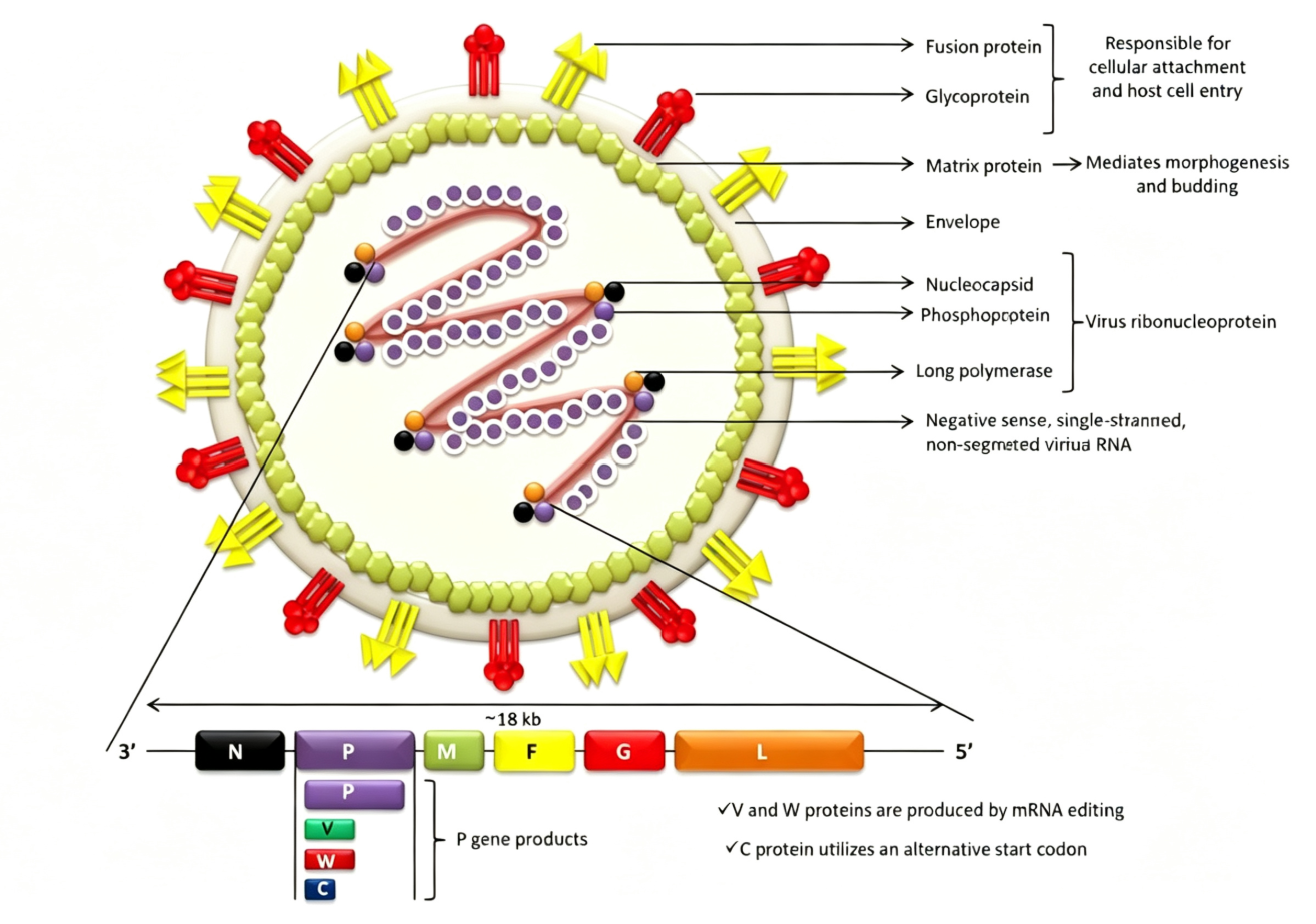
The NiV genome is a single-stranded negative-sense RNA approximately 18.2 kb in length, encoding six structural proteins: nucleoprotein (N), phosphoprotein (P), matrix protein (M), fusion protein (F), attachment glycoprotein (G), and RNA-dependent RNA polymerase (L). Among these, the G protein and F protein are the two key glycoproteins on the viral envelope surface, working synergistically to mediate the initial steps of viral entry into host cells.
The G protein exists on the viral surface as a homotetramer, responsible for recognizing and binding host cell receptors; the F protein mediates fusion between the viral envelope and the host cell membrane, allowing the viral genome to enter the cytoplasm and initiate replication.
III. Molecular Structure and Tetrameric Conformation of the G Glycoprotein.
The G protein is a type II homotetrameric transmembrane protein, structurally divided into four regions: an N-terminal cytoplasmic tail, a single-pass transmembrane helix, a stalk region, and a C-terminal globular head domain. The G protein consists of approximately 602 amino acids, with its extracellular region forming an intertwined tetramer approximately 200 Å in length and 120 Å in width. The stalk region is composed of a four-helix bundle responsible for maintaining the structural stability of the tetramer, while the globular head domain is responsible for recognizing and binding host cell receptors.
IV. Receptor Binding and Host Range Determination of the G Glycoprotein.
The G protein initiates the viral entry process by binding to Ephrin-B2 and Ephrin-B3 receptors on the host cell surface. Ephrin-B2 and Ephrin-B3 are ligands of the receptor tyrosine kinase family, highly expressed in vascular endothelial cells and neurons, which is consistent with the vasculitis and encephalitis caused by NiV infection. As these two receptors are highly conserved across different mammals, NiV possesses a broad host range and tissue tropism, capable of infecting various mammals including pigs, horses, dogs, cats, and humans.
V. The G Glycoprotein as a Core Therapeutic and Diagnostic Target.
The G protein is the primary target of neutralizing antibodies and the preferred antigen for vaccine design. Structural biology studies have shown that the head domain of the G protein is the main target of humoral immune responses, with serum neutralizing activity generated after immunization primarily directed against this region. The monoclonal antibody m102.4 has been demonstrated to effectively neutralize both NiV and Hendra virus, has been used for post-exposure prophylaxis under compassionate use, and has completed Phase I clinical trials. Additionally, G protein-based mRNA vaccines, nanoparticle vaccines, and recombinant subunit vaccines have all demonstrated favorable immunogenicity and protective efficacy in preclinical studies.
In the diagnostic field, recombinant G protein has been developed as a coating antigen for enzyme-linked immunosorbent assays to detect NiV-specific antibodies in serum, offering advantages of high safety and good accessibility.
VI. Research Application Value of Recombinant G Protein Products.
In Nipah virus basic research, vaccine development, and diagnostic reagent development, high-quality recombinant G glycoprotein is an indispensable core tool. To address the above needs, UniBio provides Nipah Virus Glycoprotein G His Tag Protein. This product is prepared using the HEK293 cell expression system, capable of preserving the native conformation and glycosylation modifications of the G protein. Purity verified by SEC-MALS to be greater than 95%, it has been validated to bind receptor Ephrin-B2 and specific antibodies, making it suitable for application scenarios including G protein-receptor binding studies, neutralizing antibody screening, vaccine immunogenicity evaluation, and diagnostic method development.
This article is reviewed and published by the technical expert team of UA
Disclaimer: This article partially utilizes artificial intelligence assistance in its creation. If any content involves copyright or intellectual property issues, please let us know and we promise to verify and remove it as soon as possible.
Purchase recombinant protein, choose Nanjing UA-Bio
UA protein focuses on providing various protein reagents, raw materials, and services required for drug research and development, cell therapy, gene therapy, and basic scientific research, including drug target proteins, immune checkpoint proteins, cytokines, tool enzymes, customized protein expression, and full-length transmembrane protein development. Youai is committed to providing customers with high-quality products and professional services, and building a High-tech Biological Enterprise with International Competitiveness.
Target proteins | membrane proteins | cytokines | enzymes | viral antigens | protein customization
Nanjing UA Biotechnology Co., Ltd. Email:order@ua-bio.com Phone:+86-25-56221161

Product Information

Link:





©2021-2026 all rights reserved UA Biotechnology Co.,Ltd.
Privacy Policy 
网站备案号 浙ICP备2022019033号-2 浙公网安备33010202004867号
 Business license (three certificates in one)
 Tel:+86-25-56221161
E-mail:order@ua-bio.com
All products sold on this website shall not be used for clinical diagnosis or treatment of humans or animals, and shall only be used for non-medical purposes such as industrial or scientific research.
