




The protective mechanism of DcR3 in sepsis: from inflammation suppression to gut microbiota regulation
Author: Senior Product Manager of UA Views:50 


This article systematically elaborates the multiple protective effects of decoy receptor 3 (DcR3) in animal models of sepsis, analyzing its molecular mechanisms in inhibiting inflammatory responses, regulating immune cell composition, protecting the intestinal barrier, and modulating gut microbiota.
- Recent Advances
- Product Information
Recent Advances
The Protective Mechanism of DcR3 in Sepsis: From Inflammation Suppression to Gut Microbiota Regulation
Summary
This article systematically elucidates the multiple protective effects of decoy receptor 3 (DcR3) in sepsis animal models, analyzing its molecular mechanisms in suppressing inflammatory responses, regulating immune cell composition, protecting the intestinal barrier, and modulating gut microbiota.
This article systematically elucidates the multiple protective effects of decoy receptor 3 (DcR3) in sepsis animal models, analyzing its molecular mechanisms in suppressing inflammatory responses, regulating immune cell composition, protecting the intestinal barrier, and modulating gut microbiota.
I. Therapeutic Challenges in Sepsis and Research Background of DcR3
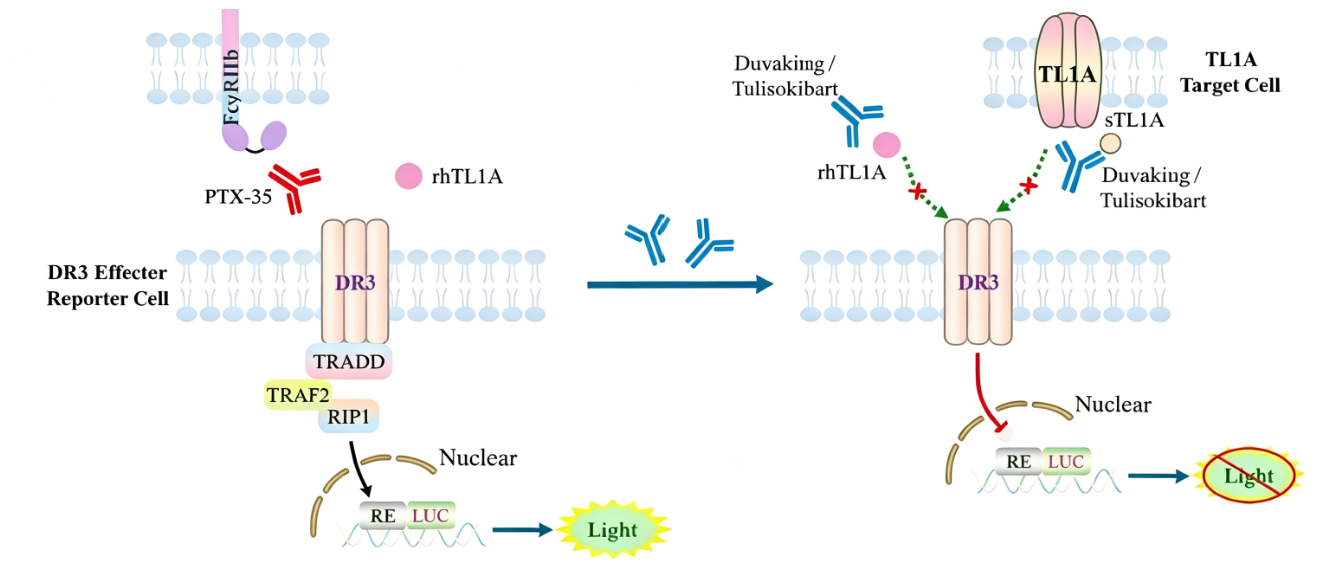
Sepsis is a systemic inflammatory response syndrome caused by infection, characterized by high mortality and a lack of specific therapeutic drugs. Uncontrolled inflammatory responses are the core driver of sepsis progression, making the identification of molecular targets capable of effectively regulating inflammation intensity clinically significant. Decoy receptor 3 (DcR3) is a soluble receptor belonging to the tumor necrosis factor receptor superfamily, which competitively binds and neutralizes pro-inflammatory signaling molecules such as LIGHT, FasL, and TL1A. Clinical studies have identified DcR3 as a potential biomarker for inflammatory disease progression. However, the specific mechanisms by which DcR3 affects sepsis remain incompletely elucidated, limiting its clinical translation.
II. Anti-inflammatory Effects of DcR3 in Vitro and Acute Inflammation Models
Researchers first validated the biological activity of recombinant DcR3 through in vitro experiments. Purified DcR3 protein, verified by SDS-PAGE to have a molecular weight of approximately 33 kDa, exhibited negligible cytotoxicity to RAW264.7 macrophages. More importantly, DcR3 significantly suppressed the upregulation of pro-inflammatory cytokines such as IL-1β, IL-6, and TNF-α induced by lipopolysaccharide, demonstrating its direct anti-inflammatory activity.
In lipopolysaccharide-induced acute sepsis models, both DcR3 and its Fc fusion protein (DcR3.Fc) significantly reduced circulating pro-inflammatory cytokine levels. Notably, DcR3 injection alone had no significant effect on the survival rate or inflammatory markers in healthy mice, suggesting that its anti-inflammatory effects are inflammation context-dependent.
III. Protective Effects of DcR3 in CLP-Induced Polymicrobial Sepsis Models
To comprehensively evaluate the therapeutic potential of DcR3, researchers employed a more clinically relevant cecal ligation and puncture (CLP)-induced polymicrobial sepsis model. Compared to untreated CLP groups, postoperative administration of DcR3 significantly improved overall physical condition, activity levels, and appetite in mice. The sepsis score in the DcR3 treatment group was markedly reduced, with survival rates increasing from 25% to 60% (P<0.05) and faster recovery of body temperature.
At the tissue level, DcR3 treatment significantly reduced CLP-induced levels of IL-1β, IL-6, and TNF-α in serum and multiple organs (heart, liver, spleen, lung, and kidney), while suppressing the expression of inflammation-related genes such as CCL2, CXCL10, and NLRP3 at the mRNA level. Histopathological analysis revealed that DcR3 markedly alleviated lung injury (reduced alveolar wall thickening and hemorrhage), liver injury (decreased inflammatory cell infiltration and hepatocyte swelling), and kidney injury (reduced glomerular rupture).
IV. Regulatory Effects of DcR3 on Immune Cell Composition and Gut Microecology
DcR3 significantly modulated the composition of circulating immune cells in CLP-induced septic mice. Compared to the CLP group, the DcR3 treatment group exhibited markedly reduced total leukocyte counts and subsets of monocytes, granulocytes, and lymphocytes, approaching levels observed in sham-operated groups. Flow cytometry analysis showed that DcR3 treatment reduced the number of activated NK cells 12 hours post-treatment, indicating its regulatory role in suppressing excessive innate immune activation.
In terms of intestinal barrier protection, DcR3 treatment effectively mitigated CLP-induced colon tissue damage, maintaining crypt organization and epithelial integrity. At the molecular level, DcR3 significantly upregulated the mRNA and protein levels of tight junction proteins (Occludin and Claudin-1), preserving the physical barrier function of the intestine.
Furthermore, DcR3 significantly ameliorated CLP-induced gut microbiota dysbiosis—reducing the abundance of pathogenic bacteria (e.g., Bacillus, Klebsiella, Streptococcus) while increasing beneficial bacteria (e.g., Alloprevotella, Lachnospiraceae NK4A136 group) and promoting the production of anti-inflammatory short-chain fatty acids (particularly butyrate).
V. Molecular Mechanisms of DcR3 in Suppressing Inflammation and Apoptosis
Whole-genome RNA sequencing revealed that DcR3 downregulated multiple CLP-induced inflammation-related pathways (including TNF, NF-κB, MAPK/ERK, NOD-like receptor, and IL-17 signaling pathways) and suppressed the expression of apoptosis-related genes. Protein-level validation confirmed that DcR3 effectively inhibited CLP-triggered phosphorylation activation of NF-κB (p65) and IκBα, while reducing cleaved caspase-3 levels, demonstrating its anti-apoptotic effects.
VI. Conclusion
DcR3 exhibits significant protective effects in CLP-induced sepsis models through systemic suppression of multi-organ inflammatory responses, regulation of excessive immune cell activation, preservation of intestinal barrier integrity, and remodeling of gut microecology. This multi-target, multi-level integrated action mode positions DcR3 as a highly promising candidate molecule for treating sepsis and other inflammatory diseases. Future research should further clarify the fine regulatory mechanisms of DcR3 in different inflammatory microenvironments and advance its clinical translation evaluation. Uni offers DcR3 His Tag Protein, Human, suitable for experimental scenarios such as DcR3 ligand binding analysis, inflammation model construction, and related basic research.
```
This article is reviewed and published by the technical expert team of UA
Disclaimer: This article partially utilizes artificial intelligence assistance in its creation. If any content involves copyright or intellectual property issues, please let us know and we promise to verify and remove it as soon as possible.
Purchase recombinant protein, choose Nanjing UA-Bio
UA protein focuses on providing various protein reagents, raw materials, and services required for drug research and development, cell therapy, gene therapy, and basic scientific research, including drug target proteins, immune checkpoint proteins, cytokines, tool enzymes, customized protein expression, and full-length transmembrane protein development. Youai is committed to providing customers with high-quality products and professional services, and building a High-tech Biological Enterprise with International Competitiveness.
Target proteins | membrane proteins | cytokines | enzymes | viral antigens | protein customization
Nanjing UA Biotechnology Co., Ltd. Email:order@ua-bio.com Phone:+86-25-56221161

Product Information

Link:





©2021-2026 all rights reserved UA Biotechnology Co.,Ltd.
Privacy Policy 
网站备案号 浙ICP备2022019033号-2 浙公网安备33010202004867号
 Business license (three certificates in one)
 Tel:+86-25-56221161
E-mail:order@ua-bio.com
All products sold on this website shall not be used for clinical diagnosis or treatment of humans or animals, and shall only be used for non-medical purposes such as industrial or scientific research.
