

Thermostable FGF Technology: A Revolutionary Tool for Enhancing Cell Culture Efficiency and Its Applications in Organoid Research
Author: Senior Product Manager of UA Views:140 


This article systematically elucidates the central role of fibroblast growth factor (FGF) family members in cell culture and the technical challenges posed by their thermal instability. It highlights the principles of thermally stable FGF technology in enhancing stability and bioactivity through protein engineering, and analyzes the unique application value of FGF-10 as a key member in organoid research.
- Recent Advances
- Product Information
Recent Advances
Thermostable FGF Technology: A Revolutionary Tool for Enhancing Cell Culture Efficiency and Its Applications in Organoid Research
Summary
This article systematically elaborates on the central role of fibroblast growth factor (FGF) family members in cell culture and the technical challenges posed by their thermal instability. It highlights the principles of thermostable FGF technology, which enhances stability and bioactivity through protein engineering, and analyzes the unique application value of FGF-10 as a key member in organoid research.
This article systematically elaborates on the central role of fibroblast growth factor (FGF) family members in cell culture and the technical challenges posed by their thermal instability. It highlights the principles of thermostable FGF technology, which enhances stability and bioactivity through protein engineering, and analyzes the unique application value of FGF-10 as a key member in organoid research.
I. The Central Role of FGF in Cell Culture and Technical Challenges.
Fibroblast growth factors (FGFs) are a family of polypeptide growth factors that play pivotal regulatory roles in cell proliferation, differentiation, migration, and survival, widely involved in physiological processes such as embryonic development, tissue homeostasis maintenance, and injury repair. In cell culture, FGFs are indispensable supplements for maintaining stem cell self-renewal, promoting cell expansion, and regulating differentiation directions. However, FGF family members universally face a critical technical bottleneck—thermal instability. For instance, basic FGF (bFGF) has a half-life of only 8 hours under mammalian cell culture conditions, severely limiting large-scale production and long-term culture of high-quality cells due to its extremely short activity window. Similarly, FGF-10, another important member of the FGF family, is intrinsically unstable at 37°C, prone to unfolding and rapid inactivation.
II. Thermostable FGF Technology: Design Strategies to Overcome Stability Bottlenecks.
To address the thermal instability of FGFs, researchers have successfully developed various thermostable FGF (TS-FGF) variants through rational directed mutagenesis strategies. Taking FGF-10 as an example, the engineered STAB variant exhibits a melting temperature increase of over 19°C compared to the wild-type, demonstrating significantly enhanced stability at 37°C. More importantly, these thermostable variants retain receptor-binding capacity and downstream signaling activation comparable to wild-type FGFs—whether in binding FGFR1/FGFR2 or activating pathways like MAPK/ERK. In long-term culture experiments, cells treated with thermostable bFGF show superior proliferation, higher clonal formation efficiency, and reduced reactive oxygen species levels, along with downregulation of senescence markers (p16, p21, p53), indicating additional advantages in delaying cellular senescence.
III. Molecular Characteristics and Biological Functions of FGF-10.
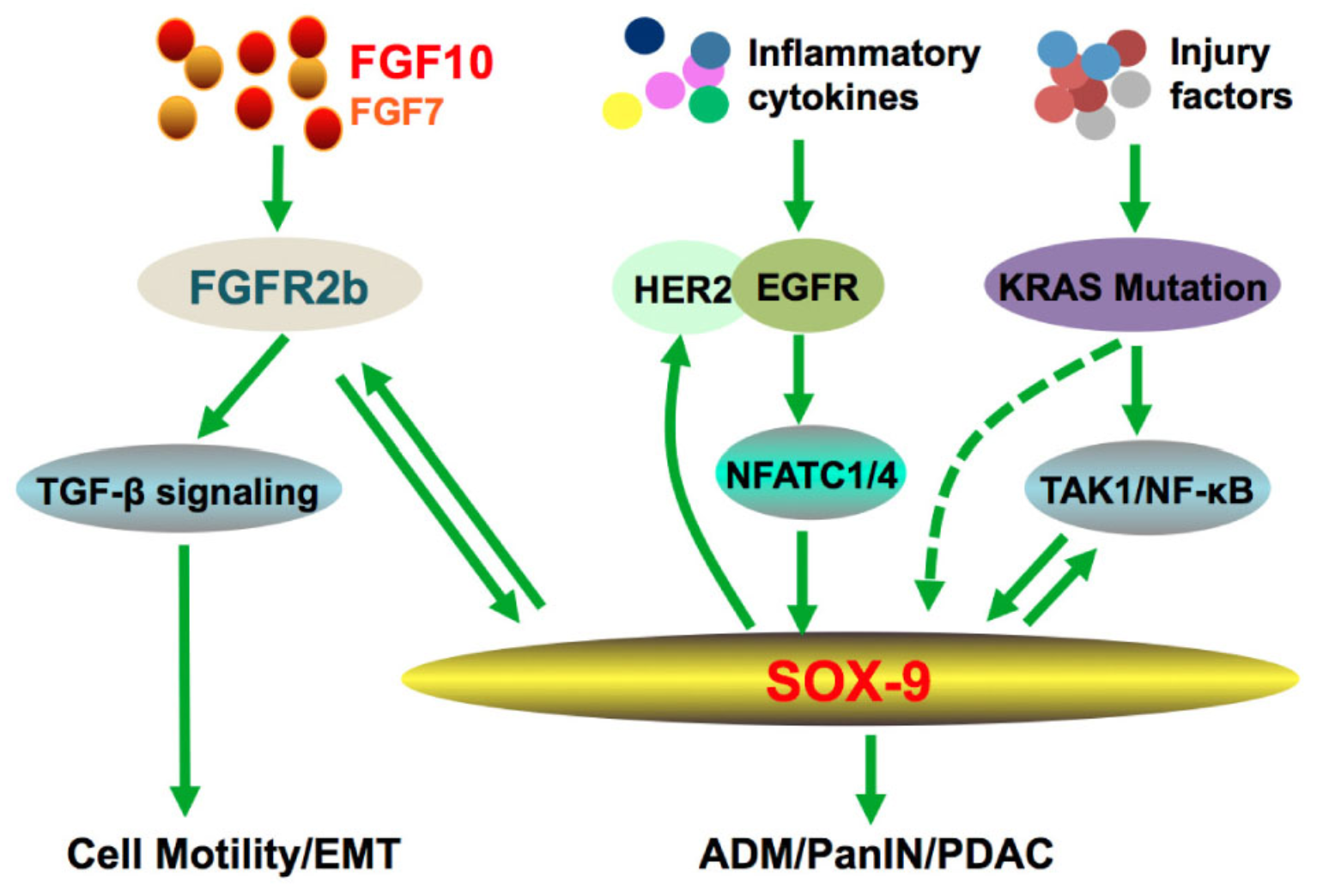
FGF-10 (also known as keratinocyte growth factor-2, KGF-2) is a key member of the FGF family. Its encoded protein features a characteristic β-trefoil fold domain, consisting of 12 β-strands folded into three similar trefoil subdomains. By binding to cell surface receptors FGFR1 and FGFR2, FGF-10 activates three major downstream signaling pathways—Ras/MAPK, PLCγ/Ca²⁺, and PI3K/Akt—thereby regulating cell proliferation and differentiation. FGF-10 is indispensable in embryonic development, serving as a critical regulator for the normal branching morphogenesis of organs such as the lungs, limb buds, and salivary glands. Additionally, it plays a vital role in wound healing and tissue repair.
IV. Key Applications of FGF-10 in Organoid Research.
Organoids, as revolutionary three-dimensional cell culture models, are increasingly important in disease modeling, drug screening, and regenerative medicine. Recent studies have demonstrated the irreplaceable role of FGF-10 in various organoid systems.
In lung organoid research, thermostable FGF-10 variants enhance the differentiation efficiency of human induced pluripotent stem cell-derived lung organoids and show potential in improving regeneration in ex vivo lung injury models.
In kidney organoid studies, FGF-10 signaling supports nephrogenesis and enriches the initial Wilms tumor protein 1 (WT1)-positive mesenchymal cell population, leading to proximally biased nephron formation, indicating precise control of kidney organoid patterning.
In skin appendage organoid research, FGF-10 and FGF7 jointly promote the transition of human epidermal cell-derived organoids toward an eccrine sweat gland phenotype.
In meibomian gland organoid studies, FGF-10 eye drops were found to rescue retinoic acid-induced meibomian gland dysfunction in mice using an organoid platform.
In lung organoid research, thermostable FGF-10 variants enhance the differentiation efficiency of human induced pluripotent stem cell-derived lung organoids and show potential in improving regeneration in ex vivo lung injury models.
In kidney organoid studies, FGF-10 signaling supports nephrogenesis and enriches the initial Wilms tumor protein 1 (WT1)-positive mesenchymal cell population, leading to proximally biased nephron formation, indicating precise control of kidney organoid patterning.
In skin appendage organoid research, FGF-10 and FGF7 jointly promote the transition of human epidermal cell-derived organoids toward an eccrine sweat gland phenotype.
In meibomian gland organoid studies, FGF-10 eye drops were found to rescue retinoic acid-induced meibomian gland dysfunction in mice using an organoid platform.
V. Conclusion.
Thermostable FGF technology, through protein engineering, successfully addresses the core bottleneck of short half-life and activity loss in FGF family members, providing superior tools for cell culture and organoid research. As a key regulator of organ development and tissue repair, FGF-10 plays unique roles in establishing and functionally modulating various organoid systems, such as lung, kidney, and skin. High-quality recombinant thermostable FGF-10 proteins will offer robust support for in-depth research and translational applications in related fields.
To meet the demands of organoid research and cell culture applications, Uni offers high-quality FGF-10 Protein, Rat. This product features the following key characteristics: optimized expression systems ensure high purity and bioactivity; thermal stability modifications extend activity duration under culture conditions; batch-to-batch consistency is guaranteed through standardized quality control processes. Core application scenarios include: serving as a critical supplement in organoid culture media for establishing and maintaining lung, kidney, salivary gland, and skin appendage organoids; promoting cell proliferation and delaying senescence in stem cell culture to enhance high-quality cell output; and facilitating mechanistic studies of FGF-10 signaling and drug screening targeting FGF-10 in basic research.
This article is reviewed and published by the technical expert team of UA
Disclaimer: This article partially utilizes artificial intelligence assistance in its creation. If any content involves copyright or intellectual property issues, please let us know and we promise to verify and remove it as soon as possible.
Purchase recombinant protein, choose 
UA protein focuses on providing various protein reagents, raw materials, and services required for drug research and development, cell therapy, gene therapy, and basic scientific research, including drug target proteins, immune checkpoint proteins, cytokines, tool enzymes, customized protein expression, and full-length transmembrane protein development. Nanjing Univ is committed to providing customers with high-quality products and professional services, and building a High-tech Biological Enterprise with International Competitiveness.
Target proteins | membrane proteins | cytokines | enzymes | viral antigens | protein customization
Nanjing UNIV Biotechnology Co., Ltd. Email:order@ua-bio.com Phone:+86-25-56221161

Product Information

Link:





©2021-2026 all rights reserved UNIV Biotechnology Co.,Ltd.
Privacy Policy
网站备案号 苏ICP备2025207586号-2 浙公网安备33010202004867号
 Business license (three certificates in one)
 Tel:+86-25-56221161
E-mail:order@ua-bio.com
All products sold on this website shall not be used for clinical diagnosis or treatment of humans or animals, and shall only be used for non-medical purposes such as industrial or scientific research.