




The USP Protein Family: Structure, Function, and Disease Regulation


The USP protein family (Ubiquitin-Specific Proteases), as a crucial component of deubiquitinating enzymes (DUBs), plays an indispensable role in key biological processes such as intracellular protein homeostasis, signal transduction, and cell cycle regulation. In recent years, with in-depth research on the functions of the USP family, their pivotal roles in various diseases have gradually been unveiled, providing new targets and strategies for disease treatment.
- Recent Advances
- Product Information
The USP Protein Family: Structure, Function, and Disease Regulation
The USP protein family (Ubiquitin-Specific Proteases), as a crucial component of deubiquitinating enzymes (DUBs), plays an indispensable role in key biological processes such as intracellular protein homeostasis, signal transduction, and cell cycle regulation. In recent years, with in-depth research on the functions of the USP family, their pivotal roles in various diseases have gradually been unveiled, providing new targets and strategies for disease treatment.
Structural and Functional Diversity of the USP Protein Family
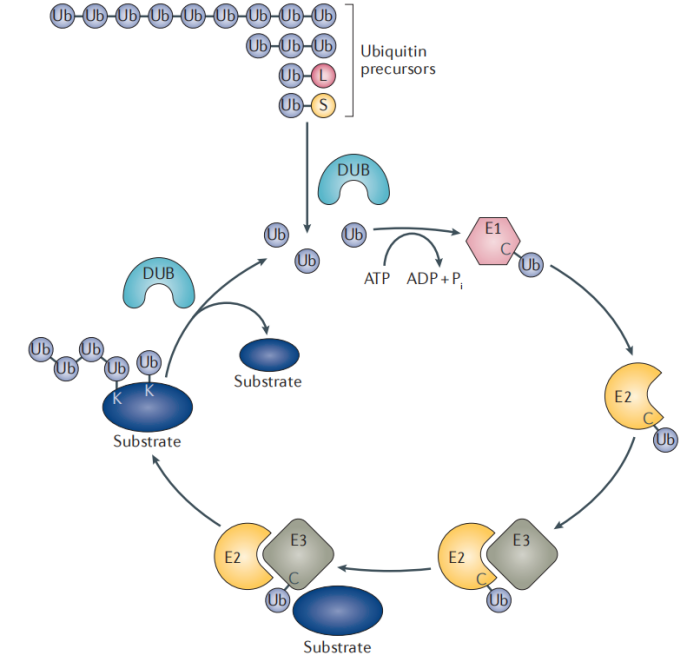
The USP family is one of the largest families of DUBs, comprising over 50 members such as USP1, USP7, and USP14. These enzymes exhibit high structural diversity, which endows them with distinct substrate specificities and functions. USP family members recognize and act on specific ubiquitin chain types through their unique domains, enabling precise regulation of protein fate.
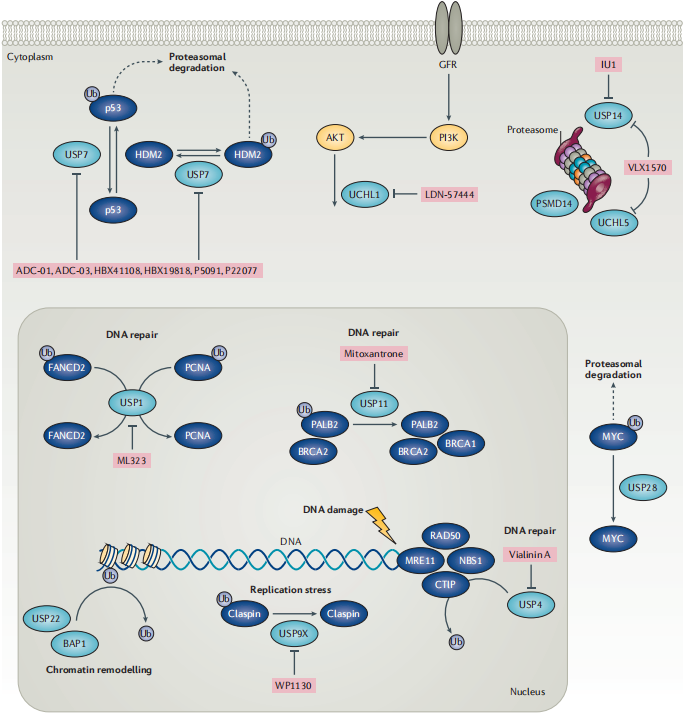
For example, USP1 is extensively involved in maintaining genome integrity, cell cycle, and cellular homeostasis. Its aberrant expression is associated with multiple tumor types, making it a research hotspot in the field of anti-tumor therapy. USP7 plays a crucial role in maintaining p53 stability, affecting the process of cell apoptosis. USP14 is involved in regulating proteasome activity and influencing protein degradation processes.
Key Roles of USP Proteins in Diseases
USP proteins play significant roles in the occurrence and development of various diseases, particularly in the fields of cancer, neurodegenerative diseases, and inflammation.
Cancer: The abnormal expression or dysregulation of USP proteins is closely related to the occurrence and development of multiple cancers. For instance, USP1 promotes the development of cholangiocarcinoma by deubiquitinating PARP1 and inhibiting its proteasomal degradation. USP11 is upregulated in hepatocellular carcinoma (HCC) and drives HCC progression by promoting epithelial-mesenchymal transition (EMT) and metastasis. Furthermore, USP22 enhances the stability of PD-L1 protein by deubiquitinating it, affecting tumor immune evasion.
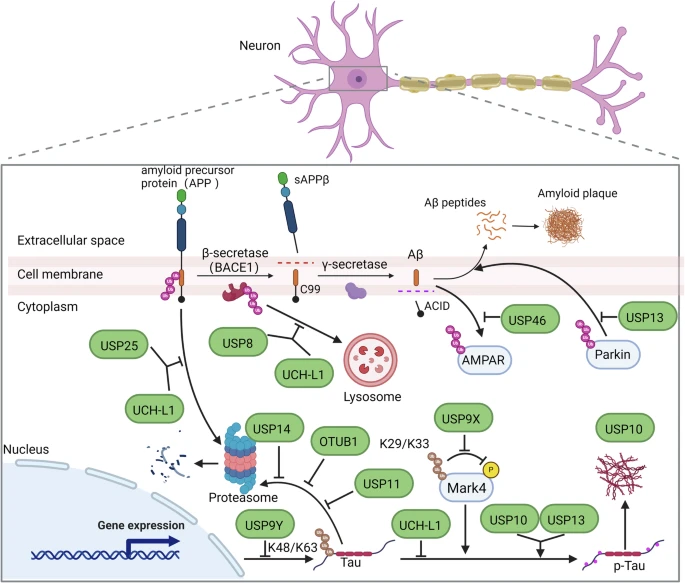
Neurodegenerative Diseases: Dysfunction of USP proteins may lead to the accumulation of abnormal proteins, triggering neurotoxicity. For example, USP7 plays a crucial role in maintaining p53 stability, and the abnormal accumulation of p53 is closely related to the pathological processes of neurodegenerative diseases.
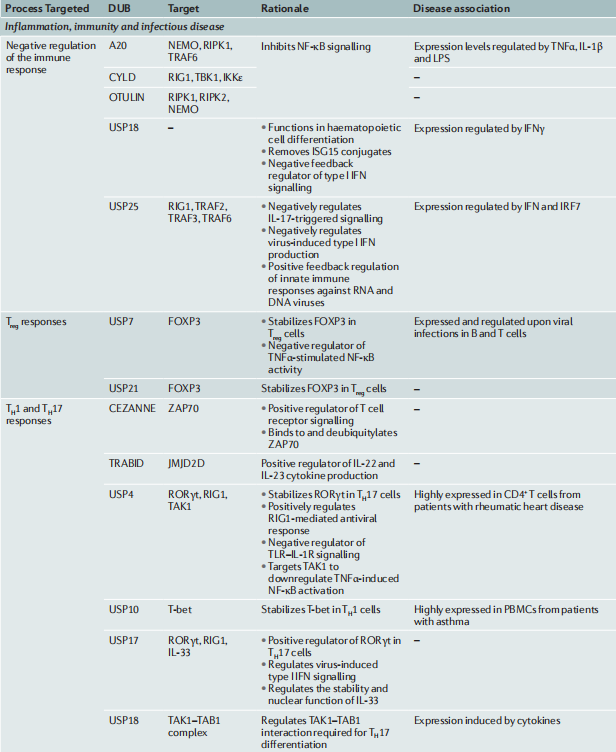
Inflammation and Autoimmune Diseases: USP proteins influence the intensity and duration of immune responses by regulating key proteins in immune signaling pathways. For example, USP16 can target metabolic-related protein ISGylation, affecting cell metabolism and immune responses.
Therapeutic Potential and Future Prospects of USP Proteins
Given their crucial roles in various diseases, USP proteins have emerged as a new hotspot in drug development. By inhibiting or activating specific USP proteins, it is expected to develop novel therapeutic strategies for diseases such as cancer, neurodegenerative diseases, and inflammation.
Currently, several small-molecule USP1 inhibitors have entered preclinical and clinical research stages, demonstrating promising tumor-suppressing efficacy. For example, KSQ-4279 is the fastest-progressing small-molecule USP1 inhibitor, currently in Phase I clinical trials. Additionally, ISM3091 has obtained new drug clinical trial approvals in China and the United States and is about to commence clinical trials.
However, drug development based on USP proteins still faces numerous challenges, such as improving drug specificity and reducing side effects. With continuous technological advancements and in-depth research, these issues are expected to be resolved. Future research will focus on the specific mechanisms of USP proteins in diseases and how to utilize these findings to develop new therapeutic strategies.
Conclusion
As key regulators of intracellular protein homeostasis, the importance of the USP protein family in biological processes and their potential roles in diseases are gradually being revealed. The structural diversity of the USP protein family endows them with distinct substrate specificities and functions, enabling precise regulation of protein fate within cells and thereby influencing cellular physiological functions. With a deep understanding of the functions and regulatory mechanisms of USP proteins, therapeutic strategies based on USP proteins are expected to bring new breakthroughs in the treatment of various diseases. In the future, with continuous research and technological advancements, USP proteins are expected to become new targets for the treatment of multiple diseases, bringing new opportunities for drug development.
High-Quality USP Proteins from Ulove Protein for Cancer Research
Ulove Protein offers a series of USP proteins to support your scientific exploration! These proteins have undergone rigorous validation, ensuring reliable purity and activity to safeguard your research journey.
This article is reviewed and published by the technical expert team of UA
Disclaimer: This article partially utilizes artificial intelligence assistance in its creation. If any content involves copyright or intellectual property issues, please let us know and we promise to verify and remove it as soon as possible.
Purchase recombinant protein, choose Nanjing UA-Bio
UA protein focuses on providing various protein reagents, raw materials, and services required for drug research and development, cell therapy, gene therapy, and basic scientific research, including drug target proteins, immune checkpoint proteins, cytokines, tool enzymes, customized protein expression, and full-length transmembrane protein development. Youai is committed to providing customers with high-quality products and professional services, and building a High-tech Biological Enterprise with International Competitiveness.







 Business license (three certificates in one)