




KRAS-Targeted Therapies: Breakthroughs and Future Prospects


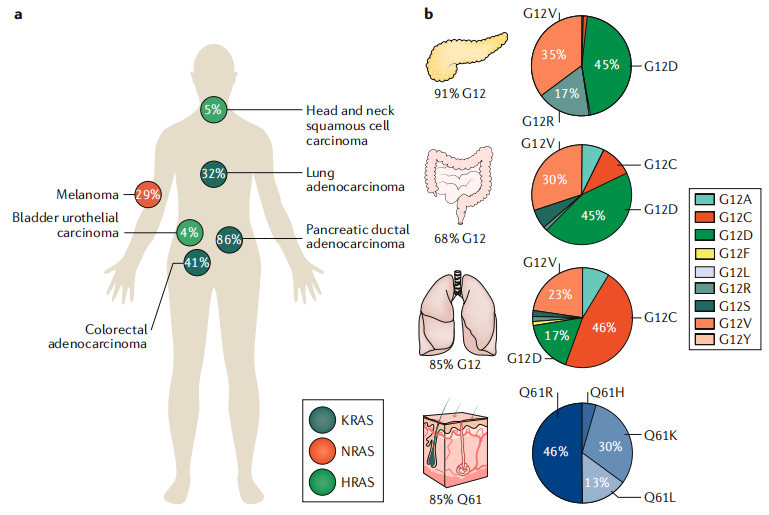
Mutations in the KRAS gene represent a significant challenge in cancer treatment, particularly in pancreatic cancer, colorectal cancer, and non-small cell lung cancer (NSCLC). These mutations result in the constitutive activation of the KRAS protein, leading to hyperactivation of downstream signaling pathways and promoting tumor cell growth. However, the lack of binding pockets on the KRAS protein surface has made it difficult for traditional small-molecule drugs to directly target KRAS, rendering it once deemed an "undruggable" target.
- Recent Advances
- Product Information
KRAS-Targeted Therapies: Breakthroughs and Future Prospects
Mutations in the KRAS gene represent a significant challenge in cancer treatment, particularly in pancreatic cancer, colorectal cancer, and non-small cell lung cancer (NSCLC). These mutations result in the constitutive activation of the KRAS protein, leading to hyperactivation of downstream signaling pathways and promoting tumor cell growth. However, the lack of binding pockets on the KRAS protein surface has made it difficult for traditional small-molecule drugs to directly target KRAS, rendering it once deemed an "undruggable" target.
Breakthroughs with G12C Inhibitors
In recent years, significant progress has been made in the development of inhibitors targeting the KRAS G12C mutation. Sotorasib and adagrasib were approved in 2021 and 2022, respectively, for the treatment of patients with advanced NSCLC harboring the KRAS G12C mutation. These drugs work by binding to the cysteine residue in the KRAS G12C mutant, locking it in an inactive state and inhibiting downstream signaling pathways. Clinical trials have demonstrated high objective response rates (ORR) and disease control rates (DCR), offering new hope for patients.
Exploration of Other Mutation Sites
Beyond the G12C mutation, other KRAS mutation sites such as G12D and G12V have also garnered attention. For instance, MRTX1133 is a selective non-covalent KRAS G12D inhibitor that has shown specific inhibitory effects on various KRAS G12D-mutant tumor cell lines in preclinical studies. Additionally, HRS-4642, an independently developed KRAS G12D inhibitor by Hengrui Pharmaceuticals, has exhibited good tolerability and antitumor activity in Phase I clinical trials. These research advancements indicate that drug development targeting other KRAS mutation sites is steadily progressing.
Novel Targeting Strategies
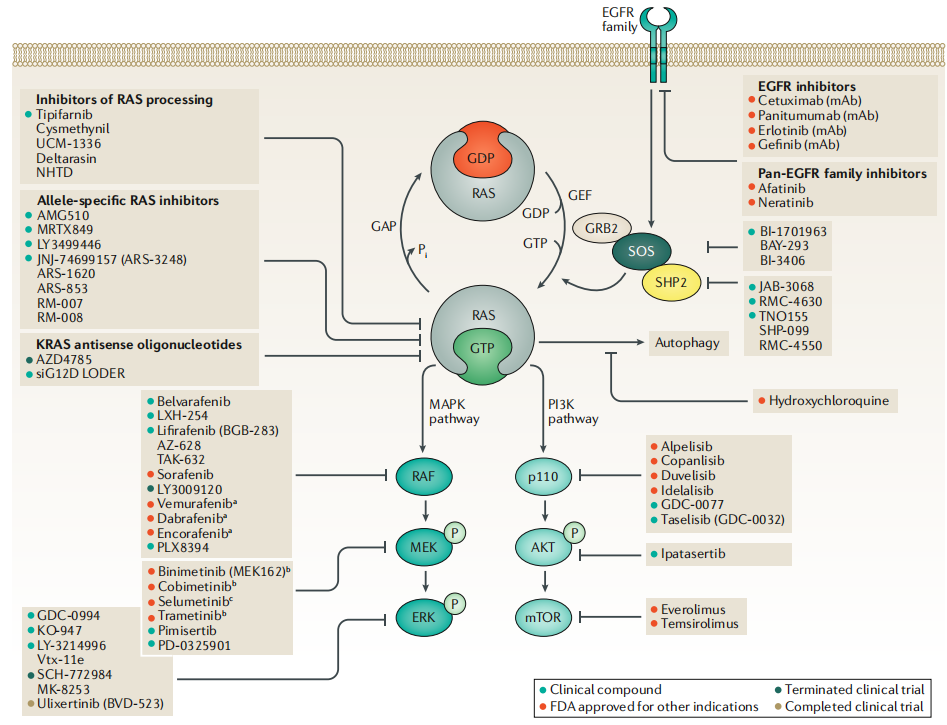
To overcome drug resistance in KRAS mutants and further enhance therapeutic efficacy, researchers are exploring various novel targeting strategies. For example, by establishing the binding interface between KRAS mutants and the cyclophilin CYPA, small-molecule inhibitors that selectively inhibit KRAS mutants have been developed. Furthermore, proteolysis-targeting chimeras (PROTAC) technology is being utilized to develop KRAS degraders, which guide the intracellular ubiquitin-proteasome system to degrade KRAS proteins, enabling precise regulation of KRAS mutants.
Exploration of Combination Therapy Strategies
Despite the significant efficacy of KRAS inhibitors in clinical trials, drug resistance remains an urgent issue to be addressed. Studies have shown that the mechanisms of resistance to KRAS inhibitors are complex and diverse, including gene mutations, compensatory activation of signaling pathways, and alterations in the tumor microenvironment. To overcome resistance, researchers are exploring various combination therapy strategies, such as combining KRAS inhibitors with EGFR inhibitors, SOS1 inhibitors, and SHP2 inhibitors, to enhance therapeutic effects and prolong patient survival.
Future Prospects
With in-depth research on the mechanisms of KRAS mutations and the continuous emergence of various novel inhibitors, KRAS-targeted therapies are rapidly transforming the landscape of cancer treatment. In the future, with the clinical application of more KRAS inhibitors and the continuous optimization of combination therapy strategies, we can expect to provide more precise and effective treatment options for cancer patients with KRAS mutations, significantly improving their prognosis and quality of life.
References
Moore AR, Rosenberg SC, McCormick F, Malek S. RAS-targeted therapies: is the undruggable drugged? Nat Rev Drug Discov. 2020 Aug;19(8):533-552. doi: 10.1038/s41573-020-0068-6. Epub 2020 Jun 11. Erratum in: Nat Rev Drug Discov. 2020 Dec;19(12):902. doi: 10.1038/s41573-020-0089-1.
High-Quality KRAS Proteins from Ulove Protein for Cancer Research
Ulove Protein offers wild-type KRAS proteins and various mutant proteins. These proteins have undergone rigorous validation on platforms such as SDS-PAGE, SPR/TR-FRET, ensuring reliable purity and activity to support your research endeavors. Let's join hands to explore new horizons in cancer treatment together!
This article is reviewed and published by the technical expert team of UA
Disclaimer: This article partially utilizes artificial intelligence assistance in its creation. If any content involves copyright or intellectual property issues, please let us know and we promise to verify and remove it as soon as possible.
Purchase recombinant protein, choose Nanjing UA-Bio
UA protein focuses on providing various protein reagents, raw materials, and services required for drug research and development, cell therapy, gene therapy, and basic scientific research, including drug target proteins, immune checkpoint proteins, cytokines, tool enzymes, customized protein expression, and full-length transmembrane protein development. Youai is committed to providing customers with high-quality products and professional services, and building a High-tech Biological Enterprise with International Competitiveness.







 Business license (three certificates in one)