




CDK Kinases: The "Conductors" of the Cell Cycle and New Breakthroughs in Cancer Therapy


The cell cycle, encompassing the entire process from one cell division to the next, is orchestrated by cyclin-dependent kinases (CDKs), which serve as its core regulatory molecules. CDKs govern each phase of the cell cycle by forming complexes with cyclins. However, aberrant activation of CDKs is closely linked to the onset and progression of numerous cancers. In recent years, CDKs and their inhibitors have emerged as a focal area of research in cancer therapy.
- Recent Advances
- Product Information
CDK Kinases: The "Conductors" of the Cell Cycle and New Breakthroughs in Cancer Therapy
The cell cycle, encompassing the entire process from one cell division to the next, is orchestrated by cyclin-dependent kinases (CDKs), which serve as its core regulatory molecules. CDKs govern each phase of the cell cycle by forming complexes with cyclins. However, aberrant activation of CDKs is closely linked to the onset and progression of numerous cancers. In recent years, CDKs and their inhibitors have emerged as a focal area of research in cancer therapy.
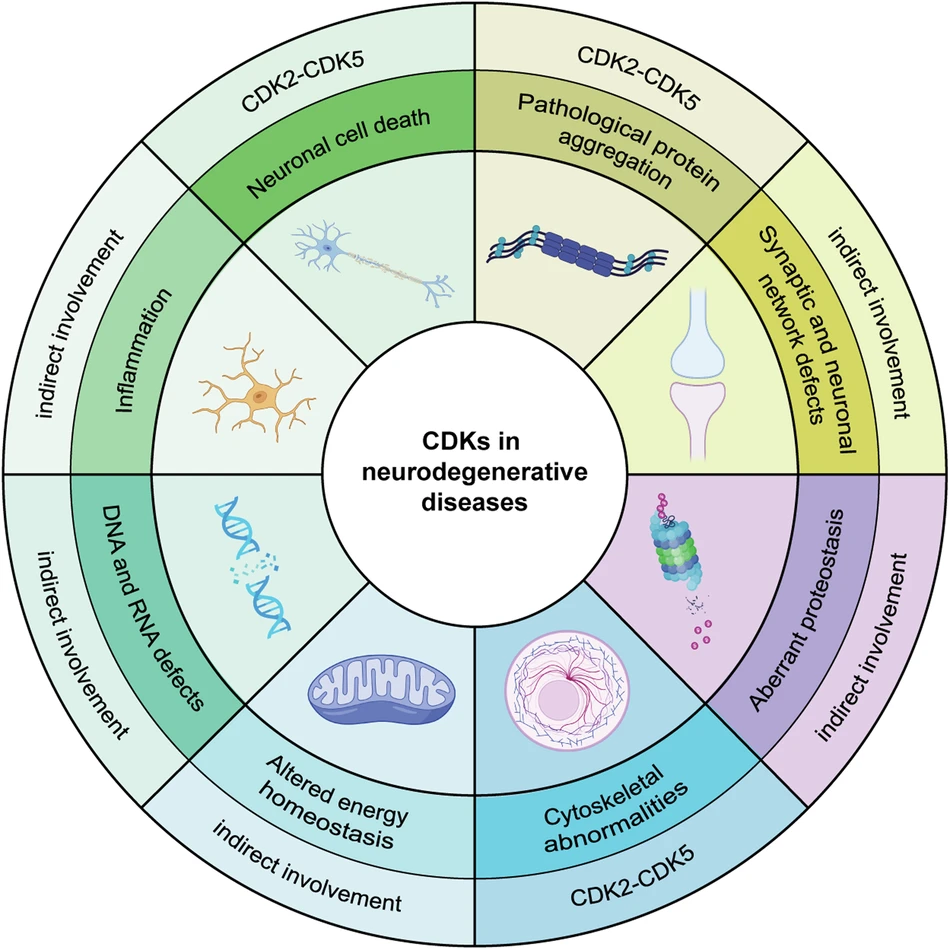
CDKs: The "Conductors" of the Cell Cycle
CDKs, a family of serine/threonine kinases, regulate the cell cycle by phosphorylating target proteins. Among their numerous members, CDK1, CDK2, CDK4, and CDK6 play particularly critical roles in cell cycle control.
- CDK1: Primarily regulates the transition from the G2 phase to the M phase, acting as a key controller of cell division.
- CDK2: Functions during the late G1 phase and S phase, driving cells into the S phase and completing DNA replication by binding to Cyclin E and Cyclin A.
- CDK4/6: Active during the G1 phase, these kinases promote progression into the S phase by phosphorylating the retinoblastoma protein (Rb) through their interaction with Cyclin D, thereby releasing the E2F transcription factor.
- CDK7: Acts as a dual "housekeeper" for both cell cycle regulation and transcriptional control.
- CDK8/9: Play significant roles in transcriptional regulation, influencing gene expression.
The Role of CDKs in Cancer
In cancer cells, aberrant CDK activation leads to uncontrolled cell cycle progression and excessive proliferation. For instance, hyperactivation of CDK4/6 is a hallmark of many tumors, including breast and lung cancers. This dysregulation can occur through mechanisms such as overexpression of Cyclin D, amplification or mutation of CDK4/6 genes, or inactivation of the Rb protein.
CDK Inhibitors: A New Dawn in Cancer Therapy
Targeting CDK hyperactivity, CDK inhibitors represent a promising therapeutic strategy. These agents block tumor cell proliferation by inhibiting CDK activity and halting cell cycle progression.
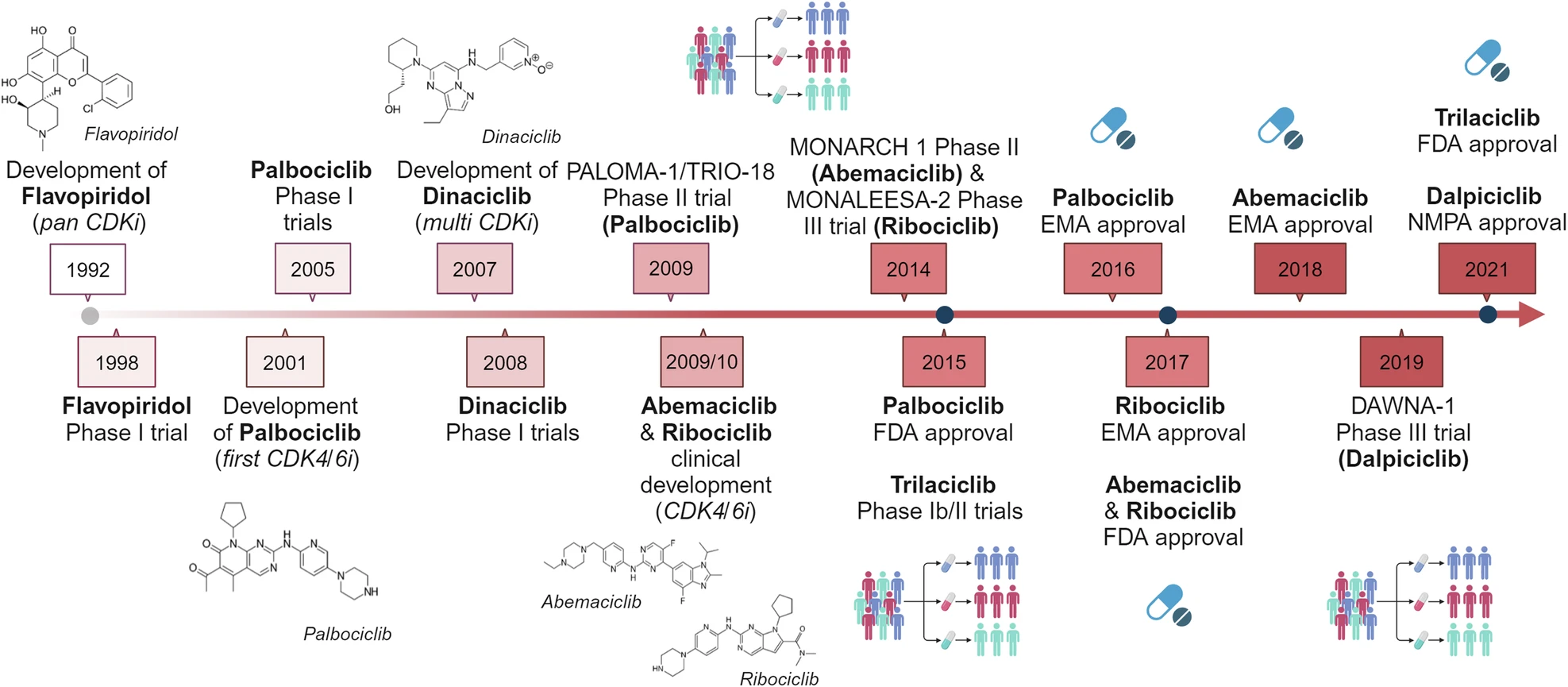
- CDK4/6 Inhibitors: Multiple CDK4/6 inhibitors, such as Palbociclib, Ribociclib, and Abemaciclib, have been approved for clinical use. These drugs, primarily indicated for hormone receptor-positive, HER2-negative (HR+/HER2-) breast cancer, have significantly extended progression-free survival in patients.
- CDK2 Inhibitors: CDK2, critical for the G1/S phase transition, is also under investigation. For example, PF-07104091, an oral CDK2 inhibitor, is undergoing clinical trials for various malignancies.
- CDK7 Inhibitors: Given CDK7's dual role in cell cycle and transcriptional regulation, CDK7 inhibitors are gaining traction. SY-5609, a novel non-covalent CDK7 inhibitor, is currently in clinical trials for advanced solid tumors.
The development of selective CDK inhibitors poses substantial challenges due to the high conservation of ATP-binding pockets across CDK family members. Nevertheless, leveraging advances in structural biology and medicinal chemistry, researchers have successfully designed selective inhibitors that enhance therapeutic efficacy while minimizing side effects. As our understanding of CDK biology and regulatory mechanisms deepens, coupled with the emergence of more selective inhibitors, CDKs are poised to become pivotal therapeutic targets in oncology. Future research will further elucidate the mechanistic roles of CDKs in diverse cancers, paving the way for more potent and safer CDK inhibitors to offer renewed hope to cancer patients.
Currently Available Products:
|
Product Code |
Product Name |
|
UA080050 |
CDK1/CycB1 Protein |
|
UA080055 |
CDK2/CycE1 Protein |
|
UA080419 |
CDK4/Cyclin D1 Protein, Human |
|
UA080220 |
CDK5/p25 Protein |
|
UA080156 |
CDK6/Cyclin D3 Protein |
|
CDK7/Cyclin H/MAT1 Protein |
|
|
CDK8/Cyclin C/MED12 Protein |
|
|
UA080053 |
CDK12/Cyclin K Protein |
|
UA080054 |
CDK13/Cyclin K Protein |
|
UA080207 |
CDK15/Cyclin Y Protein |
|
UA080208 |
CDK16/Cyclin Y Protein |
|
UA080209 |
CDK17/Cyclin Y Protein |
|
UA080210 |
CDK18/Cyclin Y Protein |
|
UA080211 |
CDK19/Cyclin C/MED12 Protein |
This article is reviewed and published by the technical expert team of UA
Disclaimer: This article partially utilizes artificial intelligence assistance in its creation. If any content involves copyright or intellectual property issues, please let us know and we promise to verify and remove it as soon as possible.
Purchase recombinant protein, choose Nanjing UA-Bio
UA protein focuses on providing various protein reagents, raw materials, and services required for drug research and development, cell therapy, gene therapy, and basic scientific research, including drug target proteins, immune checkpoint proteins, cytokines, tool enzymes, customized protein expression, and full-length transmembrane protein development. Youai is committed to providing customers with high-quality products and professional services, and building a High-tech Biological Enterprise with International Competitiveness.







 Business license (three certificates in one)