




The Claudin Protein Family: Determining Whether Your Cells Are 'Socially Awkward' or 'Sociable'


As a key component of intercellular junctions, the tight junction protein Claudin family plays an irreplaceable role in maintaining tissue barrier function, regulating paracellular permeability, and participating in various physiological and pathological processes. In recent years, with the deepening of research on Claudin proteins, their roles in tumorigenesis, development, and infectious diseases have become increasingly clear, making them a "star target" for the development of anti-tumor drugs.
- Recent Advances
- Product Information
- Reference
The Claudin Protein Family: Determining Whether Your Cells Are 'Socially Awkward' or 'Sociable'
As a key component of intercellular junctions, the tight junction protein Claudin family plays an irreplaceable role in maintaining tissue barrier function, regulating paracellular permeability, and participating in various physiological and pathological processes. In recent years, with the deepening of research on Claudin proteins, their roles in tumorigenesis, development, and infectious diseases have become increasingly clear, making them a "star target" for the development of anti-tumor drugs.
Overview of the Claudin Protein Family
The Claudin protein family is a class of tetraspan membrane proteins encoded by the multi-gene family CLDN, present in all epithelial and endothelial cells, and plays a crucial role as an important component of tight junctions. This family of proteins was first discovered and named in 1998 by Mikio Furuse and Tsukita Shoichiro of Kyoto University in Japan. The term "Claudin" is derived from the Latin word "claudere" (meaning "to close"), vividly reflecting the barrier function of these proteins.

Schematic Diagram of Claudin Protein Structure
Claudin proteins play an irreplaceable role in regulating the permeability of intercellular gaps and maintaining intercellular adhesion in epithelial and endothelial cell layers. They not only form physical barriers but also participate in transmembrane movement and signal transduction inside and outside the cell, affecting basic life processes such as cell proliferation, differentiation, and migration. In pathological states, abnormal expression or dysfunction of Claudin proteins is closely related to various diseases, including genetic diseases, infectious diseases, and malignant tumors, making the Claudin family one of the hotspots in biomedical research in recent years.
Biological Functions and Regulation

Tissue Distribution and Functional Characteristics of Major Members of the Claudin Family
I. Biological Functions
Maintaining Cell Barrier Function: Claudin proteins maintain cell barrier function by participating in the formation of tight junctions, preventing the invasion of harmful substances and pathogens. For example, claudin-1 is a co-receptor for hepatitis C virus and participates in the late steps of virus entry into cells.
Regulating Paracellular Transport of Ions and Molecules: Claudin proteins regulate the paracellular transport of ions and molecules in various tissues. For example, claudin-10 plays a key role in maintaining cell membrane selective permeability and regulating ion transport through the paracellular pathway.
Participating in Cell Proliferation, Differentiation, and Apoptosis: Claudin proteins are closely related to processes such as cell proliferation, differentiation, and apoptosis, and are involved in various physiological and pathological processes. For example, the expression of claudin-3 in lung cancer is associated with epithelial-mesenchymal transition (EMT) and invasion.
II. Functional Regulation Mechanisms of Claudin Proteins
Transcriptional Level Regulation: Various growth factors and cytokines can regulate the transcriptional activity of CLDN genes. For example, TGF-β, EGF, and TNF-α can all affect the expression levels of specific Claudin members.
Post-translational Modifications: Phosphorylation is the most common regulatory method. Phosphorylation of Claudin-3 and Claudin-4 by protein kinases A and C can increase paracellular permeability. WNK4 kinase can also regulate permeability by phosphorylating multiple Claudin proteins.
Protein Interactions: Binding to scaffold proteins such as ZO-1 and ZO-2 through the PDZ-binding motif at the C-terminus affects the localization and stability of Claudins.
Membrane Transport Regulation: The internalization and recycling processes of Claudin proteins are also involved in rapidly regulating the permeability of tight junctions.
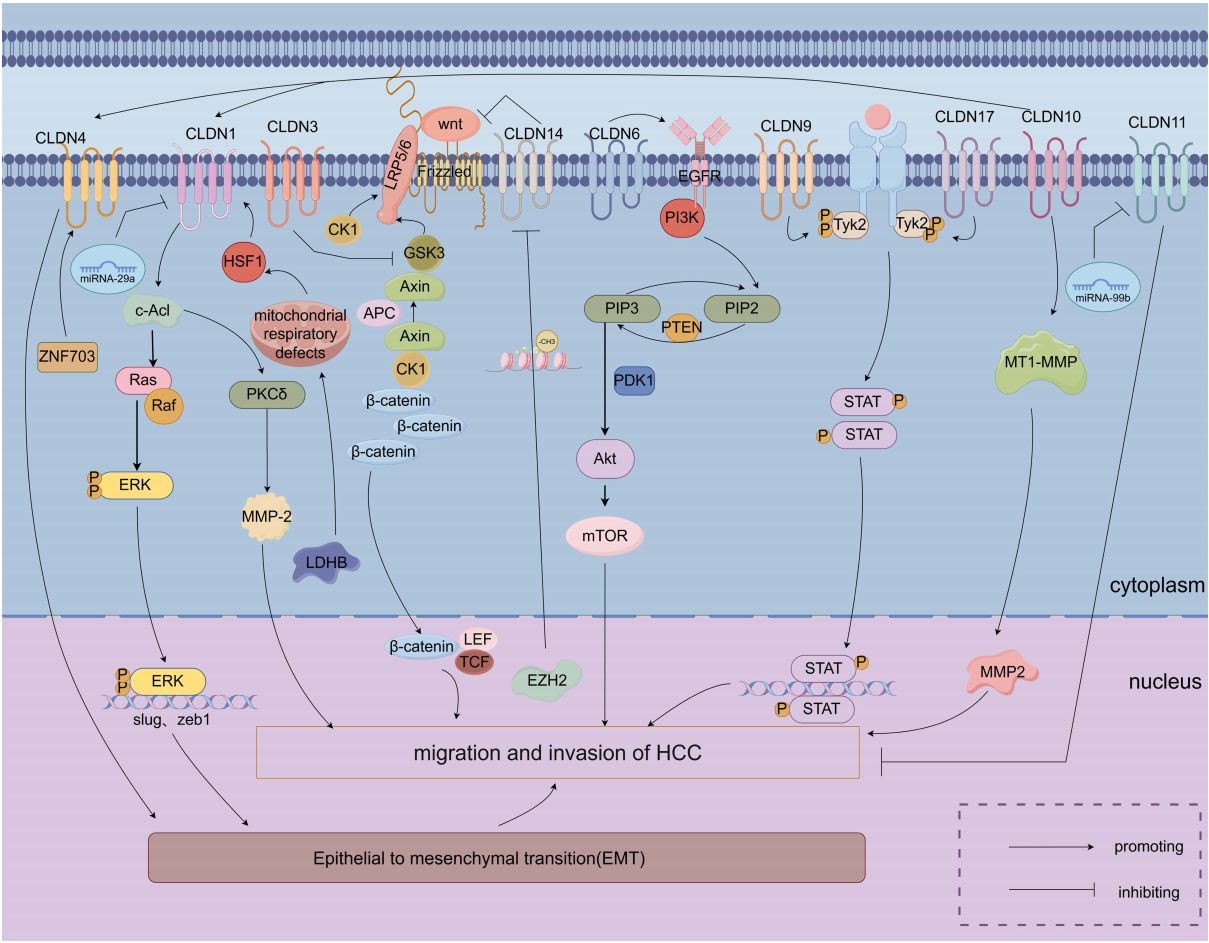
It is worth noting that the functions of Claudin proteins are not limited to forming static physical barriers. Accumulating evidence shows that they also participate in cell signaling, regulating cell proliferation, differentiation, and migration by affecting various signaling pathways such as Wnt, MAPK, and PI3K/Akt. This dual function—acting as both structural proteins and signaling molecules—makes Claudin proteins key regulators in the physiological and pathological processes of epithelial tissues.
Claudin Proteins and Human Diseases
Claudin1
Inflammatory Bowel Disease (IBD): Increased expression of Claudin1 in inflamed areas is associated with intestinal epithelial barrier dysfunction.
Colorectal Cancer: The expression of Claudin1 is associated with the occurrence and progression of colorectal cancer and may promote tumor development by affecting cell proliferation and differentiation.
Kidney Diseases: In diabetic nephropathy, Claudin1 is abnormally upregulated in podocytes, disrupting the normal structure of the glomerular filtration membrane and leading to proteinuria.
Claudin2
Belongs to the "leaky" type of claudin proteins, increasing the permeability of paracellular pathways to sodium and water. In certain pathological states (such as intestinal inflammation), it may lead to barrier dysfunction.
Claudin4
Various Cancers: Claudin4 is dysregulated in various cancers such as bladder cancer, breast cancer, colorectal cancer, and gastric cancer. Its abnormal expression may promote the proliferation and invasion of tumor cells.
Drug Delivery: Due to its crucial role in tight junctions, Claudin4 is a potential target for improving drug delivery (such as crossing the blood-brain barrier).
Claudin5
Highly expressed in cerebral vascular endothelium, maintaining the integrity of the blood-brain barrier. In diabetic nephropathy, the loss of Claudin5 exacerbates podocyte injury and proteinuria.
Claudin6
Gastric Cancer: Claudin6 promotes the proliferation and invasion of gastric cancer cells by affecting the YAP1-Snail axis. Its expression is associated with poor prognosis in gastric cancer patients.
Other Cancers: Claudin6 is highly expressed in tumor tissues but lower in surrounding normal tissues in tumors such as liver cancer, ovarian cancer, and endometrial cancer.
Claudin18
In gastric cancer, the Claudin18.2 subtype is an important target for anti-tumor therapy. Its high expression in gastric cancer cells is associated with tumor invasion and metastasis.
Research Progress and Application Prospects
In recent years, research on Claudin family proteins as drug targets has made significant progress. For example, the antibody Vyloy (zolbetuximab) targeting claudin-18.2 has been approved for the treatment of patients with CLDN18.2-positive, unresectable, advanced, or recurrent gastric cancer. In addition, proteins such as claudin-3 and claudin-4 have also become potential therapeutic targets due to their high expression in tumors.
The importance of Claudin family proteins in cell biology and medical research is increasingly prominent. In the future, with further research on their structure and function, Claudin family proteins are expected to play a greater role in disease diagnosis, treatment, and prevention.
Recommended Products:
|
Catalog Number |
Product Name |
Expression System |
|
Claudin-1 Flag-His Tag Protein, Human (Detergent) |
BacMam |
|
|
Claudin-1 His-EGFP-Twinstrep tag Protein, Human (Detergent) |
HEK293 |
|
|
Claudin-4 protein his tag (detergent, full length), Human |
Baculovirus-InsectCells |
|
|
Claudin-6 membrane Protein with Flag&His Tag in Detergent, Human |
HEK293 |
|
|
Anti-CLDN1 monoclonal antibody(Lixudebart) |
CHO |
Click the catalog number official website for details of activity data~
This article is reviewed and published by the technical expert team of UA
Disclaimer: This article partially utilizes artificial intelligence assistance in its creation. If any content involves copyright or intellectual property issues, please let us know and we promise to verify and remove it as soon as possible.
Purchase recombinant protein, choose Nanjing UA-Bio
UA protein focuses on providing various protein reagents, raw materials, and services required for drug research and development, cell therapy, gene therapy, and basic scientific research, including drug target proteins, immune checkpoint proteins, cytokines, tool enzymes, customized protein expression, and full-length transmembrane protein development. Youai is committed to providing customers with high-quality products and professional services, and building a High-tech Biological Enterprise with International Competitiveness.

- Amar B. Singh; Ashok Sharma; Punita Dhawan.Claudin Family of Proteins and Cancer: An Overview. Journal of Oncology(2010).
- Fangqian Du; Yuwei Xie; Shengze Wu; Mengling Ji; Bingzi Dong; et al.Expression and Targeted Application of Claudins Family in Hepatobiliary and Pancreatic Diseases. Journal of Hepatocellular Carcinoma(2024).
- Kristin E. Cox; Shanglei Liu; Robert M. Hoffman; Surinder K. Batra; Punita Dhawan; et al.The Expression of the Claudin Family of Proteins in Colorectal Cancer. Biomolecules(2024).
- Hiroshi Suzuki; Tomohiro Nishizawa; Kazutoshi Tani; Yuji Yamazaki; Atsushi Tamura; et al. Crystal Structure of a Claudin Provides Insight into the Architecture of Tight Junctions.Science(2014).






 Business license (three certificates in one)