




The mystery of cancer from the perspective of the Eph system


Cancer is one of the major threats to global health today, and in the process of exploring its occurrence and development, scientists have gradually uncovered a key molecular mechanism - the Eph system. The Eph system consists of Eph receptor tyrosine kinases and their ligands, ephrin. Since the first Eph receptor was discovered about 35 years ago, more and more evidence has shown that it plays an important role in the development and progression of cancer.
- Recent Advances
- Product Information
The mystery of cancer from the perspective of the Eph system
The complex relationship between the Eph system and cancer
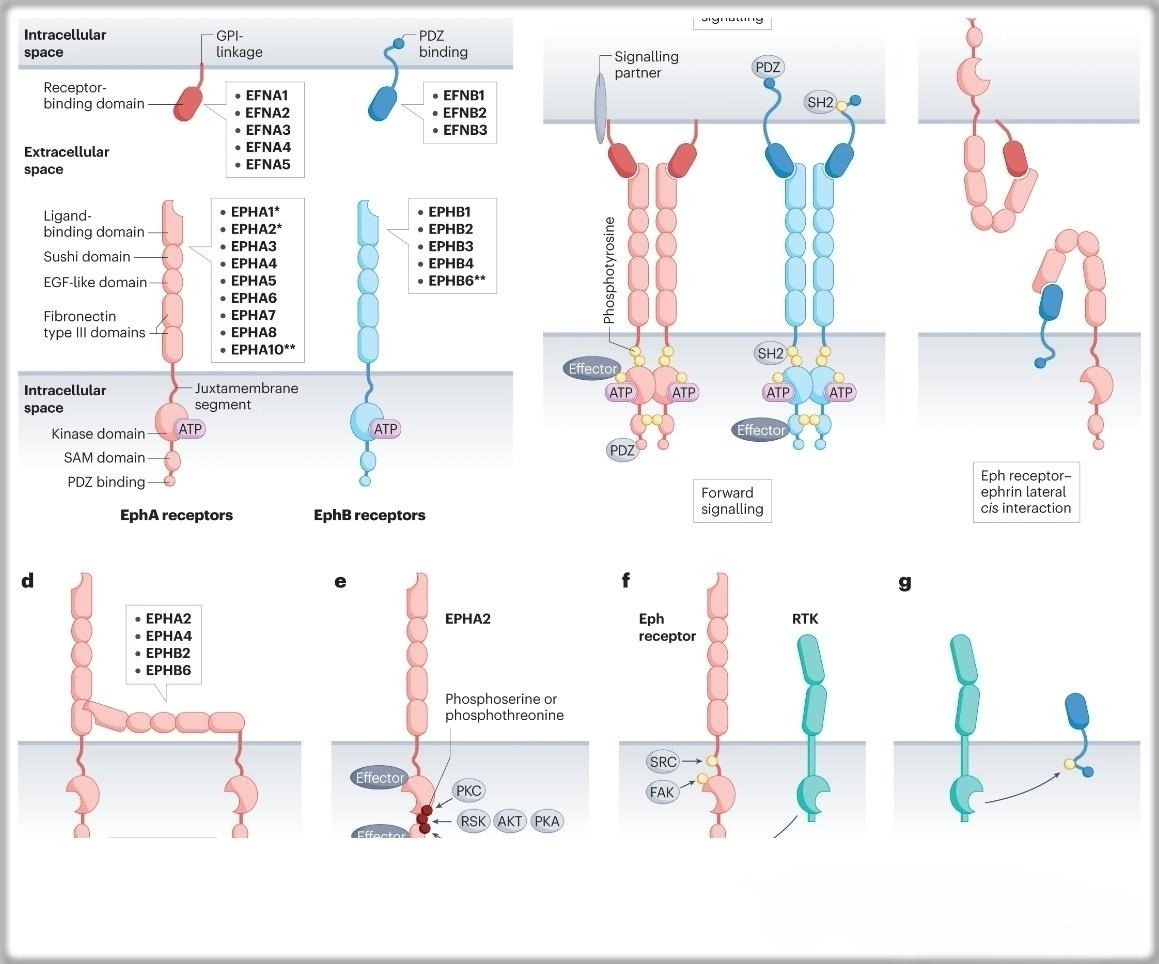
The Eph system contains 14 tyrosine kinase receptors (9 EphA and 5 EphB receptors) and 8 cell surface-anchored ephrin ligands (5 glycophosphatidylinositol-linked ephrin-A and 3 transmembrane ephrin-B). These receptors and ligands interact to form a complex signal transduction network that regulates cell-to-cell communication. Under normal physiological conditions, the Eph system is involved in tissue development, homeostasis, and regeneration, but in cancer, this system is dysregulated.
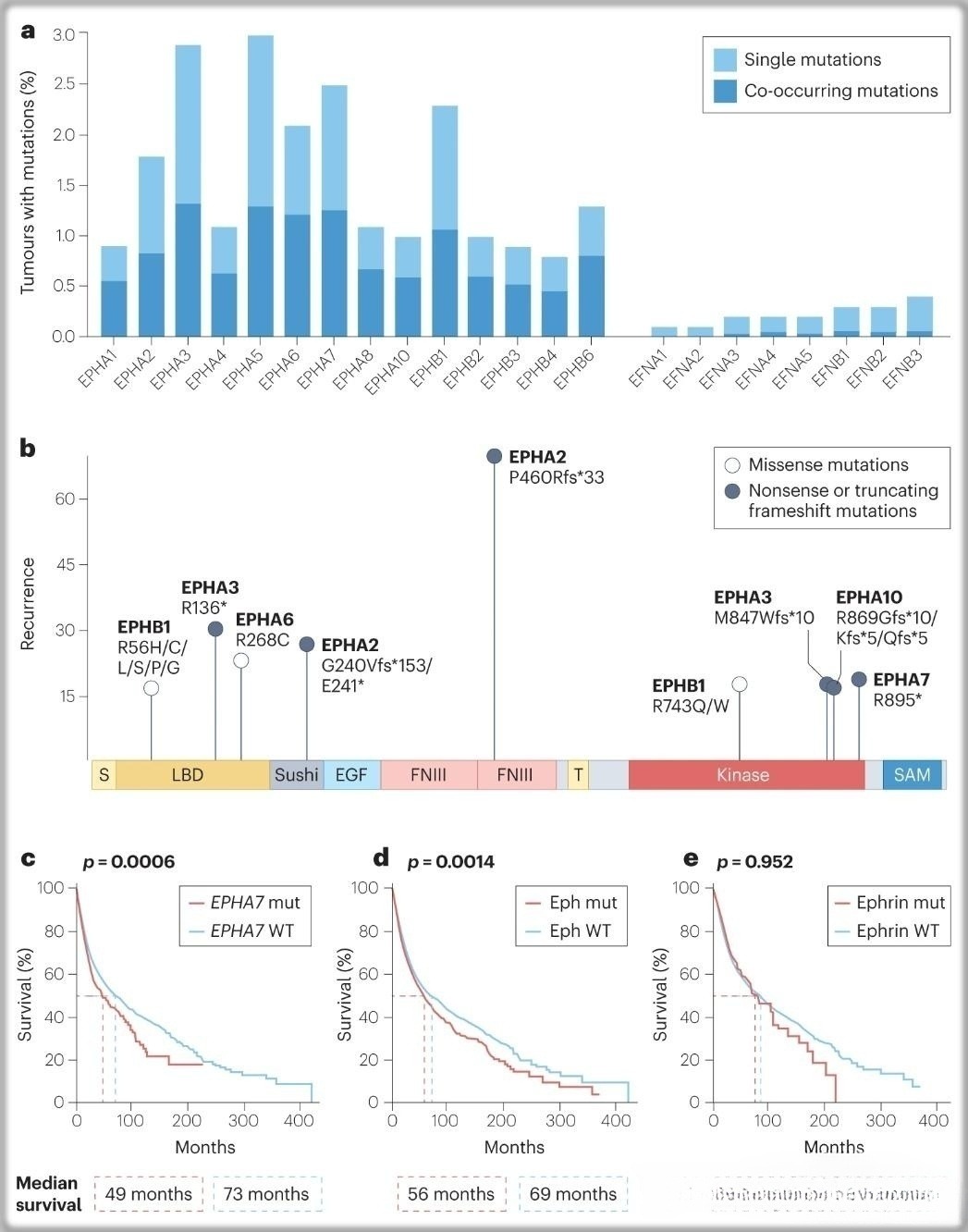
The expression of Eph receptors and ephrins in cancer cells may be upregulated or downregulated, and this expression change is consistent with their dual role in cancer progression. For example, in the early stages of some cancers, Eph receptors may be upregulated to promote tumorigenesis, while in the late stages they are downregulated, showing different functions. In addition, the expression of Eph receptors and ephrins can regulate each other, and this regulation may alleviate the tumor suppressive effect of Eph forward signals in some cancers.
Dual Role of Eph System in Cancer Progression
The role of Eph system in cancer is two-sided. On the one hand, forward signaling of Eph receptors usually has the effect of inhibiting cancer progression. For example, forward signaling of EPHA3 and EPHA7 can induce apoptosis in prostate cancer cells, while forward signaling of EPHB2 can impair cell division, leading to multinucleation and apoptosis. On the other hand, non-classical signaling of Eph receptors is usually associated with pro-tumor activities. For example, non-classical signaling of EPHA2 can promote cancer cell invasion and metastasis through multiple mechanisms.
Interaction of Eph system with tumor microenvironment
The Eph system not only plays a role inside cancer cells, but also mediates the mutual communication between cancer cells and cells in the tumor microenvironment (TME). The tumor microenvironment contains a variety of cell types and extracellular matrix (ECM), which support tumor cells during cancer progression. The role of Eph system in tumor angiogenesis is well established, but recent studies have also revealed its role in immune cells, cancer-associated fibroblasts and extracellular matrix.
New targets for cancer treatment
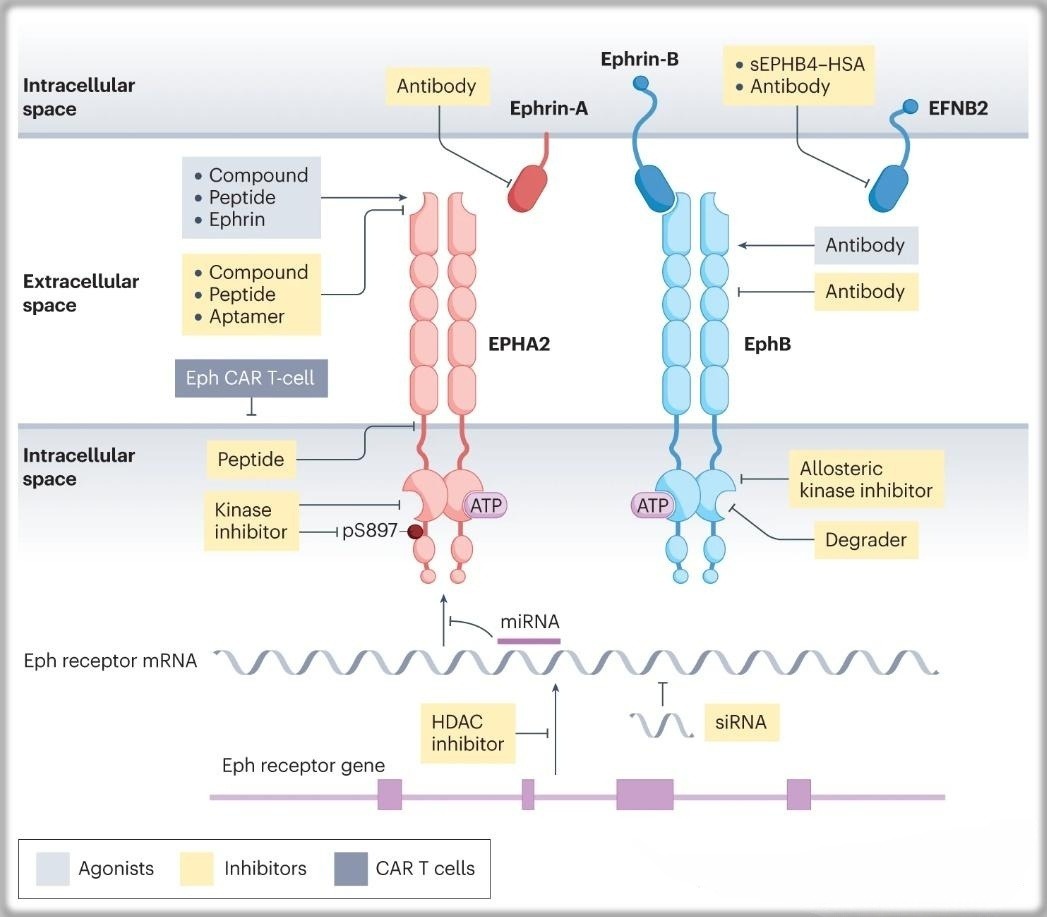
Given the importance of the Eph system in cancer, scientists are exploring cancer treatment strategies targeting Eph receptors and ephrin. These strategies include the use of small molecule kinase inhibitors, antibodies, peptide agonists, and recombinant ephrin. For example, antibodies and peptide drugs targeting EPHA2 have shown good results in preclinical studies. In addition, immunotherapy is also being explored, including the use of Eph receptor peptide fragments as T cell epitopes to induce anti-tumor immunity.
Future research directions
Although some progress has been made, there are still many unknowns about the role of the Eph system in cancer. Future research will focus on better understanding the signaling mechanisms of Eph receptors and ephrin in different cell types and how they affect cancer progression and treatment response. In addition, the expansion of comprehensive omics methods will help identify the best therapeutic targets and targeting strategies.
In summary, the complex role of the Eph system in cancer provides us with new perspectives and potential therapeutic targets. With the deepening of research, we are expected to develop more effective cancer treatments and improve patient outcomes.
This article is reviewed and published by the technical expert team of UA
Disclaimer: This article partially utilizes artificial intelligence assistance in its creation. If any content involves copyright or intellectual property issues, please let us know and we promise to verify and remove it as soon as possible.
Purchase recombinant protein, choose Nanjing UA-Bio
UA protein focuses on providing various protein reagents, raw materials, and services required for drug research and development, cell therapy, gene therapy, and basic scientific research, including drug target proteins, immune checkpoint proteins, cytokines, tool enzymes, customized protein expression, and full-length transmembrane protein development. Youai is committed to providing customers with high-quality products and professional services, and building a High-tech Biological Enterprise with International Competitiveness.







 Business license (three certificates in one)