




The mystery of health and disease from the perspective of the Eph receptor family


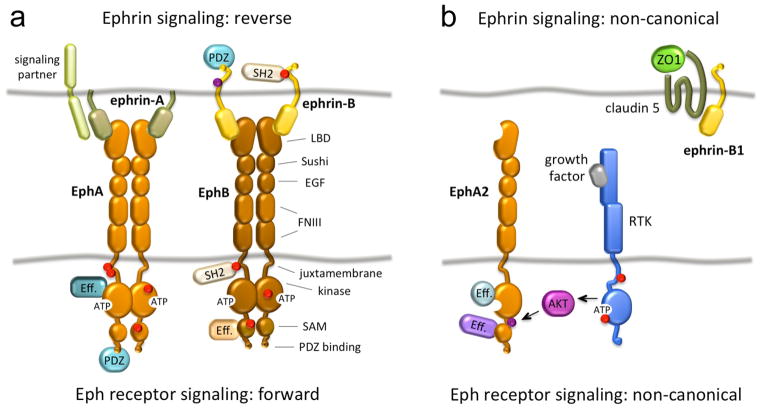
The Eph receptor tyrosine kinase family and its ligand ephrin play a key role in the development of organisms, adult tissue homeostasis, and a variety of diseases. These receptors and ligands trigger a series of complex signal transduction processes through cell-to-cell interactions, thereby regulating cell morphology, movement, survival, and proliferation. The Eph receptor family contains 14 receptors, which are divided into two major categories, EphA and EphB. After binding to ephrin ligands, they can produce bidirectional signal transduction. This signal transduction not only plays an important role in normal physiological processes, but also shows great therapeutic potential under various pathological conditions.
- Recent Advances
- Product Information
The mystery of health and disease from the perspective of the Eph receptor family
The Eph receptor tyrosine kinase family and its ligand ephrin play a key role in the development of organisms, adult tissue homeostasis, and a variety of diseases. These receptors and ligands trigger a series of complex signal transduction processes through cell-to-cell interactions, thereby regulating cell morphology, movement, survival, and proliferation. The Eph receptor family contains 14 receptors, which are divided into two major categories, EphA and EphB. After binding to ephrin ligands, they can produce bidirectional signal transduction. This signal transduction not only plays an important role in normal physiological processes, but also shows great therapeutic potential under various pathological conditions.
Eph receptors and ephrin in the nervous system
During the development of the nervous system, Eph receptors and ephrin are essential for the spatial organization of cell populations, tissue patterns, axon guidance, and the formation of synaptic connections. For example, EphA4 and EphB2 receptors are still expressed in large quantities in the adult nervous system, and they control the structure and function of synapses, as well as various biological characteristics of neural stem cells. However, the Eph/ephrin system is also associated with a variety of neuropathologies, including impaired neural repair, neurodegenerative diseases, and chronic neuropathic pain.
In neurodegenerative diseases such as Alzheimer's disease, the Eph/ephrin system is closely associated with the generation and neurotoxicity of beta-amyloid protein (Aβ). The binding of Aβ to EphB2 leads to the degradation of EphB2, which in turn affects synaptic transmission. In addition, the activation of EphA4 is also involved in the neurotoxicity of Aβ, indicating that the Eph/ephrin system may play an important role in the pathogenesis of Alzheimer's disease.
Eph receptors and ephrin in the cardiovascular system
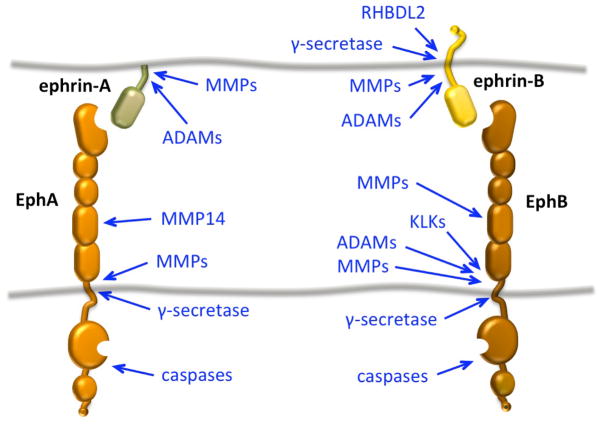
The Eph/ephrin system plays a key role in cardiovascular development, and knocking out Eph receptors or ephrins can lead to cardiac and vascular defects. In the adult cardiovascular system, members such as EphA2/ephrin-A1 and EphB4/ephrin-B2 play an important role in vascular regeneration and pathological forms of angiogenesis. For example, the expression of EphA2 in angiogenesis interacts with vascular endothelial growth factor (VEGF) to regulate the formation and stability of blood vessels. In addition, the Eph/ephrin system is also involved in the inflammatory process, affecting the permeability of the vascular endothelium and the migration of inflammatory cells.
Eph receptors and ephrin in cancer
Eph receptors and ephrin are dysregulated in a variety of cancers, and they interact through bidirectional signaling and other signaling systems to affect the malignancy of tumors. For example, EphA2 is overexpressed in a variety of cancers and is associated with tumor invasiveness and drug resistance. In breast cancer, the activation of EphA2 is associated with resistance to the estrogen receptor antagonist tamoxifen. In addition, the Eph/ephrin system is also involved in the regulation of the tumor microenvironment, affecting tumor angiogenesis and the infiltration of immune cells.
Therapeutic potential and challenges
Given the important role of the Eph/ephrin system in a variety of diseases, they are regarded as highly promising therapeutic targets. Currently, scientists are exploring a variety of strategies to regulate the expression and function of Eph receptors and ephrin, including the use of small molecule inhibitors, antibodies, peptide agonists, and gene therapy. However, the complex biological characteristics of the Eph/ephrin system also bring challenges, such as the diversity of signal transduction and differences in cellular background. Future research needs to have a deeper understanding of the specific mechanism of action of the Eph/ephrin system in different diseases in order to develop more effective treatment strategies.
In short, Eph receptors and ephrin play a multifaceted role in the development of organisms, tissue homeostasis, and disease occurrence. As research continues to deepen, we can hope to better use these molecules to develop new treatments and improve human health.
This article is reviewed and published by the technical expert team of UA
Disclaimer: This article partially utilizes artificial intelligence assistance in its creation. If any content involves copyright or intellectual property issues, please let us know and we promise to verify and remove it as soon as possible.
Purchase recombinant protein, choose Nanjing UA-Bio
UA protein focuses on providing various protein reagents, raw materials, and services required for drug research and development, cell therapy, gene therapy, and basic scientific research, including drug target proteins, immune checkpoint proteins, cytokines, tool enzymes, customized protein expression, and full-length transmembrane protein development. Youai is committed to providing customers with high-quality products and professional services, and building a High-tech Biological Enterprise with International Competitiveness.







 Business license (three certificates in one)