Unlocking the "key" of cell signaling: the secret of Wnt protein and cancer


Wnt protein is an important class of signaling molecules that play an indispensable role in cell growth, differentiation, migration and tissue homeostasis maintenance.
- Recent Advances
- Product Information
Unlocking the "key" of cell signaling: the secret of Wnt protein and cancer
In the world of cells, signal transmission is like a carefully choreographed dance, and Wnt protein is the key dancer in this dance. Wnt protein is an important class of signaling molecules that play an indispensable role in cell growth, differentiation, migration and tissue homeostasis maintenance. However, when the Wnt signaling pathway is abnormal, it may cause a variety of diseases including cancer.
Wnt signaling pathway: the "commander" of cell fate
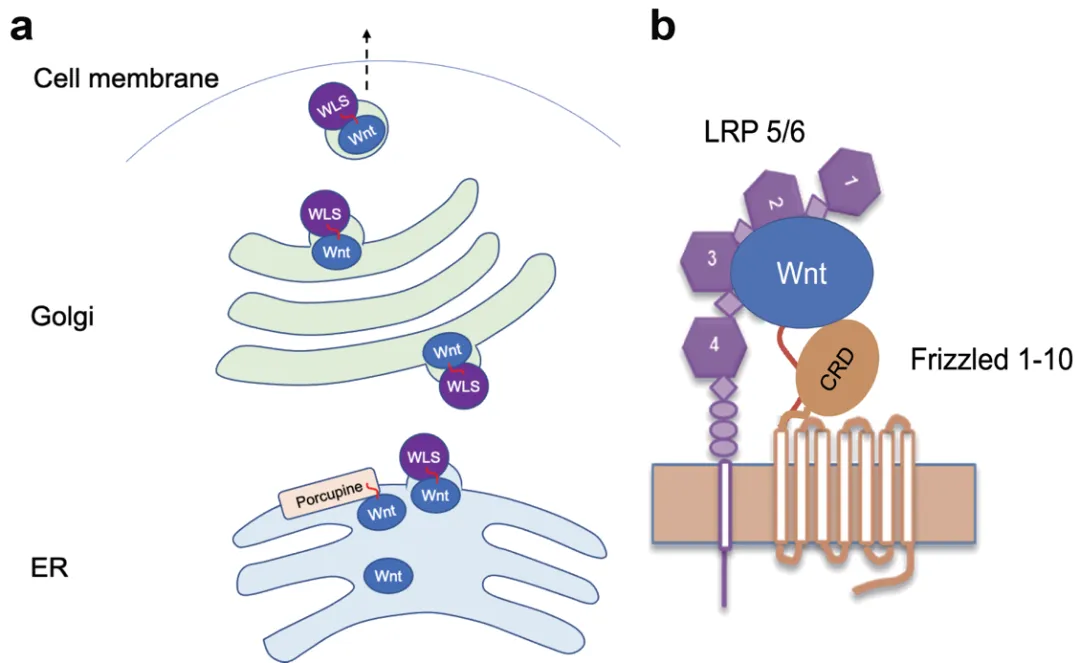
The Wnt signaling pathway is a complex signal transduction network that is highly conserved in organisms and cannot be separated from its regulation from embryonic development to the maintenance of adult tissues. The Wnt signaling pathway is mainly divided into the classical Wnt/β-catenin signaling pathway and the non-classical Wnt signaling pathway. In the classical Wnt signaling pathway, Wnt protein binds to the Frizzled (FZD) receptor and the low-density lipoprotein receptor-related protein 5/6 (LRP5/6) co-receptor on the cell membrane, activating a series of downstream signals, which ultimately leads to the accumulation of β-catenin protein in the cell nucleus and regulates gene expression. These genes include c-Myc and Cyclin D1, which can promote cell proliferation and differentiation.
Abnormal activation of the Wnt signaling pathway is closely related to the occurrence of various cancers. For example, in hepatocellular carcinoma (HCC), the Wnt signaling pathway accumulates β-catenin, activates downstream genes, promotes cell proliferation and inhibits cell apoptosis. In addition, the Wnt signaling pathway can also change the tumor microenvironment and promote immune escape, thereby supporting the survival and spread of tumor cells.
Wnt protein "porter": WLS protein
The secretion of Wnt protein is a key step in activating downstream signaling pathways. Mature Wnt protein needs to bind to Wntless (WLS) protein before it can be secreted into the extracellular environment. WLS protein is like a "porter" of Wnt protein, helping Wnt protein to be transported from the cell to the outside of the cell, and then bind to receptors on the target cell membrane to activate the signaling pathway.
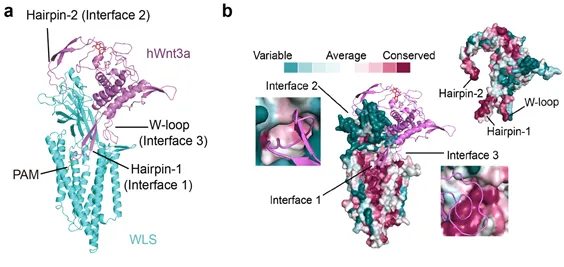
However, the secretion process of Wnt protein has long been a difficult point in research due to the lack of high-resolution three-dimensional structural information of related proteins. Until 2021, the Ma Dan group and Zhou Qiang group of West Lake University cooperated to use cryo-electron microscopy to analyze the high-resolution structure of the human Wnt transporter WLS and Wnt3a complex. This achievement not only reveals the molecular basis of WLS-mediated Wnt secretion, but also provides important clues for the development of anti-tumor drugs targeting the Wnt secretion pathway.
From structure to drug: the future of Wnt signaling pathway
By analyzing the structure of the WLS-Wnt3a complex, scientists found that there are three main binding regions between WLS and Wnt3a, and the interaction of these regions is crucial for the secretion of Wnt3a and the activation of downstream signaling pathways. More importantly, these binding regions are highly conserved in different species, indicating that the WLS-mediated Wnt secretion mechanism is highly conserved in evolution.
The analysis of this high-resolution structure provides new ideas for the development of drugs targeting the Wnt signaling pathway. For example, by designing small molecule drugs that can specifically bind to the binding region of WLS and Wnt3a, the secretion of Wnt protein can be blocked, thereby inhibiting the abnormal activation of the Wnt signaling pathway. This is of great significance for the treatment of cancers related to the Wnt signaling pathway.
Conclusion
Wnt signaling pathway plays a key role in cell fate determination and disease occurrence. From embryonic development to cancer treatment, Wnt protein and its signaling pathway have always been a hot topic in biomedical research. With the continuous deepening of the molecular mechanism of Wnt signaling pathway, we are expected to develop more effective drugs and bring new hope for the treatment of diseases such as cancer.
This article is reviewed and published by the technical expert team of UA
Disclaimer: This article partially utilizes artificial intelligence assistance in its creation. If any content involves copyright or intellectual property issues, please let us know and we promise to verify and remove it as soon as possible.
Purchase recombinant protein, choose 
UA protein focuses on providing various protein reagents, raw materials, and services required for drug research and development, cell therapy, gene therapy, and basic scientific research, including drug target proteins, immune checkpoint proteins, cytokines, tool enzymes, customized protein expression, and full-length transmembrane protein development. Nanjing Univ is committed to providing customers with high-quality products and professional services, and building a High-tech Biological Enterprise with International Competitiveness.







 Business license (three certificates in one)